| Electrical System Compatibility | Confirm the harness is designed for the vehicle or equipment voltage, normally 12 VDC or 24 VDC in many mobile and commercial applications. | Incorrect voltage can cause poor illumination, overheating, premature LED failure, or control-system faults. | Rated voltage, operating-voltage range, wiring diagram, polarity information, and compatibility statement. | Check the product label and datasheet against the application voltage. Test at minimum, nominal, and maximum specified voltage where applicable. |
| Current and Circuit Protection | The supplier should state the current draw of each circuit and provide fuse or circuit-protection recommendations. | Correct protection reduces the risk of conductor damage and electrical fires caused by overloads or short circuits. | Current-consumption table, fuse rating, relay rating, connector rating, and over-current protection design. | Measure current with a calibrated meter and confirm that the selected fuse is appropriate for the conductor and load. |
| Wire Selection | Wire cross-section, insulation type, and temperature rating must match the circuit current, cable length, installation environment, and voltage-drop requirements. | Undersized or poorly insulated wire can create excessive voltage drop, heat buildup, dim LEDs, and early insulation failure. | Conductor size, material, insulation specification, temperature rating, and applicable wire standard. | Inspect conductor construction, measure resistance, and calculate voltage drop for the actual cable length and operating current. |
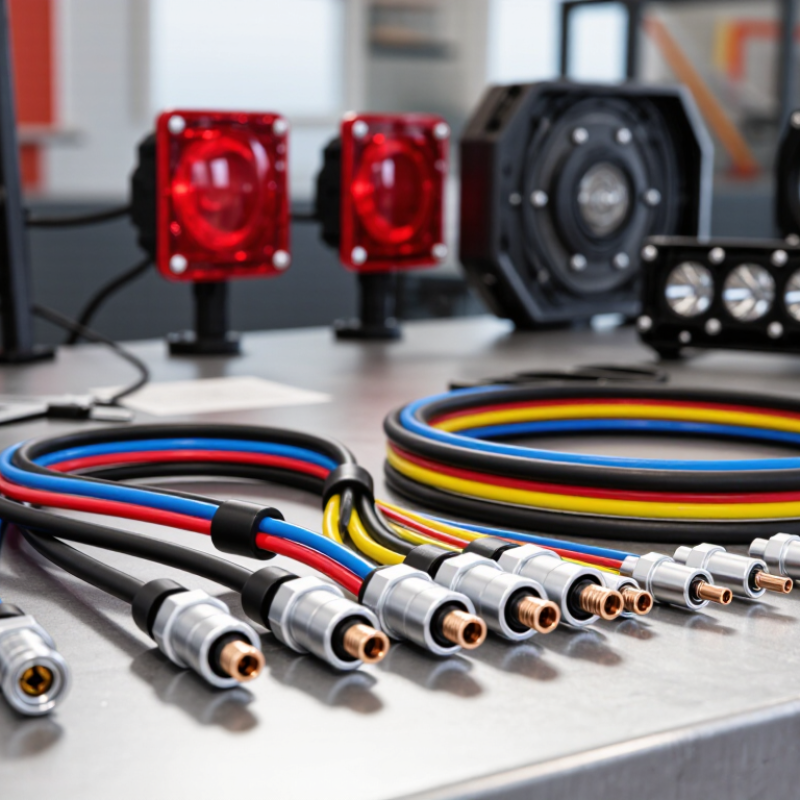
| Connector and Terminal Quality | Use locking connectors with terminals suited to the expected current, vibration, moisture, and temperature conditions. | Loose, weak, or corroded terminals are common causes of intermittent LED faults. | Connector part specification, terminal material, contact-plating information, mating-cycle data, and crimp-tool requirements. | Check terminal retention, crimp geometry, pull-out strength, locking action, and continuity after vibration or movement testing. |
| Ingress Protection | For exposed vehicle or outdoor locations, select components with an ingress-protection rating appropriate to the installation; IP65, IP67, or IP68 may be relevant depending on exposure. | Ingress protection helps limit dust and water entry, but the rating applies only to the tested configuration and installation conditions. | Test report or certificate stating the exact component, configuration, and IP rating. | Confirm that seals, backshells, plugs, and cable exits are installed exactly as tested. Do not treat an IP rating as proof of chemical or pressure-washing resistance unless specified. |
| LED Light Output | Compare measured lumens, beam pattern, color temperature, color consistency, and optical efficiency rather than LED quantity alone. | More LEDs do not automatically mean higher usable light output or better road and work-area visibility. | Photometric test data, lumen-maintenance information, color-temperature tolerance, and beam-pattern documentation. | Use an integrating-sphere or photometric test report from an appropriately qualified laboratory, and compare samples under identical conditions. |
| Color Temperature and Visibility | Common white LED products are often specified around 5,000–6,500 K; the selected value should match the application and local requirements. | Color temperature affects perceived brightness, glare, contrast, and performance in rain, dust, or fog. | Color-temperature range, chromaticity tolerance, and production consistency data. | Measure representative samples with a calibrated colorimeter or obtain independent photometric verification. |
| Thermal Management | The design should include an appropriate heat sink, thermal path, airflow requirement, and maximum operating temperature. | LED lifetime and light output are strongly affected by junction and housing temperature. | Thermal design data, operating-temperature range, derating curve, and temperature-test results. | Operate the harness and lamps at the specified maximum ambient temperature while monitoring housing temperature, current, and light output. |
| Environmental Durability | For mobile applications, evaluate resistance to vibration, mechanical shock, humidity, salt spray, dust, and temperature cycling. | Real-world installations experience movement, road shock, condensation, and rapid temperature changes. | Environmental test plan, test duration, severity level, sample configuration, and failure criteria. | Review laboratory reports and inspect samples after testing for cracked seals, loose terminals, corrosion, insulation damage, or flicker. |
| Electromagnetic Compatibility | The complete LED assembly should be assessed for electromagnetic emissions and immunity when used near radios, sensors, controllers, or communication equipment. | Poor electromagnetic design may create radio interference or cause malfunction in nearby electronic systems. | Applicable EMC test reports, wiring-layout guidance, grounding instructions, and suppression-component details. | Verify the report applies to the actual electrical design and test configuration, not only to an unrelated lamp or controller. |
| Regulatory Documentation | Request documentation relevant to the destination market, product category, and intended use; requirements vary by jurisdiction. | Market access and legal compliance depend on the destination country and whether the product is for road, industrial, agricultural, or off-road use. | Declaration of conformity where applicable, test reports, material declarations, safety documents, and installation instructions. | Check the product model, revision, test standard, laboratory details, and report date. Do not accept a generic certificate without model traceability. |
| Traceability and Change Control | Every shipment should be traceable by production batch, component revision, and inspection record. | Traceability allows buyers to identify affected lots and control changes to wire, terminals, LEDs, or suppliers. | Batch number format, bill of materials, engineering-change process, incoming-inspection records, and retained-sample policy. | Select a shipment at random and trace it back to raw materials, production records, inspection results, and approved drawings. |
| Factory Quality Controls | A capable supplier should perform incoming inspection, crimp inspection, continuity testing, polarity testing, insulation checks, and final functional testing. | Process controls identify assembly defects before products are shipped. | Inspection standards, test equipment list, calibration records, control plan, defect-rate data, and corrective-action records. | Request anonymized inspection records and conduct a pre-shipment inspection using an agreed sampling plan. |
| Sample-to-Mass-Production Consistency | Production units should match the approved sample in dimensions, wiring, connector type, light output, materials, and labeling. | Some quality problems occur when a supplier substitutes components after approval. | Golden sample, approved drawing, bill of materials, deviation-approval procedure, and first-article report. | Compare random production samples with the approved reference sample and record all deviations before shipment approval. |
| Warranty and After-Sales Support | The warranty period, exclusions, remedy process, and response time should be written into the purchasing agreement. | Clear warranty terms reduce disputes involving installation, water ingress, LED failure, connector defects, or unauthorized modifications. | Warranty policy, failure-analysis procedure, replacement terms, spare-parts policy, and technical-support contact process. | Review whether the warranty covers the complete harness and connected components, and define evidence required for a claim. |
| Total Cost of Ownership | Compare unit price together with tooling, minimum order quantity, freight, duties, replacement rate, installation time, and expected service life. | The lowest purchase price may produce higher costs if installation, failures, or replacement logistics are expensive. | Itemized quotation, packaging specification, lead time, spare-parts pricing, tooling ownership, and estimated replacement terms. | Calculate landed cost and expected cost per operating year using verified failure and replacement assumptions. |