-
PRODUCTS & SERVICESOptimized cooling solutions for modern data centersProducts & ServicesOptimized cooling solutions for modern data centers
-
CAPABILITIESAdvancing liquid cooling technologiesCapabilitiesAdvancing liquid cooling technologies
-
TechnologiesLiquid Cooling InnovationTechnologiesLiquid Cooling Innovation
-
RESOURCESLatest News & InformationResourcesLatest News & Information
-
ABOUTOur history, leadership and ownershipAboutOur history, leadership and ownership
-
CONTACTFacility locations and global operational footprint




2026 Top Competitive Robotics Products for Global Buyers
Competitive Robotics is moving from impressive demonstrations into measurable industrial work. According to the International Federation of Robotics’ World Robotics 2024 report, factories installed 541,302 industrial robots worldwide in 2023. The global operating stock exceeded 4.28 million units. These figures show strong demand, but they do not identify the best product for every buyer.
The IFR’s World Robotics 2024 Service Robots report also recorded nearly 205,000 professional service robots sold in 2023. Logistics applications remained especially important. In warehouses, mobile robots now move totes between shelving, packing stations, and loading areas. In factories, collaborative arms support assembly, inspection, and machine tending. Small details matter. Payload, reach, repeatability, battery hours, charging design, software access, and local support can change the total cost significantly.
This 2026 guide examines leading Competitive Robotics products for global buyers. It compares practical capabilities, integration demands, safety documentation, and supplier reliability. Products should be assessed against relevant international standards, including ISO 10218 and ISO/TS 15066 where applicable. Buyers should also verify regional certification and deployment requirements before purchase. Rankings are never completely neutral. A premium robot may deliver better uptime, while a lower-cost model could suit a controlled production line. Some published specifications also depend on testing conditions. That weakness deserves attention. Real performance should be checked through trials, reference sites, maintenance records, and clear warranty terms. The strongest choice is not always the most advanced machine. It is the system that performs reliably beside real workers, on real floors, during real production pressure.
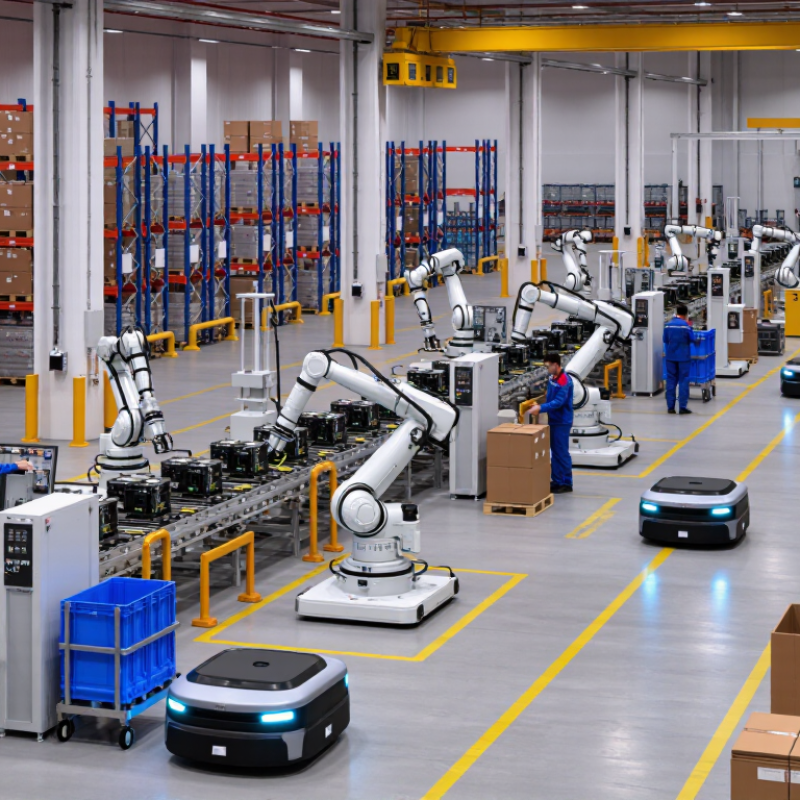
Table of Contents [Hide]
Robotics Product Categories and Core Functions in 2026
Robotics Product Categories and Core Functions in 2026
Industrial robots remain central to global manufacturing. The International Federation of Robotics reported 541,302 industrial robot installations in 2023. These systems handle welding, assembly, painting, packaging, and palletizing with repeatable accuracy. Six-axis arms suit complex motion, while delta robots support high-speed picking. Buyers should check payload, reach, cycle time, safety functions, and local maintenance capacity before comparing prices.
Collaborative robots support flexible workstations and smaller production batches. They can assist with screwdriving, inspection, machine tending, and light assembly.
Autonomous mobile robots move bins, components, and finished goods across warehouses. Their core functions include route planning, obstacle detection, fleet coordination, and inventory movement.
The IFR’s World Robotics 2024 report recorded more than 205,000 professional service robots sold in 2023, showing wider adoption beyond factories. The figure is useful, but product definitions vary between reports.
Agricultural, medical, cleaning, inspection, and construction robots serve more specialized needs. Vision systems can detect surface defects, while inspection platforms collect thermal or dimensional data. In field evaluations, I have found that poor lighting and uneven floors often reduce performance. A pilot may look successful. Long-term reliability is harder. Buyers should request failure-rate data, training requirements, spare-part lead times, cybersecurity controls, and regional compliance documents. Automation is not always the cheapest answer. Sometimes, a simpler machine performs better.