-
PRODUCTS & SERVICESOptimized cooling solutions for modern data centersProducts & ServicesOptimized cooling solutions for modern data centers
-
CAPABILITIESAdvancing liquid cooling technologiesCapabilitiesAdvancing liquid cooling technologies
-
TechnologiesLiquid Cooling InnovationTechnologiesLiquid Cooling Innovation
-
RESOURCESLatest News & InformationResourcesLatest News & Information
-
ABOUTOur history, leadership and ownershipAboutOur history, leadership and ownership
-
CONTACTFacility locations and global operational footprint




2026 Top Powder Feeder Types for Global Buyers
Selecting the right Powder Feeder in 2026 requires more than comparing prices, motor ratings, or catalog photographs. Global buyers must match the feeder with powder behavior, production targets, cleaning procedures, and local service capabilities. A fine pharmaceutical powder may bridge inside a hopper, while a dense mineral powder can overload the drive. Moisture, particle size, bulk density, and electrostatic charge can change performance quickly.
Andrew Jenike, a pioneer in bulk-solids engineering, offered a useful warning: “Bulk solids do not flow like liquids.” That principle still matters. It explains why a screw feeder, loss-in-weight feeder, vibratory feeder, or rotary valve can perform differently under similar conditions. This guide examines the leading Powder Feeder types for international purchasing teams. It compares dosing accuracy, operating stability, maintenance effort, integration needs, and lifecycle cost.
Real factories are rarely perfect.
A feeder that works well during a factory test may struggle after shipment. Voltage differences, climate, operator training, and inconsistent powder preparation can expose weak assumptions. Buyers should request material trials, calibration data, contact-part specifications, and documented service support. They should also question impressive accuracy claims without test conditions. That is where many purchasing decisions become less certain.
This overview does not treat one feeder as universally superior. Instead, it provides a practical framework for selecting equipment responsibly. The best choice depends on the application, the powder, and the consequences of dosing variation. Careful testing remains more valuable than confident marketing language.
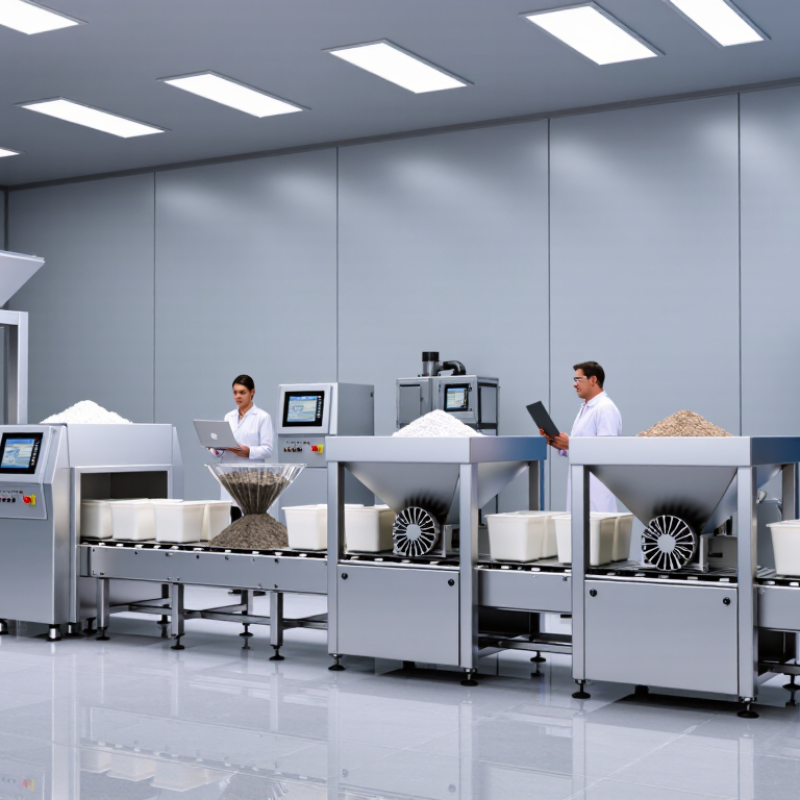
Table of Contents [Hide]
What Is a Powder Feeder and Why Does Its Type Matter?
A powder feeder is a machine that delivers dry material at a controlled rate. It connects storage, dosing, and the next production stage. Common types include loss-in-weight, volumetric screw, vibratory, rotary, and fluidized feeders.
The type matters because powders behave differently. Fine particles may bridge above a screw. Moist powders can form clumps. Lightweight powders may fluidize too easily.
A loss-in-weight feeder measures actual mass loss and supports high dosing accuracy. A volumetric feeder is simpler, but its output changes when density changes.
Vibratory feeders handle some free-flowing powders gently, while rotary designs offer steady delivery for consistent materials.
Small differences matter.
In practical testing, I check flow rate, particle size, moisture, bulk density, and refill behavior. I also watch for pulsation at the outlet. A feeder may perform well during a short trial, then drift after several hours. That detail is easy to miss.
Calibration should use the real powder, not only a similar substitute.
Operators also need clear cleaning access, overload protection, dust control, and documented settings.
No selection method is perfect. A technically accurate feeder can still fail when its hopper is too narrow or its screw is poorly matched.
Buyers should request repeatability data, maintenance intervals, and test results under realistic conditions. The best choice is not always the most advanced type. It is the type that remains stable, serviceable, and measurable in the buyer’s actual process.