-
PRODUCTS & SERVICESOptimized cooling solutions for modern data centersProducts & ServicesOptimized cooling solutions for modern data centers
-
CAPABILITIESAdvancing liquid cooling technologiesCapabilitiesAdvancing liquid cooling technologies
-
TechnologiesLiquid Cooling InnovationTechnologiesLiquid Cooling Innovation
-
RESOURCESLatest News & InformationResourcesLatest News & Information
-
ABOUTOur history, leadership and ownershipAboutOur history, leadership and ownership
-
CONTACTFacility locations and global operational footprint





7 Best Fixed Speed Screw Compressors for Buyers
Compressed air rarely gets attention until pressure drops on a production line. Then every minute matters. A Fixed Speed Screw Compressor can provide dependable, continuous airflow for workshops and factories with steady demand. Its motor runs at a constant speed, making selection straightforward, but operating costs depend heavily on load, controls, maintenance, and system design.
The U.S. Department of Energy’s Improving Compressed Air System Performance source notes that compressed air can represent a significant share of electricity use in manufacturing facilities. That makes efficiency more than a specification-sheet detail. Buyers should compare specific power, rated flow, working pressure, motor efficiency, noise, cooling requirements, and service access. A unit may look strong on paper. It may still be poorly matched to fluctuating demand.
This guide reviews seven fixed-speed screw compressors through practical buying criteria, including capacity, reliability, and ownership considerations. Where available, manufacturer specifications should be checked against the intended duty cycle and local service support. Actual energy use varies with installation and operating conditions; published ratings cannot tell the whole story. That is an important limitation. A clear comparison can narrow the shortlist, but the final choice should follow measured air demand, not guesswork.
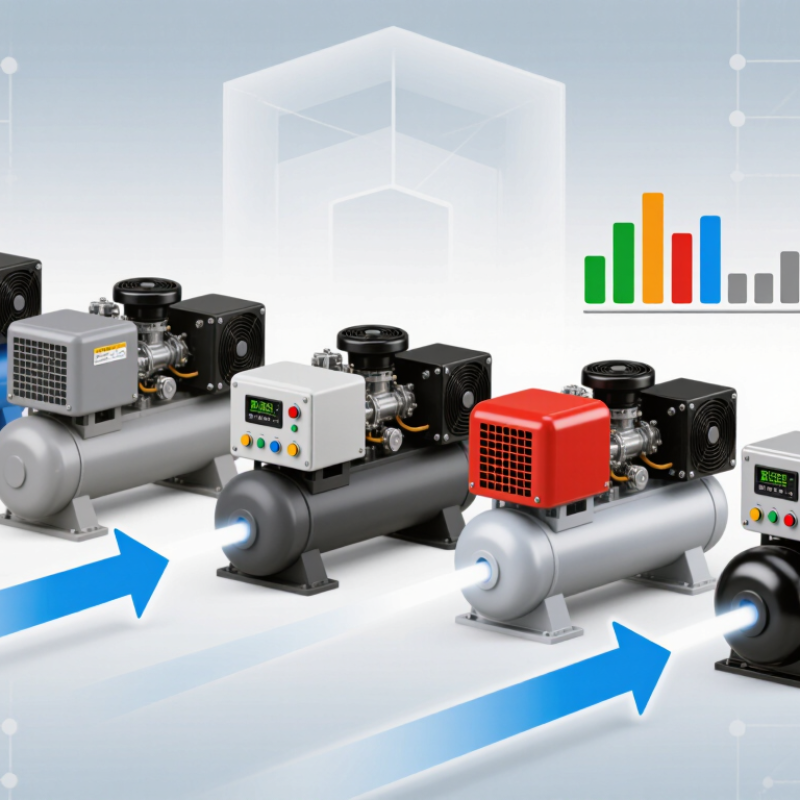
Table of Contents [Hide]
How Fixed-Speed Screw Compressors Work
How Fixed-Speed Screw Compressors Work
A fixed-speed screw compressor uses two meshing helical rotors to trap and shrink air. As the rotors turn, air enters through an inlet, moves along the rotor chambers, and exits at higher pressure. In oil-injected models, oil helps seal clearances, remove heat, and lubricate moving parts. The motor runs at a constant speed whenever the machine is on. Simple in principle. Yet its energy use depends heavily on demand.
When plant pressure falls below a set point, the compressor loads and delivers air. Once pressure reaches the upper set point, it unloads; the motor may keep running while producing little or no useful air. A receiver tank softens pressure swings, but it cannot erase that unloaded energy draw.
The U.S. Department of Energy’s Improving Compressed Air System Performance guide notes that compressed air can account for about 10% of electricity use in U.S. manufacturing. That figure is broad, not a promise for any individual site. For buyers, logged pressure, loaded hours, and leak checks reveal more than nameplate flow alone. I have seen an oversized unit cycle often in a small workshop. It still made air, but not efficiently. That detail is easy to miss.