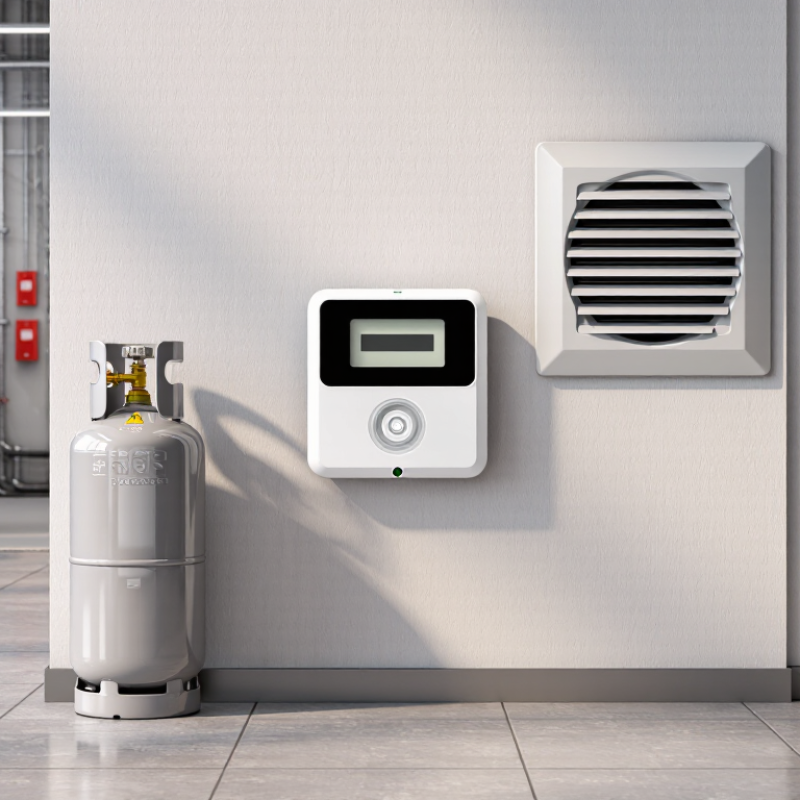
| Domestic Plug-In LPG Detector | Homes, apartments, utility rooms, and small kitchens | Propane, butane, or LPG mixtures | Semiconductor gas sensor; some higher-grade units use catalytic-bead or infrared sensing | Commonly set around 10% to 20% of the lower explosive limit (LEL), depending on the design | AC mains power; battery backup may be included; some units provide relay, app, or audible alerts | Install low on the wall because LPG vapor is heavier than air. Keep near, but not directly above, likely leak sources and follow the installation manual. | Simple installation, continuous monitoring, loud local alarm, and suitable coverage for ordinary residential spaces | Not normally suitable for outdoor exposure, hazardous industrial zones, or areas with heavy condensation and dust | Choose a detector tested to the applicable residential gas-alarm standard, such as EN 50194 where relevant. Never use it as a substitute for appliance maintenance. |
| Battery-Powered Portable LPG Detector | Temporary accommodation, workshops, camping, inspections, and travel | Propane and butane; some devices also detect methane or refrigerant gases | Semiconductor sensor with a handheld display or audible indication | Usually a manufacturer-defined alarm point; the displayed value may be relative rather than laboratory-grade concentration | Replaceable or rechargeable batteries; portability is the main feature | Use for spot checks and temporary monitoring near cylinders, regulators, hoses, and appliances. Do not leave it in a location where it can be damaged. | Flexible, easy to move, useful for checking several areas, and independent of mains power | Battery life, sensor warm-up time, cross-sensitivity, and calibration stability can vary significantly | Confirm that the device is specifically rated for LPG. A portable detector should not be treated as a permanently installed life-safety alarm unless approved for that use. |
| RV and Caravan LPG Alarm | Motorhomes, caravans, campervans, and marine-style compact living spaces | Propane and butane; some models additionally detect carbon monoxide | Dedicated LPG sensor, sometimes combined with an electrochemical carbon-monoxide sensor | Typically near 10% to 20% LEL for combustible gas, subject to the product standard and configuration | Usually 12 V DC from the vehicle electrical system; low-power standby operation is common | Mount close to the floor and near LPG appliances or cylinders, while avoiding direct drafts, water, and areas immediately beside ventilation openings. | Designed for mobile vibration, compact interiors, 12 V systems, and continuous protection while occupants sleep | Vehicle power interruptions, poor placement, dust, humidity, and blocked ventilation can reduce protection | Look for compliance with an applicable recreational-vehicle gas-alarm requirement, such as UL 1484 in relevant markets. LPG and carbon monoxide are different hazards and require suitable sensing elements. |
| Kitchen LPG Detector with Solenoid Shut-Off | Residential kitchens, restaurants, food-service areas, and commercial cooking spaces | Propane, butane, or the LPG blend used by the installation | Fixed combustible-gas sensor connected to an alarm controller and an automatic gas shut-off valve | Often configured for a low-percentage-LEL pre-alarm or alarm; exact settings must follow local code and the system design | Mains-powered controller, backup supply in some systems, audible/visual alarm, and normally closed solenoid valve | Place the sensor low because LPG settles near floor level. Install the shut-off valve in an accessible section of the gas pipe by a qualified professional. | Can warn occupants and stop gas flow automatically, reducing the duration of a leak | Requires correct valve sizing, commissioning, periodic testing, and protection against false alarms from cleaning chemicals or aerosols | The valve must be compatible with the fuel, pressure, pipework, and emergency-reset procedure. Automatic shut-off systems should not impede required manual isolation points. |
| Fixed Outdoor LPG Detector | LPG cylinder cages, loading areas, external plant rooms, and storage compounds | Propane, butane, and LPG vapor | Catalytic-bead, infrared, or other industrial combustible-gas sensor in a weather-resistant enclosure | Common alarm stages are set below 20% LEL, with higher-level shutdown or evacuation alarms determined by the risk assessment | 24 V DC or industrial power; relay outputs, 4–20 mA, Modbus, beacon, siren, or control-panel integration may be available | Install at low points, pits, drains, or enclosed areas where heavier-than-air gas could accumulate. Account for wind, ventilation, and vapor migration. | Continuous monitoring, integration with emergency shutdown systems, and better durability than domestic detectors | Open-air dilution, wind direction, rain, icing, dust, and sensor poisoning can affect detection performance | Use equipment with the required ingress protection and hazardous-area certification where applicable. A standard household alarm is not a replacement for an industrial gas-detection system. |
| Industrial Fixed LPG Gas Detection System | Refineries, bottling plants, warehouses, process areas, and large commercial facilities | Propane, butane, LPG vapor, and other specified combustible gases | Industrial catalytic-bead or infrared point detector; open-path infrared may be used for selected large areas | Multi-stage alarms are commonly configured around 10% and 20% LEL, but the final values depend on the process hazard analysis and local regulations | 24 V DC, dedicated gas panel or safety PLC, 4–20 mA, relay, digital bus, horns, beacons, ventilation, and emergency shutdown interfaces | Design the detector layout through a documented risk assessment. Place sensors near credible release points and low-level accumulation zones, with additional units around pits and confined spaces. | Scalable coverage, event logging, automatic ventilation or shutdown, fault monitoring, and integration with emergency procedures | Higher purchase and maintenance costs; requires engineering, calibration, bump testing, documentation, and trained personnel | Equipment selection may need to meet IEC 60079 requirements and the hazardous-area classification. Alarm settings must be coordinated with site emergency-response procedures. |
| LPG Detector with Wireless or Smart Alerts | Connected homes, remote cabins, rental properties, and facilities requiring centralized notifications | Propane and butane; optional carbon monoxide sensing depends on the device | Usually a semiconductor sensor with a wireless gateway, Wi-Fi, cellular, or low-power radio connection | Typically based on a fixed alarm threshold near a low percentage of LEL; exact calibration and notification delays vary | Battery or mains power; smartphone notifications, gateway integration, and local audible alarm may be available | Install according to LPG vapor behavior and the manufacturer’s coverage instructions. Maintain reliable network and gateway placement. | Remote notifications, alarm history, multiple-detector monitoring, and convenient status checks | Internet, gateway, cloud-service, battery, and cybersecurity failures can prevent remote alerts; local audible alarm remains essential | Do not rely solely on a mobile notification for immediate danger. Test local alarms regularly and verify that the device still operates during network loss. |