-
PRODUCTS & SERVICESOptimized cooling solutions for modern data centersProducts & ServicesOptimized cooling solutions for modern data centers
-
CAPABILITIESAdvancing liquid cooling technologiesCapabilitiesAdvancing liquid cooling technologies
-
TechnologiesLiquid Cooling InnovationTechnologiesLiquid Cooling Innovation
-
RESOURCESLatest News & InformationResourcesLatest News & Information
-
ABOUTOur history, leadership and ownershipAboutOur history, leadership and ownership
-
CONTACTFacility locations and global operational footprint







What Is the Best POY Spinning Line for Global Buyers?
Global buyers rarely choose a POY Spinning Line by catalog speed alone. The real decision begins with yarn targets, feedstock quality, factory conditions, and long-term service. A line producing stable polyester yarn must also handle product changes without excessive waste. Small details matter. Spinneret design, quenching airflow, winding tension, and online monitoring can shape daily output.
This guide examines what makes a POY Spinning Line dependable across different markets. It considers capacity, denier range, energy consumption, automation, installation support, spare parts, and operator training. Buyers should request trial data, not only polished brochures. Sample reports should show tenacity, elongation, interlace performance, dye consistency, and package appearance. Factory references can reveal more than a sales presentation. Ask how quickly a technician responds when a winder stops at 2 a.m.
Price still matters, but the lowest quotation may hide costly limitations. Weak documentation, delayed components, or difficult software access can reduce usable capacity. Local voltage, humidity, water quality, and building layout also deserve careful review. These issues are easy to overlook.
No single configuration fits every producer. A recycled-material project may need different filtration and drying controls. A high-volume plant may value uptime over maximum flexibility. Even experienced teams can misjudge maintenance skills or future product plans. That uncertainty deserves honest discussion. This outline compares technical performance, supplier credibility, lifecycle cost, and practical risk, helping global buyers choose with evidence rather than attractive claims.
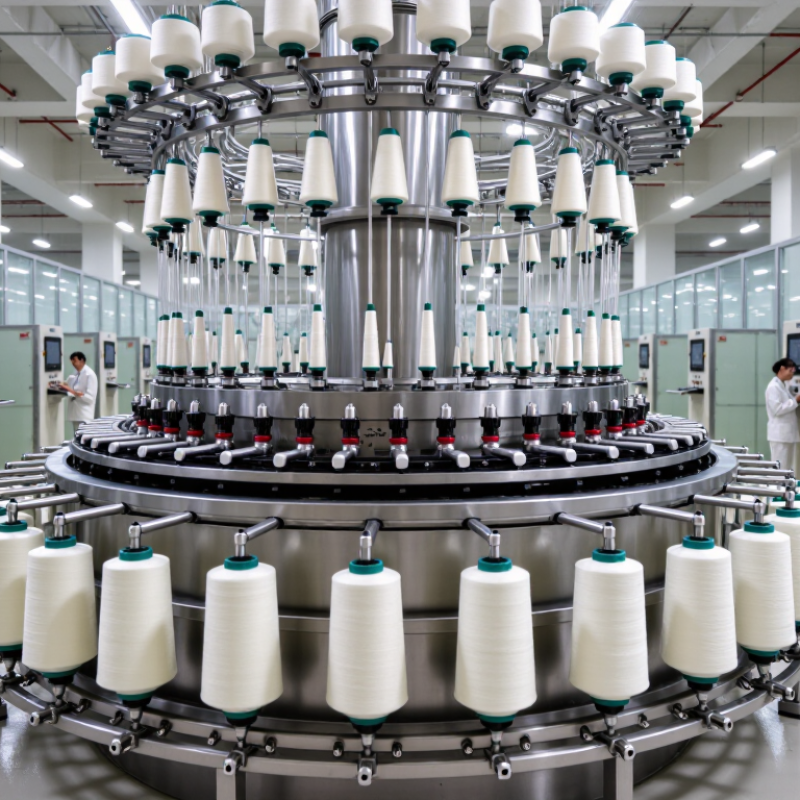
Table of Contents [Hide]
POY Spinning Line Fundamentals and Core Production Stages
A POY spinning line converts polymer chips into partially oriented yarn through controlled melting, filtration, extrusion, cooling, drawing, and winding. The process begins with drying. Moisture can reduce polymer viscosity and create unstable spinning.
The polymer then enters an extruder and passes through a melt filter. A spinning pack shapes the melt through precision spinnerets. Quench air cools the fresh filaments evenly. Small temperature differences matter. Operators monitor air velocity, melt pressure, and filament breaks continuously. Godet rollers control yarn speed and tension before automatic winders form stable packages. Modern POY production commonly runs above 2,500 meters per minute, although actual speed depends on polymer quality, denier, and equipment design.
Market scale makes process discipline important. Textile Exchange’s Materials Market Report 2024 estimated global fiber production at 124 million tonnes in 2023, with polyester representing about 57%. This demand does not make every high-speed line suitable. A global buyer should examine energy use, filter-change intervals, package consistency, and maintenance access. The International Textile Machinery Federation also emphasizes automation, efficiency, and reliable process control in modern filament production.
One detail is often underestimated: cooling uniformity. Poor quench balance can produce uneven dye uptake later. A line may look efficient during a factory visit, yet its long-term waste rate remains unclear. Buyers should request production records, yarn evenness data, and trial packages under real operating conditions. Specifications alone are not enough.