What Is the Best Pure Water Machine for Global Buyers?
Choosing the best Pure Water Machine for global buyers is not as simple as comparing prices or claiming the highest purity. Water sources vary widely, from municipal supplies in Singapore to hard groundwater in rural Mexico. A reliable choice must match local water quality, household demand, voltage, climate, and maintenance access. It should also provide clear performance data, not vague promises.
Look closely at filtration stages, membrane type, recovery rate, flow speed, storage capacity, and replacement costs. A reverse osmosis system may reduce dissolved solids effectively, while ultraviolet treatment can support microbial control without changing taste. These technologies solve different problems. One machine cannot suit every market. Certifications such as NSF/ANSI standards may strengthen buyer confidence, but documentation must be checked for the exact model. Local import, electrical, and water safety requirements also deserve attention.
Details matter.
A good evaluation includes laboratory reports, installation guidance, warranty terms, and responsive technical support. It should explain what happens when filters clog or feed pressure drops. A product with excellent specifications may still disappoint if spare cartridges are unavailable locally. Buyers should test source water before purchasing, especially when arsenic, nitrate, heavy metals, or unusual salinity may be present. This article compares practical options for homes, offices, hospitality businesses, and distributors. The assessment is careful, but not perfect. Real-world performance can change with water conditions, user habits, and maintenance quality. That uncertainty should remain visible.
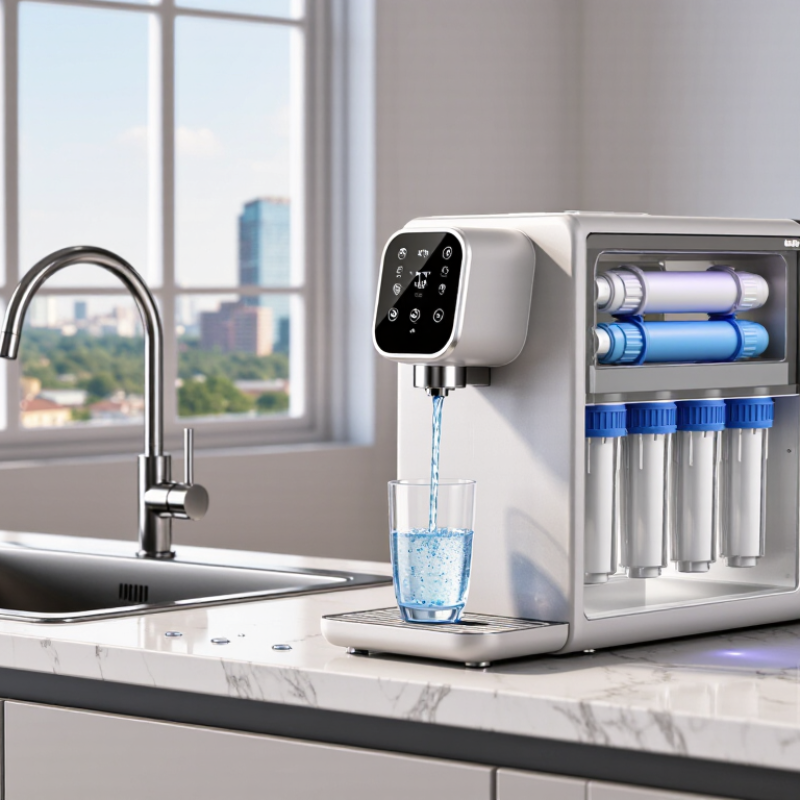
Defining Pure Water Machines and Their Main Purification Methods
For global buyers, a pure water machine is a treatment system that reduces unwanted substances in drinking water. It may target sediment, chlorine, dissolved salts, microorganisms, or unpleasant odors. Purity is not one fixed number. The right design depends on source-water quality, daily demand, and local safety requirements. In practical assessments, I check a recent water report before comparing equipment. This step is often skipped.
Reverse osmosis uses pressure to push water through a fine membrane. It can reduce many dissolved salts, metals, and other contaminants. However, RO produces wastewater and may remove beneficial minerals. Distillation boils water and condenses the vapor, helping reduce dissolved solids and many microorganisms. It usually needs more energy. Ultraviolet treatment can inactivate microorganisms without changing water taste. UV does not remove chemicals or suspended particles. Ultrafiltration blocks larger particles and microorganisms, while activated carbon improves taste and reduces chlorine. No method wins everywhere.
A reliable purchase starts with verified performance data, not impressive advertising. Ask for independent test results that match the actual water conditions. Check replacement intervals, cleaning needs, power use, and wastewater rates. For homes, flow rate and storage capacity affect daily convenience. For clinics or hospitality sites, continuous supply and maintenance access matter more. Installation conditions matter. A poorly fitted system can leak or lose pressure. Some specifications look impressive but remain difficult to verify. Real water reports should guide the final choice.
Comparing Water Quality, Capacity, Energy Use, and Operating Costs
What Is the Best Pure Water Machine for Global Buyers?
The best pure water machine depends on source quality, daily demand, and electricity prices. Reverse osmosis usually delivers strong dissolved-solid reduction, but it can waste water during filtration. Distillation offers high purity, yet heating requires more energy. Ultraviolet treatment uses less electricity, but it cannot remove salts, metals, or sediment.
Water quality should be tested before purchase. The WHO Guidelines for Drinking-water Quality emphasize microbial safety and chemical control, not simply low TDS readings. Capacity also matters. A two-person home may need 5–10 liters daily, while a small office needs much more. The International Energy Agency reports that efficient seawater reverse osmosis can approach 3 kWh per cubic meter, although household machines differ greatly. Filter replacement, membrane life, wastewater, and service access often decide the real operating cost. Cheap equipment can become expensive after one year. This comparison is imperfect because local water chemistry changes every result.
Tips: Check NSF/ANSI 58 certification for reverse osmosis claims. Measure output volume over one hour, not from a brochure. Ask for the recovery ratio and annual filter cost. Keep a simple log of electricity, replacement parts, and rejected water. It reveals the true price.
A machine with lower capacity may suit a rural home better than a large commercial unit. Reliable maintenance is often more valuable than impressive laboratory numbers. Even energy estimates need verification. Get local data.
Evaluating Machine Types for Homes, Businesses, and Industrial Sites
When buyers compare pure water machines, the right choice begins with water testing, not advertising. A home kitchen usually needs a compact reverse osmosis unit for drinking and cooking. It can reduce dissolved salts, metals, and many unwanted compounds. A carbon stage improves taste, while ultraviolet treatment can address microbial concerns. Output may be modest, often five to ten liters per hour. Storage tanks help during busy mornings. Start with testing. RO systems also create reject water, which many household buyers overlook.
Small offices, cafés, clinics, and laboratories need a steadier supply. Commercial RO systems with larger tanks and UV modules are often more suitable. Buyers should check peak demand, recovery rate, filter replacement intervals, and cleaning access. A powerful-looking machine may perform poorly with hard or muddy feed water. Pretreatment matters. Sediment filters and softeners can protect membranes, although they increase maintenance and operating costs. In field assessments, staff sometimes ignore alarms until water quality changes. Training is part of reliable operation.
Industrial sites require a different evaluation. Multi-stage RO, ultrafiltration, electrodeionization, or distillation may be combined for process water. The target conductivity, flow rate, temperature, and production schedule should guide the design. Continuous monitoring is essential. Independent laboratory testing should verify performance after installation, not only before purchase. Even experienced teams can specify oversized equipment and waste energy. Maintenance is real. A site survey, service plan, spare filters, and sanitation records help operators track conductivity, pressure, and service dates from day one.
Checking Global Standards, Installation Needs, and Maintenance Support
Choosing the best pure water machine for global buyers requires more than comparing filtration ratings. A reliable unit should match recognized standards for materials, electrical safety, and water treatment performance. Look for documented testing, not only marketing claims. Certification should cover the exact model and configuration. An optional component may not share the same approval.
Installation conditions can change results quickly. Check inlet pressure, pipe size, drainage access, voltage, frequency, and available space. A machine designed for 220 volts may need a different electrical setup elsewhere. Hard water may also require pretreatment. Leave room above the unit for filter replacement. Small details matter.
Maintenance support often decides long-term value. Ask whether manuals, filter codes, spare parts, and remote troubleshooting are available in your market. A clear service schedule should explain when to replace sediment filters, carbon filters, and membranes. Water quality should be tested after installation, not assumed from factory data. Keep records of pressure, TDS, and sanitation dates.
Technicians should also explain how to prevent stagnant water during shutdowns. Poor drainage can create avoidable hygiene problems. I have seen buyers focus on purity numbers while ignoring local service capacity. That choice can become expensive. No system is maintenance-free. A realistic supplier should admit this and provide measurable support, response times, and trained installers.
Choosing the Best Pure Water Machine for Different Buyer Requirements
What Is the Best Pure Water Machine for Global Buyers?
Choosing the best pure water machine depends on water quality, daily demand, budget, and maintenance skills. The WHO and UNICEF Joint Monitoring Programme reported that 2.2 billion people lacked safely managed drinking water services in 2022. This gap makes local testing essential. A household may need a compact reverse osmosis system with ultraviolet treatment. An office may require higher flow, larger storage, and easier filter replacement. Rural buyers might prefer gravity-fed ultrafiltration because electricity can be unreliable.
Do not trust the word “pure” alone. WHO Guidelines for Drinking-water Quality recommend managing microbiological and chemical risks together. Reverse osmosis can reduce dissolved salts, while ultraviolet treatment targets microorganisms without removing minerals. Activated carbon helps control odors and certain organic compounds. However, every method has limits. A poorly maintained machine may create new hygiene concerns. That part is often overlooked. Experienced installers should check source-water reports, pressure, temperature, recovery rate, and replacement costs before recommending equipment.
Tips: Test the incoming water first. Measure daily usage, not peak hopes. For families, calculate liters per person. For restaurants, check continuous flow and wastewater handling. Ask whether filters are locally available. Keep a simple maintenance log with dates and readings. Buyers sometimes choose advanced systems they cannot service; that is a costly mistake. A smaller, well-maintained machine may perform better than a powerful unit with neglected filters. Specifications matter, but user habits matter more.






