-
PRODUCTS & SERVICESOptimized cooling solutions for modern data centersProducts & ServicesOptimized cooling solutions for modern data centers
-
CAPABILITIESAdvancing liquid cooling technologiesCapabilitiesAdvancing liquid cooling technologies
-
TechnologiesLiquid Cooling InnovationTechnologiesLiquid Cooling Innovation
-
RESOURCESLatest News & InformationResourcesLatest News & Information
-
ABOUTOur history, leadership and ownershipAboutOur history, leadership and ownership
-
CONTACTFacility locations and global operational footprint





How to Buy ADSS Fibra Optica for Global Projects?
Buying Adss Fibra Optica for global projects requires more than comparing prices per kilometer. The cable must match route conditions, network architecture, and national approval requirements. ITU’s Facts and Figures 2024 estimates that 5.5 billion people use the Internet worldwide. This growing demand increases pressure on operators to build reliable fiber infrastructure, including in remote and weather-exposed regions. FTTH Council Global Alliance reports also show continued fiber expansion across major markets, but deployment conditions differ sharply between countries.
A practical purchasing process starts with the route survey. Record pole spacing, maximum span, wind speed, ice loading, temperature range, and ultraviolet exposure. Then confirm the required fiber type, tensile strength, cable diameter, and permitted sag. IEC 60794 cable standards and ITU-T G.652.D or G.657 recommendations can support technical evaluation. However, compliance alone does not guarantee field performance. Supplier experience matters.
Ask for factory test reports, attenuation results, tensile testing, aging data, and traceable production records. Request samples before approving a full shipment. A real sample can reveal stiffness, sheath quality, marking clarity, and handling problems. Small details matter.
The lowest quotation may hide higher installation costs, longer lead times, or weak after-sales support. I would not pretend every supplier comparison is perfectly objective. Exchange rates, customs delays, and incomplete route data can distort the decision. A stronger approach combines verified standards, local engineering review, and documented supplier references. For global projects, choose a partner that can provide consistent specifications, packaging, technical documentation, and replacement support across multiple regions. That is often more valuable than a small initial discount.
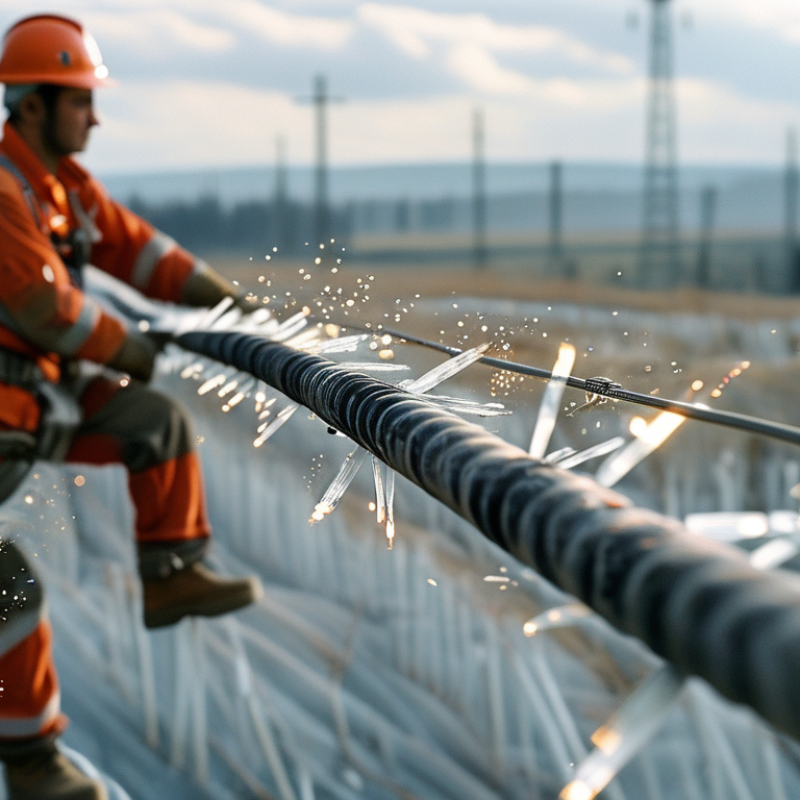
Table of Contents [Hide]
Define Route, Span, Fiber Count, and G.652.D Loss ≤0.22 dB/km
How to Buy ADSS Fibra Optica for Global Projects?
Define Route, Span, Fiber Count, and G.652.D Loss ≤0.22 dB/km
Begin with the route, not the cable catalogue. Map pole locations, road crossings, river sections, and maintenance access. Record the longest span between supports. A 180-meter span needs different mechanical performance than a 60-meter span. Check wind, ice, temperature changes, and local installation rules. A route survey is essential.
Select fiber count from real network demand and future expansion. Twelve fibers may serve a small link, while 48 or 96 fibers can support regional growth. Avoid choosing only by today’s traffic. Empty fibers provide useful capacity, but excessive count can increase cable weight and installation tension. This is where planning becomes imperfect.
Specify G.652.D fiber with attenuation no higher than 0.22 dB/km at 1550 nm. Request factory test records for every cable length. Also confirm attenuation at 1310 nm, chromatic dispersion, tensile strength, and cable diameter. Calculate the optical budget using cable length, splices, connectors, and repair allowance. A spreadsheet can still lie when field conditions are missing. Test installed sections with OTDR and insertion-loss equipment. Inspectors should compare results with the approved route design, not just the delivery documents. Local climate data and actual pole loading deserve equal attention.