-
PRODUCTS & SERVICESOptimized cooling solutions for modern data centersProducts & ServicesOptimized cooling solutions for modern data centers
-
CAPABILITIESAdvancing liquid cooling technologiesCapabilitiesAdvancing liquid cooling technologies
-
TechnologiesLiquid Cooling InnovationTechnologiesLiquid Cooling Innovation
-
RESOURCESLatest News & InformationResourcesLatest News & Information
-
ABOUTOur history, leadership and ownershipAboutOur history, leadership and ownership
-
CONTACTFacility locations and global operational footprint





How to Choose a Titanium Welding Supplier in 2026?
Choosing a Titanium Welding supplier in 2026 requires more than comparing hourly rates. Titanium can look clean while hidden oxygen contamination weakens the joint. A reliable supplier must control shielding, heat input, joint preparation, and post-weld inspection with documented discipline.
The U.S. Geological Survey’s Mineral Commodity Summaries 2025 continues to identify aerospace, chemical processing, and medical applications as major titanium demand areas. These sectors require traceability, consistent metallurgy, and qualified procedures. The International Titanium Association also highlights titanium’s corrosion resistance and strength-to-weight advantages, which explain its expanding industrial relevance. However, broader titanium growth does not automatically prove welding competence.
John C. Lippold, a respected welding metallurgy specialist, has stated, “Titanium is not difficult to weld, but it is intolerant of contamination.” That sentence should shape every supplier evaluation. Ask whether the company uses dedicated stainless-steel-free tools, high-purity argon, controlled weld chambers, and calibrated oxygen monitoring. Request procedure qualifications, welder certifications, material certificates, inspection records, and representative production samples.
Look closely at the details. A pale silver bead is encouraging. A blue, purple, or gray surface may signal inadequate shielding. The supplier should also explain its compliance with relevant AWS, ASME, or ISO requirements, rather than simply listing certificates on a website.
Cost still matters. It is not the whole decision.
A careful buyer should admit one uncomfortable possibility: an impressive facility can still produce inconsistent welds. Audit the process, not the promises. In 2026, the strongest Titanium Welding partner will combine proven experience, transparent documentation, technical responsiveness, and the humility to investigate its own defects.
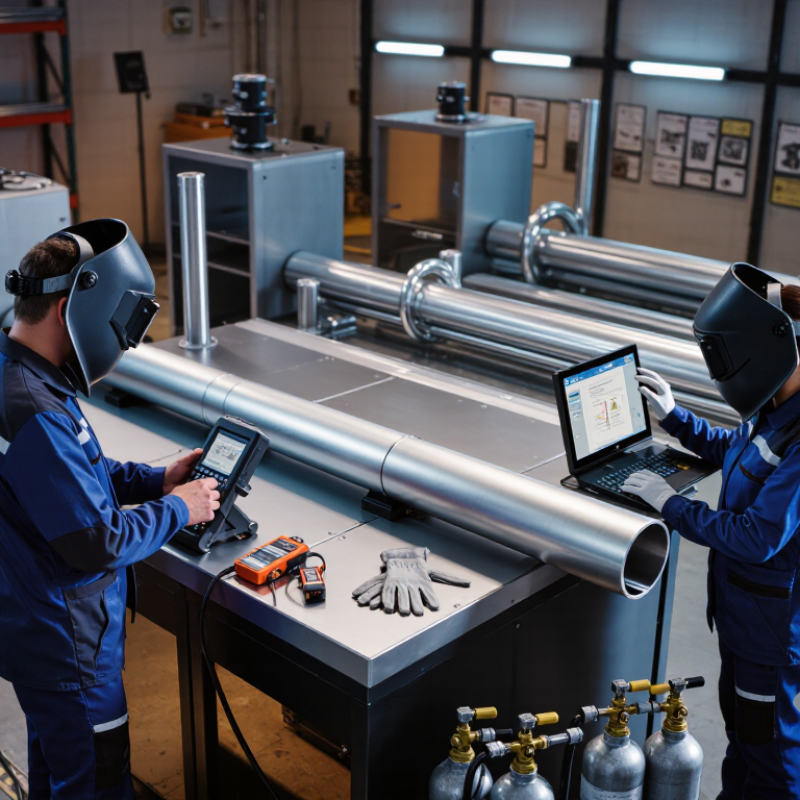
Table of Contents [Hide]
Define Your Titanium Welding Requirements and Application Conditions
How to Choose a Titanium Welding Supplier in 2026?
Define your titanium welding requirements before comparing suppliers. State the alloy grade, material thickness, joint design, and expected production volume. A supplier needs more than the phrase “titanium welding.” Grade 2 sheet behaves differently from Grade 5 components during welding. Include drawings, dimensional tolerances, surface-finish limits, and inspection requirements. Mention whether the part will face saltwater, vacuum, heat, vibration, or repeated loading. These conditions influence shielding, heat control, filler selection, and testing methods. Ask for weld procedure qualifications and technician experience with similar applications. Practical experience matters here. A supplier may own advanced equipment but lack useful titanium-specific knowledge.
Application conditions should be written in measurable terms. Give operating temperatures, pressure ranges, exposure time, and cleaning processes. Explain how the finished assembly will be installed and serviced. Small details can prevent expensive misunderstandings. For example, a thin tube near a heat-sensitive seal may require tighter heat input control. Do not assume a standard procedure will fit your design. That assumption can fail. Some requirements may also remain uncertain during early development. Record those gaps and ask the supplier how they will manage them. Their response can reveal technical honesty and engineering depth.
Tips: Request sample weld records, inspection reports, and traceability documents. Confirm oxygen monitoring, purge-gas controls, and post-weld cleaning practices. Ask how defects are recorded and corrected. Compare answers, not only prices. A clear supplier should explain risks in plain language and identify limits before production begins. Photographing critical joints during trials can also support later quality reviews.