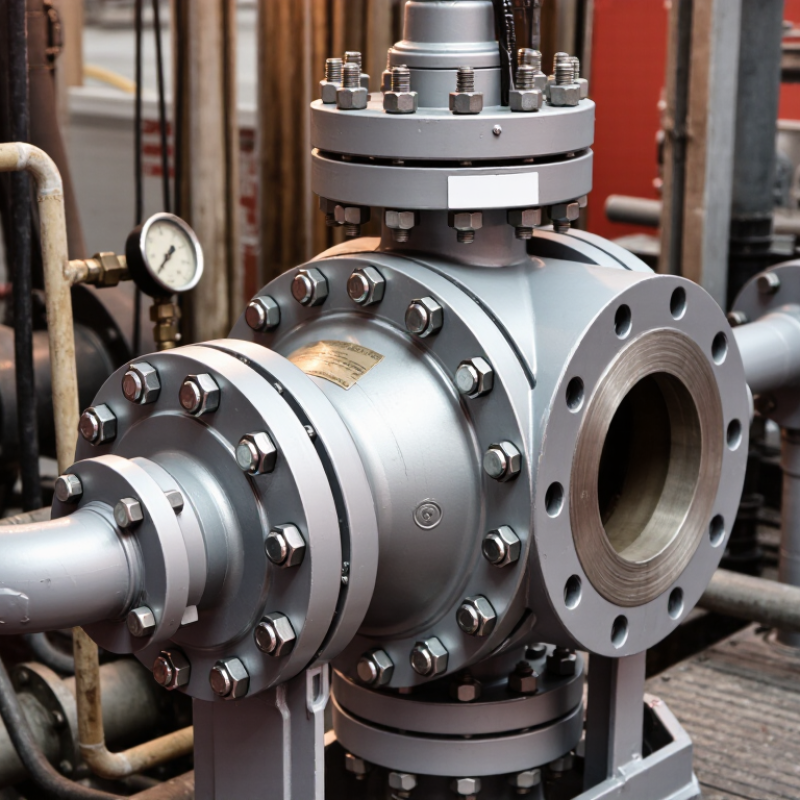
| Applicable product standard | Pressure-containing and pressure-controlling equipment must be designed for severe well-service conditions. | API Specification 6A is the principal product standard for wellhead and Christmas-tree equipment, including pressure-containing valve equipment. | Provides a recognized framework for pressure ratings, materials, design validation, manufacturing, marking, and testing. | Confirm current edition |
| Nominal size and bore | The valve must match the flow path, adjacent equipment, and available rig space. | Common API 6A nominal sizes include 1 13/16, 2 1/16, 2 9/16, 3 1/8, 4 1/16, 4 1/2, 5 1/8, 7 1/16, and 9 in. | A compatible bore reduces installation problems, unnecessary turbulence, and restrictions during circulation or well-control operations. | Check nominal size, bore, face-to-face dimension, end connection, and drift requirements. |
| Working pressure rating | The valve must withstand the maximum anticipated well pressure, pressure surges, and shut-in conditions. | API 6A pressure ratings commonly include 2,000; 3,000; 5,000; 10,000; 15,000; and 20,000 psi working pressure, subject to size and design availability. | Selecting only by normal operating pressure can leave inadequate margin for transient or trapped-pressure events. | Verify working pressure, test pressure, temperature derating, and the complete pressure-containing envelope. |
| Valve configuration | The internal mechanism must close reliably in the intended flow direction and tolerate solids, vibration, and pressure cycling. | Swing, piston, dart, and axial-flow check-valve arrangements are used in high-pressure applications; the correct choice depends on flow direction, solids loading, and pressure drop. | Different mechanisms have different resistance to impact, reverse flow, erosion, fouling, and maintenance requirements. | Review flow-direction marking, closure behavior, allowable installation orientation, and internal clearances. |
| Minimum cracking pressure | The valve should open without creating excessive restriction while still preventing reverse flow. | Typical spring-loaded designs may use a low cracking pressure, often specified by the manufacturer for the selected size and trim; the value is not universal across API 6A valves. | Excessive cracking pressure can reduce pump efficiency, while insufficient closing force can increase reverse-flow risk. | Require a documented cracking-pressure range at the operating temperature and fluid condition. |
| Backflow shutoff | Rapid and dependable reverse-flow prevention is essential for well-control barriers and pressure isolation. | The closure element should seat under reverse differential pressure and pass the specified shell and seat tests without leakage beyond the applicable acceptance criteria. | Reliable shutoff helps protect pumps, manifolds, choke equipment, and personnel from unexpected pressure migration. | Check seat-test direction, test medium, duration, allowable leakage, and acceptance standard. |
| Pressure-containing materials | Materials must tolerate pressure, temperature, drilling fluids, produced fluids, hydrogen sulfide, and carbon dioxide where applicable. | API 6A material classes include AA, BB, CC, DD, EE, FF, and HH; the selected class must correspond to the well-fluid environment and sour-service requirements. | Correct material selection reduces sulfide-stress cracking, corrosion, loss of toughness, and premature pressure-boundary failure. | Confirm material class, body and bonnet material, heat treatment, hardness, and sour-service compliance when required. |
| Trim and wetted components | Internal parts are exposed directly to erosive and corrosive fluids and may experience repeated impact. | Trim selection should address erosion, corrosion, galling, and solids. Common engineering controls include corrosion-resistant alloys, hardfacing, replaceable seats, and protected sealing surfaces. | Appropriate trim extends service life and helps maintain shutoff performance after repeated cycling. | Request a material list for the closure element, seat, spring, retainer, and all wetted components. |
| Temperature class | Seals, elastomers, lubricants, and metallic components must remain functional at the lowest and highest operating temperatures. | API 6A temperature classes cover service from sub-zero conditions through elevated well-service temperatures; the exact class must be selected from the project temperature envelope. | Temperature extremes can cause seal hardening, extrusion, loss of spring force, or reduced material toughness. | Compare the valve temperature class with minimum ambient, fluid, startup, shutdown, and well-temperature conditions. |
| Sealing arrangement | Seals must withstand high differential pressure, pressure cycling, decompression, and chemical exposure. | Metal-to-metal seating is often preferred for severe service; elastomeric seals may be used where compatible with pressure, temperature, and fluid chemistry. | Seat and stem-seal design directly affects leakage control, maintenance intervals, and resistance to extrusion or rapid gas decompression. | Review seal material, anti-extrusion features, gas-decompression qualification, and replacement procedure. |
| Product specification level | The required manufacturing and quality-control level depends on risk, service severity, and operator specifications. | API 6A PSL requirements range from PSL 1 through PSL 4, with higher levels generally requiring more extensive material control, inspection, testing, and documentation. | A suitable PSL provides traceability and verification proportional to the consequences of equipment failure. | Specify the required PSL in the purchase document and confirm all associated inspection records. |
| Performance requirement level | Critical well-control applications may require validated performance under pressure and environmental conditions. | API 6A PR levels define performance requirements; the applicable level should be selected according to the required validation and service conditions. | PR selection helps distinguish basic product conformity from more demanding performance qualification. | Confirm the required PR level, test sequence, acceptance criteria, and qualification evidence. |
| Pressure testing | Testing must demonstrate pressure-boundary integrity and seat performance before field deployment. | API 6A testing typically includes shell and seat tests using a suitable liquid test medium, with test pressure and duration determined by the applicable specification and rating. | Documented testing reduces the risk of hidden casting, machining, sealing, or assembly defects. | Require certified test charts or reports, calibrated gauges, test medium, duration, pressure, and leakage results. |
| Erosion and solids tolerance | Sand, cuttings, lost-circulation material, and high-velocity flow can damage seats and closure elements. | For abrasive service, favor streamlined flow passages, erosion-resistant trim, protected seating surfaces, and a design that minimizes particle entrapment. | Improved solids tolerance helps preserve closing reliability and reduces unplanned valve replacement. | Evaluate particle size, concentration, flow velocity, pressure drop, and expected erosion rate. |
| Maintenance and inspection | Rig equipment must be serviced quickly with minimal downtime and safe access. | Preferred features include replaceable seats and seals, accessible inspection points, clear flow-direction marking, and documented torque and assembly procedures. | Maintainable construction lowers turnaround time and reduces the chance of incorrect reassembly. | Verify spare-part availability, maintenance tooling, inspection intervals, and technician training requirements. |
| Connection and installation | Connections must match the pressure class and geometry of the surrounding manifold, riser, or wellhead equipment. | Common high-pressure end connections include flanged and studded configurations defined by applicable API 6A dimensional requirements. | Correct connection selection supports pressure integrity, interchangeability, alignment, and safe installation. | Confirm flange type, nominal size, pressure rating, ring-groove specification, bolting, orientation, and make-up procedure. |
| Documentation and traceability | Pressure equipment requires evidence that materials, manufacturing, inspection, and testing meet the purchase specification. | A complete data package commonly includes material certificates, heat-treatment records, inspection reports, pressure-test records, drawings, manuals, and final marking details. | Traceability supports acceptance, future maintenance, failure investigation, and regulatory or operator audits. | Define documentation requirements before purchase and match certificates to component heat numbers and serial records. |