How to Choose Rolled Metal Suppliers in 2026?
Choosing Rolled Metal suppliers in 2026 requires more than comparing price lists. It requires evidence.
The World Steel Association’s 2024 World Steel in Figures reported nearly 1.9 billion tonnes of crude steel production in 2023. This scale creates opportunity, but it also creates uneven quality, delivery, and documentation. A supplier may quote attractive coil prices while hiding slitting fees, packaging limits, or unstable lead times. Those details matter on a factory floor.
Industry data also signals continued pressure on steel supply chains. The OECD’s Steel Market Developments report highlights excess capacity, trade uncertainty, and weak demand in several regions. These conditions can change mill allocations quickly. Therefore, buyers should examine production origin, monthly capacity, inventory visibility, and export experience. Ask for recent mill test certificates, dimensional tolerances, surface-finish records, and traceability samples. Request references from customers using similar gauges and grades.
Standards matter.
A credible supplier should explain compliance with ASTM, EN, JIS, or ISO requirements in practical language. Certifications alone are not enough. Check certificate validity, testing laboratories, corrective-action records, and inspection procedures. For carbon steel, stainless steel, aluminum, or coated products, chemical composition and mechanical performance must match the application.
Sustainability should receive equal attention. The International Energy Agency’s reports on the iron and steel sector show why emissions data increasingly affects procurement decisions. Ask whether the supplier can provide product carbon information, recycled-content evidence, and transparent energy data.
No shortlist is perfect. I would still test a small order first. Compare coil condition, edge quality, packing, delivery accuracy, and communication. The strongest 2026 supplier is not simply the cheapest. It is the partner whose claims survive inspection.
Define Your Rolled Metal Requirements and Performance Standards
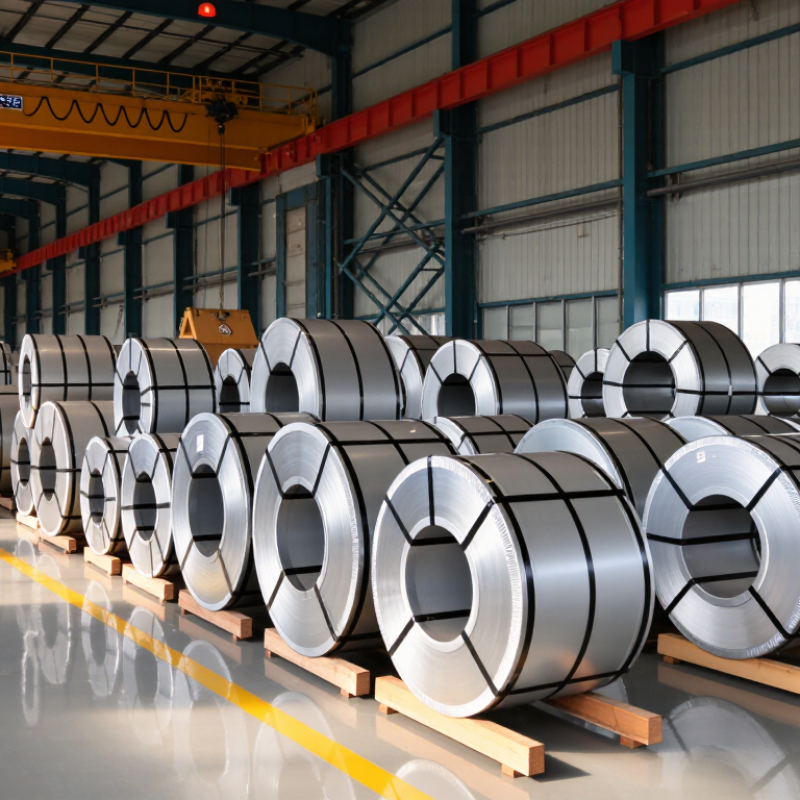
Choosing a rolled metal supplier in 2026 starts with a precise material definition. Identify the required grade, thickness, width, coil weight, temper, and surface finish. Then connect each specification to its real application. A panel exposed to rain needs different protection from an indoor bracket. A part shaped at a tight radius may require higher formability. Do not rely on “standard quality” alone. It is too vague.
Experienced buyers also define measurable performance standards. State thickness tolerance, flatness, yield strength, tensile strength, elongation, coating weight, and acceptable surface marks. Include forming, welding, corrosion, and temperature requirements when relevant. Ask suppliers for recent test certificates, inspection records, heat numbers, and traceability procedures. A small sample can reveal edge cracks, uneven coating, or poor stamping behavior. It may also expose an incomplete specification.
Tips: Write a one-page requirement sheet. Add drawings and end-use photos. Request three production samples. Compare results under identical tests. Check whether the supplier can maintain quality across full coils, not only samples. Ask about packaging, moisture protection, delivery limits, and handling damage. Confirm the testing method and standard edition in writing. Details matter.
Your requirements should also reflect production reality. Excessively narrow tolerances can increase cost without improving the final product. Yet loose limits may cause assembly failures and rework. Review the specification with design, quality, and manufacturing teams. Leave room for improvement. A perfect document rarely appears on the first attempt. Revisit it after the first trial order, using measured evidence rather than assumptions.
Evaluate Supplier Quality Systems, Certifications, and Production Capacity
Choosing a rolled metal supplier in 2026 requires more than comparing prices.
Quality systems deserve close inspection. ISO’s Survey 2023 recorded over 1.26 million ISO 9001 certificates worldwide, but certification alone proves little. Ask for the current certificate, audit scope, nonconformity records, and corrective-action evidence. Check whether controls cover slitting, leveling, surface inspection, packaging, and traceability. A polished certificate can hide weak shop-floor discipline.
Capacity must match your real production pattern. The World Steel Association reported approximately 1.88 billion tonnes of crude steel production in 2024. This scale creates availability, but not necessarily dependable delivery. Review monthly rolling capacity, furnace or mill access, maintenance schedules, backup lines, and subcontracting exposure. Request sample lead-time data from the last twelve months. A supplier may promise ten-day delivery during a quiet month. Your peak month matters more.
Tips:
Visit the facility if possible. Follow one coil from incoming material to final packing. Scan its heat number. Compare the digital record with the label. Ask operators what happens after a failed thickness test. Their answer may reveal more than a presentation. Certifications, laboratory accreditation, and statistical process control are useful signals, yet my own assessment would still remain imperfect without production records. Leave room for that uncertainty.
Reference: ISO Survey 2023; World Steel Association, World Steel in Figures 2025.
Compare Materials, Pricing, Lead Times, and Minimum Order Requirements
Choosing a rolled metal supplier in 2026 requires more than comparing a low price. Material quality must match your forming, welding, and corrosion requirements. Ask for the exact grade, thickness tolerance, surface finish, and heat treatment details. Request recent mill certificates and independent test results. Ask for evidence.
For pricing, compare the complete delivered cost, not only the quoted price per ton. Include slitting, packaging, freight, inspection, duties, and possible storage fees. A cheaper coil can create higher waste if its width or flatness is inconsistent. In my experience, trial samples reveal problems that spreadsheets often miss. Measure twice.
Lead time also needs careful verification. Ask whether the material is stocked, in production, or dependent on another mill. Confirm production time, inspection time, shipping time, and the date when responsibility transfers. A written schedule is useful, but it can still fail during demand spikes. Build a realistic buffer instead of trusting the most optimistic promise.
Minimum order requirements may affect cash flow more than expected. Some suppliers accept small trial orders but require larger volumes for custom widths or finishes. Ask whether mixed sizes can share one order and whether partial shipments are allowed. I once underestimated packaging and storage costs on a small order, which made the final unit price disappointing. A staged purchase may reduce risk, though it can increase freight costs. Review payment terms, replacement procedures, and communication response times before signing.
Purchasing basis: Price ranges are indicative 2026 budgeting ranges for standard, non-branded mill products purchased in commercial quantities. Actual quotations vary by region, alloy surcharge, order volume, width, thickness tolerance, surface finish, certification, freight, duties, and payment terms.
Lead-time definition: Estimated time from approved order and technical confirmation to shipment for standard specifications. Custom rolling, tight tolerances, special finishes, or mill-test certification may extend the schedule.
MOQ guidance: Minimum order quantities are typical planning ranges rather than universal requirements. Service centers may offer lower quantities at a higher conversion or cutting charge, while direct mill orders commonly require larger batch sizes.
Select the Supplier Using a Structured 2026 Evaluation Checklist
How to Choose Rolled Metal Suppliers in 2026?
Select the Supplier Using a Structured 2026 Evaluation Checklist
Choosing a rolled metal supplier requires more than comparing prices on a spreadsheet. Begin with a practical checklist covering material grade, thickness tolerance, surface condition, and monthly capacity. Request recent inspection reports, mill certificates, and sample coils before approving regular orders. Small details matter. A clean edge can prevent costly production delays.
Evaluate quality systems through evidence, not promises. Check how the supplier records heat numbers, handles nonconforming material, and responds to customer complaints. Ask for realistic lead times, packaging photographs, and shipping records from recent orders. Verify whether their testing equipment is calibrated and independently reviewed. These details reveal operational discipline.
Financial stability and communication also deserve careful attention. A reliable supplier should explain price adjustments, minimum order quantities, and delivery risks clearly. Include backup plans for port delays, raw material shortages, or sudden demand changes. No checklist is perfect. A supplier may pass every document review yet struggle during a rushed production schedule. Add a small trial order and measure actual results, including flatness, packaging, documentation, and response speed. Recheck the checklist every six months, because market conditions and production needs rarely stay still.






