-
PRODUCTS & SERVICESOptimized cooling solutions for modern data centersProducts & ServicesOptimized cooling solutions for modern data centers
-
CAPABILITIESAdvancing liquid cooling technologiesCapabilitiesAdvancing liquid cooling technologies
-
TechnologiesLiquid Cooling InnovationTechnologiesLiquid Cooling Innovation
-
RESOURCESLatest News & InformationResourcesLatest News & Information
-
ABOUTOur history, leadership and ownershipAboutOur history, leadership and ownership
-
CONTACTFacility locations and global operational footprint






How to Choose the Best China Air Tube Fittings?
Choosing the best China Air Tube Fittings requires more than comparing prices on a supplier website. The right choice depends on tubing size, working pressure, temperature, thread type, and installation conditions. A fitting that looks polished may still leak after repeated assembly. Small details matter. Check the tube’s outer diameter carefully. Confirm whether the thread is BSP, NPT, or metric. A mismatch can damage equipment and waste valuable production time.
Reliable sourcing also requires practical verification. Ask manufacturers for material information, dimensional drawings, pressure ratings, and inspection records. Stainless steel fittings may suit humid environments, while nickel-plated brass can offer a balanced option for many pneumatic systems. Polyurethane and nylon tubing also behave differently under heat, vibration, and bending. Do not trust technical claims without evidence. Request samples and test them with your actual tubes, tools, and operating pressure.
Factory experience is useful, but it is not the only measure of quality. Review production controls, batch traceability, sealing performance, and response speed. A supplier that communicates clearly is easier to manage when specifications change. Still, even careful buyers can overlook thread standards or sealing requirements. That is worth admitting. Before placing a large order, compare samples under realistic conditions and record the results. This guide explains how to evaluate China Air Tube Fittings with greater confidence, fewer assumptions, and better long-term reliability.
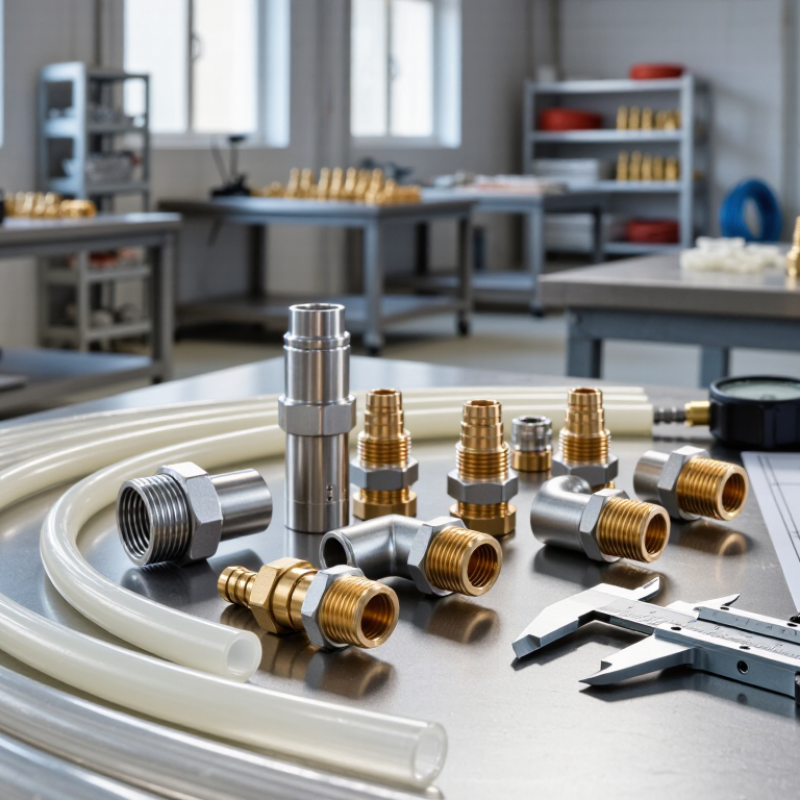
Table of Contents [Hide]
Understand Air Tube Fitting Types and Their Applications
How to Choose the Best China Air Tube Fittings?
Understand Air Tube Fitting Types and Their Applications
Choosing air tube fittings starts with the tube, not the fitting. Polyurethane tubes suit flexible robot arms and compact pneumatic tools. Nylon tubes handle higher pressure and sharper industrial routing. Push-to-connect fittings reduce assembly time and support quick maintenance. Compression fittings offer stronger resistance to vibration, but installation needs more care. Elbows fit crowded control panels, while tees divide air toward cylinders, valves, or sensors.
Pressure and temperature must match the working environment. ISO 4414 requires pneumatic systems to address safe design, installation, and maintenance practices. The U.S. Department of Energy reports that compressed-air leaks can waste 20–30% of compressor output in poorly maintained systems. A loose connector may look minor. It can still create noise, pressure loss, and higher energy costs. Check thread standards, tube outside diameter, sealing method, and chemical exposure before ordering. Metric and inch dimensions are not interchangeable.
MarketsandMarkets’ 2024 Pneumatic Equipment Market report valued the sector at about USD 28.7 billion in 2023. This growth increases fitting choices, but it also creates confusion. Product catalogs often emphasize appearance more than long-term sealing performance. That is a weakness worth noticing. For China sourcing, request pressure-test records, material certificates, and sample validation under actual temperature cycles. A fitting that works on a clean workbench may fail beside oil mist, vibration, or repeated bending. Reference data helps, but hands-on testing remains necessary.