-
PRODUCTS & SERVICESOptimized cooling solutions for modern data centersProducts & ServicesOptimized cooling solutions for modern data centers
-
CAPABILITIESAdvancing liquid cooling technologiesCapabilitiesAdvancing liquid cooling technologies
-
TechnologiesLiquid Cooling InnovationTechnologiesLiquid Cooling Innovation
-
RESOURCESLatest News & InformationResourcesLatest News & Information
-
ABOUTOur history, leadership and ownershipAboutOur history, leadership and ownership
-
CONTACTFacility locations and global operational footprint







How to Choose a Cleanroom Window in 2026?
Cleanroom design is often discussed through filtration, pressure control, and validated workflows. Yet the window is part of the controlled boundary, not merely a view into the room. Grand View Research valued the global cleanroom technology market at approximately USD 5.1 billion in 2023 and forecast further growth through 2030. That investment makes interface details increasingly important. A Cleanroom Window can influence visibility, cleaning routines, condensation risk, and maintenance access. Small details matter.
ISO 14644-1 classifies cleanrooms by airborne particle concentration, but it does not prescribe one universal window design. Selection depends on the room’s processes and the surrounding wall system. Consider flush installation, sealed joints, glazing strength, thermal performance, and resistance to repeated cleaning. In a pharmaceutical suite, an uninterrupted, wipeable surface may be critical. In an inspection area, clear viewing and controlled glare may matter more. These are practical trade-offs, not just catalogue features.
This guide explains how to compare window types, frame materials, glazing options, and installation details in 2026. It also highlights questions to ask suppliers, including how they document dimensions, seals, and cleaning compatibility. Request evidence for the intended application, and confirm that the proposed assembly matches the project specification. A product described as “cleanroom-ready” may still need careful review. That label alone is not proof. Even a well-chosen window can disappoint if installation leaves hard-to-clean gaps, so plan the wall interface before purchase.
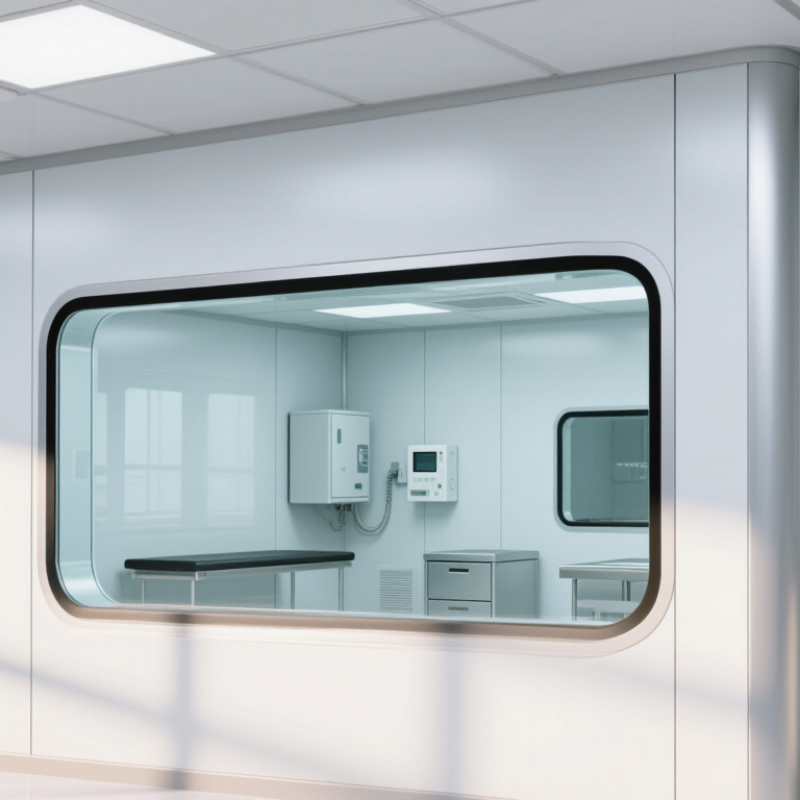
Table of Contents [Hide]
Define Cleanroom Requirements and Environmental Conditions
Before choosing a cleanroom window, define the room’s classification, operating state, pressure direction, temperature range, and humidity limits. “Clean” is not one condition. ISO 14644-1:2015 sets particle concentration limits by class; at 0.5 micrometres, the limits are 3,520 particles per cubic metre for ISO Class 5 and 352,000 for ISO Class 7. These figures describe the air, not the window itself. Still, they help clarify how carefully the window assembly must avoid particle traps and support cleaning.
Map the room’s real conditions before comparing window designs. Record pressure differentials, temperature swings, condensation risk, cleaning chemicals, and whether staff inspect the room from either side. A flush interior face, smooth sealed joints, and low-leakage framing can reduce ledges where dust collects. Double glazing may help limit heat transfer, but it can also create a condensation problem if the frame or installation forms a thermal bridge. Details matter. ISO 14644-4:2022 addresses cleanroom design and construction, but it cannot supply one universal temperature or humidity target; those depend on the process and equipment. A common oversight is treating the window as a passive panel. It is part of the room envelope, and its seals may need more attention than the glass. I would check the proposed assembly against the actual cleaning routine, not just the specification sheet. That check is easy to miss.