-
PRODUCTS & SERVICESOptimized cooling solutions for modern data centersProducts & ServicesOptimized cooling solutions for modern data centers
-
CAPABILITIESAdvancing liquid cooling technologiesCapabilitiesAdvancing liquid cooling technologies
-
TechnologiesLiquid Cooling InnovationTechnologiesLiquid Cooling Innovation
-
RESOURCESLatest News & InformationResourcesLatest News & Information
-
ABOUTOur history, leadership and ownershipAboutOur history, leadership and ownership
-
CONTACTFacility locations and global operational footprint







Why Choose the Right Discharge Hose Coupler?
Choosing a Discharge Hose Coupler is not a minor purchasing detail. The connection affects how securely a hose joins a pump, pipe, or other equipment. A poor fit can cause leaks, interruptions, or extra strain on the hose. Small details matter.
Start by checking the hose’s inside diameter, the coupler’s connection style, and the pressure rating of every connected component. Ratings should suit the actual operating conditions, not just the pump’s advertised maximum. Consider the fluid, temperature, and work environment, too. A coupler used near abrasive surfaces may need different protection from one used in a clean, stationary setup. Materials and seals should be compatible with the fluid; assumptions here can be costly.
The right choice also depends on how often the connection will be assembled and removed. A quick-connect design may save time, while a threaded or clamped connection may better suit a fixed installation. Neither is automatically best. Check manufacturer specifications, confirm that the parts are designed to work together, and inspect sealing surfaces for wear before use. Even a correctly sized coupler can perform poorly if its gasket is damaged or the connection is not fully secured. In practice, selection is sometimes less tidy than a chart suggests: existing equipment, space, and maintenance habits all shape the decision. Careful checks help narrow the options and support a reliable connection.
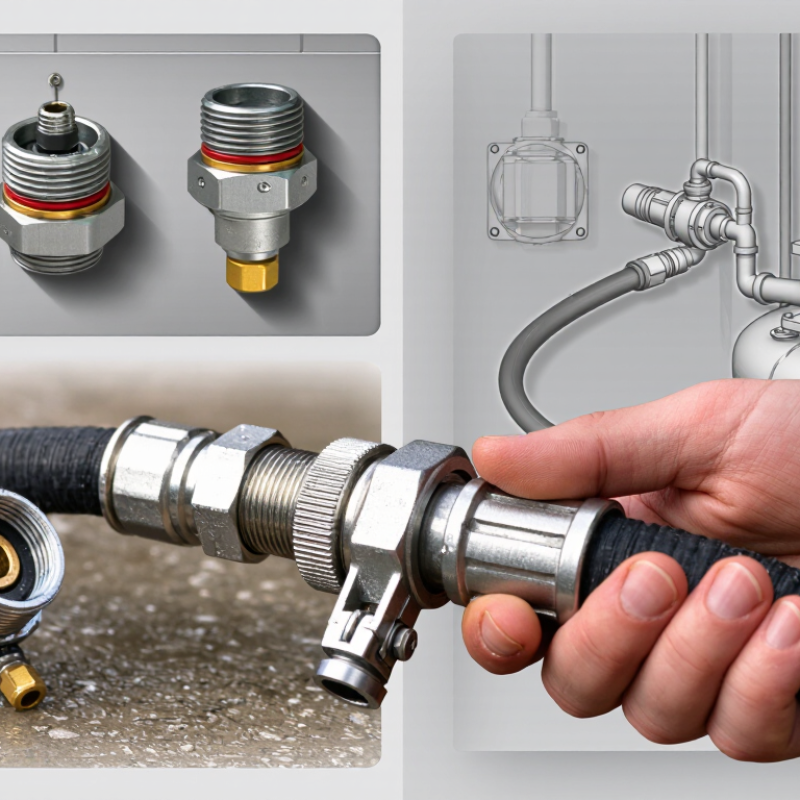
Table of Contents [Hide]
What a Discharge Hose Coupler Is and How It Works
A discharge hose coupler is the fitting that connects a hose to a pump, pipe, or another hose. It creates a joined path for moving water or other compatible fluids. The coupling may use threads, locking arms, or another joining method. Each design has its own matching connection. A gasket or seal sits between mating surfaces to limit leakage. The coupler does not increase pump capacity; it helps maintain a continuous, controlled connection.
During operation, fluid pressure pushes against the hose and its fittings. The coupler must stay engaged and sealed under the system’s working conditions. Before connection, check that the sizes and connection types match, and inspect the sealing surface for grit, cracks, or flattening. A small piece of debris can spoil the seal. It is tempting to treat a tight connection as proof of a good one; that assumption deserves a second look. Follow the specified pressure rating, and avoid forcing parts that do not align. Small leaks matter. A brief low-pressure check can reveal a loose joint before full flow begins. Recheck the connection if the hose shifts or the flow changes.