-
PRODUCTS & SERVICESOptimized cooling solutions for modern data centersProducts & ServicesOptimized cooling solutions for modern data centers
-
CAPABILITIESAdvancing liquid cooling technologiesCapabilitiesAdvancing liquid cooling technologies
-
TechnologiesLiquid Cooling InnovationTechnologiesLiquid Cooling Innovation
-
RESOURCESLatest News & InformationResourcesLatest News & Information
-
ABOUTOur history, leadership and ownershipAboutOur history, leadership and ownership
-
CONTACTFacility locations and global operational footprint




How to Choose the Right HJT Wet Carrier for Solar Cell Production
Choosing the right Hjt Wet Carrier can affect wafer handling, process stability, and production yield in heterojunction solar cell manufacturing. HJT wafers are thin and sensitive to scratches, particles, and surface contamination. A carrier must hold each wafer securely while allowing process liquids to reach the required surfaces. It should also support smooth drainage, rinsing, and drying. Small design details matter.
Start by checking wafer dimensions, thickness, and the layout of your wet-process equipment. Then review the carrier material for chemical compatibility, thermal limits, and particle control. Confirm that its slots provide enough support without pressing unevenly on the wafer edges. Too much contact can create damage. Too little can allow movement. Neither is ideal. Consider how quickly operators can load and unload wafers, and whether the carrier fits existing automation and cleaning routines.
Specifications alone are not enough. Ask suppliers for material data, cleaning guidance, and evidence from relevant production conditions. Where possible, run a controlled trial and inspect wafers for marks, residue, breakage, and handling consistency. Track results across repeated cycles, not just one successful run. There is no single carrier design that suits every HJT line; chemistry, equipment, wafer format, and throughput all influence the choice. Even a careful evaluation may miss a practical issue. A carrier that performs well in a test may behave differently during routine production, so feedback from operators should remain part of the decision.
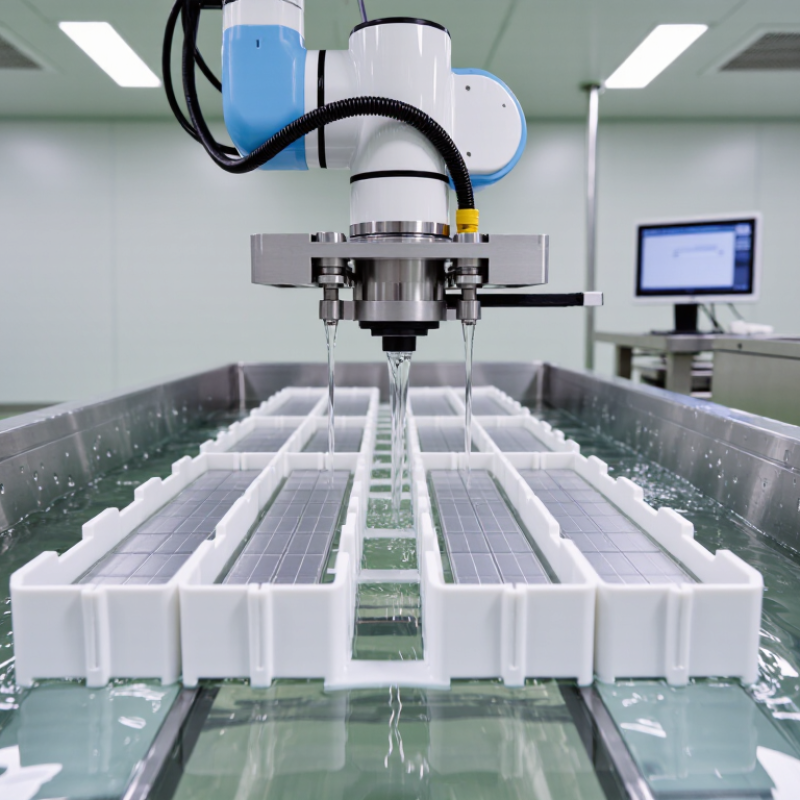
Table of Contents [Hide]
Understanding the Role of Wet Carriers in HJT Cell Production
In HJT cell production, a wet carrier does more than hold wafers. It keeps fragile silicon substrates positioned as they pass through cleaning, texturing, and other wet-process stages. Stable support helps limit wafer movement, edge contact, and breakage. It also allows process liquids to reach the surfaces consistently, which matters when small differences in residue or treatment can affect later cell performance.
Choosing a carrier means matching its material and design to the actual process. Check chemical compatibility, temperature limits, drainage, and how securely wafers sit in their slots. Narrow or poorly finished contact points may leave marks or trap liquid. A carrier that is difficult to rinse can also carry residues between baths. Small details matter. In production, operators should inspect carriers for wear and verify that cleaning removes visible deposits. Testing a sample carrier under real process conditions is more reliable than relying on a specification sheet alone.
It is tempting to treat carriers as simple fixtures. That view can miss their influence on handling consistency and contamination control. Still, a better carrier cannot compensate for unstable bath conditions or careless loading. Selection deserves review alongside the wet-process recipe, wafer dimensions, and maintenance routine. Some trade-offs remain; denser support may improve stability but restrict liquid flow. Teams should document breakage, residue, and handling issues, then adjust the design based on observed results.