-
PRODUCTS & SERVICESOptimized cooling solutions for modern data centersProducts & ServicesOptimized cooling solutions for modern data centers
-
CAPABILITIESAdvancing liquid cooling technologiesCapabilitiesAdvancing liquid cooling technologies
-
TechnologiesLiquid Cooling InnovationTechnologiesLiquid Cooling Innovation
-
RESOURCESLatest News & InformationResourcesLatest News & Information
-
ABOUTOur history, leadership and ownershipAboutOur history, leadership and ownership
-
CONTACTFacility locations and global operational footprint







How to Choose the Right Drywall Screw?
Choosing the right Drywall Screw is a small decision with visible consequences. The wrong fastener can protrude, loosen, or break through the paper face. A useful principle reflected in drywall author Myron R. Ferguson’s installation guidance is: match the screw to the board, framing, and conditions. This is a practical summary, not a verbatim quotation. Start by identifying what lies behind the panel. Wood studs generally call for coarse-thread screws; metal framing usually needs fine-thread screws. Board thickness also matters. A screw that is too short may not hold securely, while one that is too long can reach wiring or plumbing.
Look closely at the details. The screw head should sit just below the surface without tearing the paper. Set the driver clutch carefully, and test on a scrap piece if possible. A shallow dimple is right. A ragged hole is not. Corrosion-resistant options may suit damp locations, but follow the product and project specifications. Drywall type and framing material can change the recommendation, so check the manufacturer’s guidance before buying in bulk. Even experienced installers can overdrive a screw when moving quickly. That mistake is easy to miss until finishing compound reveals it. The sections ahead compare screw types, lengths, thread patterns, and common selection mistakes, helping you choose with confidence—and pause when the conditions are unclear.
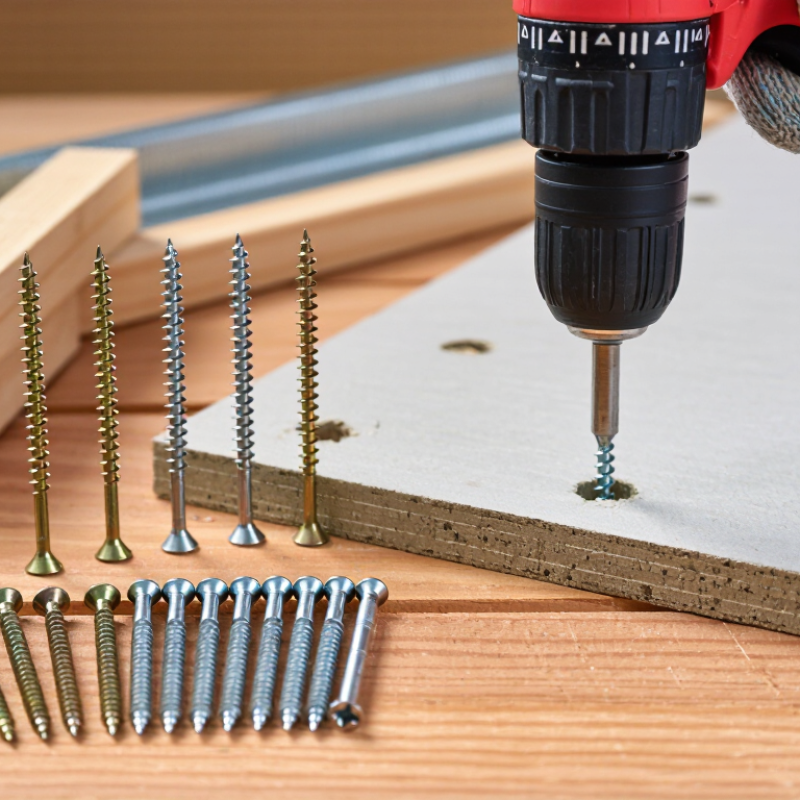
Table of Contents [Hide]
Identify the Drywall Material and Installation Conditions
How to Choose the Right Drywall Screw?
Identify the Drywall Material and Installation Conditions
Choosing a drywall screw starts with the board, not the toolbox. Standard gypsum board usually needs fine-thread screws for metal studs and coarse-thread screws for wood framing. Check the board thickness before selecting screw length. The screw should penetrate the framing securely without passing too deeply through the face paper.
Moisture-resistant boards need corrosion-resistant fasteners, especially in bathrooms, basements, and poorly ventilated rooms. Cement board is denser and may require specially hardened screws with suitable heads. For ceilings, longer screws can improve holding strength when the framing surface is uneven. I have seen installers use one screw type everywhere, then discover rust stains or loose panels months later. That shortcut saves minutes, not repairs.