-
PRODUCTS & SERVICESOptimized cooling solutions for modern data centersProducts & ServicesOptimized cooling solutions for modern data centers
-
CAPABILITIESAdvancing liquid cooling technologiesCapabilitiesAdvancing liquid cooling technologies
-
TechnologiesLiquid Cooling InnovationTechnologiesLiquid Cooling Innovation
-
RESOURCESLatest News & InformationResourcesLatest News & Information
-
ABOUTOur history, leadership and ownershipAboutOur history, leadership and ownership
-
CONTACTFacility locations and global operational footprint







What Is a Containerized Energy Storage System?
A Containerized Energy Storage System places batteries, power-conversion equipment, cooling units, and safety controls inside a transportable enclosure. Think of a steel container beside a solar farm, humming quietly while cables carry electricity into the grid. This design simplifies deployment, especially where permanent buildings are expensive or unavailable. It also supports modular expansion. More containers can be added as demand grows.
Dr. Imre Gyuk, a respected U.S. Department of Energy energy-storage expert, has stated, “Energy storage is the key to enabling the widespread adoption of renewable energy.” His observation explains the system’s central purpose. It stores surplus solar or wind power, then releases electricity during peak demand or temporary generation gaps. However, the container itself does not guarantee reliability. Battery chemistry, thermal management, fire detection, software controls, installation quality, and maintenance all matter.
The details are easy to underestimate. A hot afternoon can increase cooling demands. A poorly balanced battery rack can reduce usable capacity. Cybersecurity and emergency procedures also require serious attention. No system is perfect.
Understanding a Containerized Energy Storage System therefore requires more than examining its battery capacity. Readers should consider round-trip efficiency, response time, operating temperature, degradation, grid connection, and safety certification. Field experience often reveals gaps that product brochures overlook. Even accurate specifications need context.
This article explains the system’s structure, operating process, benefits, limitations, and practical applications. It also questions a common assumption: larger storage is not always better storage. The right solution depends on the site, energy profile, climate, and long-term operating plan.
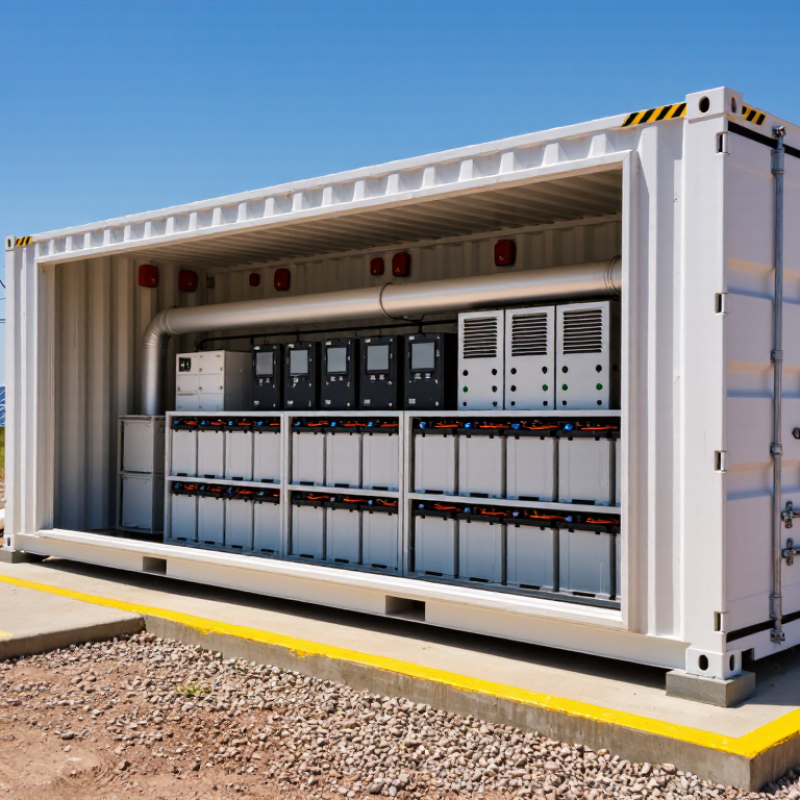
Table of Contents [Hide]
What Is a Containerized Energy Storage System?
What Is a Containerized Energy Storage System?
A containerized energy storage system places batteries, power conversion equipment, cooling, fire protection, and controls inside a modified shipping container. It stores electricity when supply is high and releases it during peak demand or outages. In field projects, technicians often inspect cable glands, ventilation paths, and temperature sensors before energizing the unit. Small installation mistakes can create large maintenance problems.
The International Energy Agency reported that global battery storage additions reached about 42 GW in 2023, more than doubling from the previous year. This growth reflects rising renewable generation and stronger demand for flexible power. Containerized designs help projects scale in blocks, reduce construction time, and move equipment between prepared sites. However, containers are not automatically plug-and-play. Grid codes, thermal management, emergency access, and site drainage still require careful engineering.
The U.S. Department of Energy identifies battery storage as a key resource for balancing variable renewable power. A typical system may include lithium-ion battery racks, bidirectional inverters, a battery management system, and remote monitoring. Performance depends on temperature, cycling frequency, and charging limits. Real-world output can differ from nameplate capacity. That detail is easy to overlook. Independent testing, documented maintenance, and compliance with standards such as NFPA 855 and IEC 62933 improve reliability, although they cannot remove every operational risk.
What Is a Containerized Energy Storage System?
| Data Dimension | Typical Data or Specification | Description |
|---|---|---|
| System definition | Factory-integrated battery storage package housed in a standard shipping container | A containerized energy storage system combines batteries, power conversion equipment, thermal management, controls, and safety equipment in a transportable enclosure. |
| Primary battery chemistry | Lithium iron phosphate (LFP) is widely used in stationary storage | LFP chemistry is commonly selected for its thermal stability, long cycle life, and reduced reliance on nickel and cobalt compared with some other lithium-ion chemistries. |
| Energy capacity | Common project sizes range from hundreds of kWh to several MWh per containerized unit | Actual capacity depends on cell energy density, usable state-of-charge window, enclosure size, cooling design, and the required operating duration. |
| Power rating | Typically specified separately in kW or MW | Power rating is determined mainly by the power conversion system. Two systems with the same MWh capacity can have different MW ratings and discharge durations. |
| Typical discharge duration | Approximately 1–4 hours for many grid-connected applications | Duration is calculated by dividing usable energy capacity by rated power, while accounting for operating limits and efficiency losses. |
| Round-trip efficiency | Commonly about 85%–95% at system level | Round-trip efficiency represents the energy discharged compared with the energy required to charge the system. It includes battery, converter, transformer, cooling, and auxiliary losses. |
| Response time | Milliseconds to seconds, depending on the control mode and grid connection | Battery systems can respond rapidly to changes in grid demand, making them suitable for frequency regulation, ramp-rate control, and backup applications. |
| Main components | Battery racks, battery management system, power conversion system, energy management system, HVAC, fire protection, and switchgear | The integrated design reduces on-site assembly work and allows the major electrical and control subsystems to be tested before delivery. |
| Container formats | Commonly based on 20-foot or 40-foot ISO-style containers | The final external dimensions, internal layout, equipment weight, and thermal design vary by project and must be checked against transport and site requirements. |
| Operating temperature | Often designed for approximately −20°C to 50°C ambient conditions, subject to the selected equipment | Heating, ventilation, and air-conditioning systems help keep cells within their specified temperature range and reduce performance degradation. |
| Expected service life | Commonly designed for approximately 10–20 years, depending on cycling and maintenance | Calendar aging, depth of discharge, temperature, charge rate, discharge rate, and operating strategy all affect degradation and usable capacity. |
| Safety and monitoring | Cell-level monitoring, thermal sensors, smoke or gas detection, emergency shutdown, and fire protection | The battery management system monitors voltage, temperature, current, and state of charge to help identify abnormal operating conditions. |
| Relevant standards | Examples include IEC 62619, IEC 62933, UL 9540, UL 9540A, and NFPA 855, where applicable | Applicable requirements depend on the country, installation type, electrical connection, fire authority, and project design. Compliance should be verified locally. |
| Grid connection | Low-voltage or medium-voltage connection through transformers and switchgear | The power conversion system converts battery direct current into alternating current and manages synchronization, voltage, and power flow. |
| Typical applications | Renewable energy shifting, peak shaving, frequency regulation, backup power, microgrids, and transmission support | The system can store electricity when supply is available and discharge it when energy, capacity, or grid-support services are needed. |
| Key advantages | Modular deployment, reduced site construction time, factory testing, scalable capacity, and relocatability | Containerization simplifies transportation and installation, although foundations, cabling, fire separation, permitting, and grid interconnection are still required. |
Note: Specifications are representative industry ranges rather than guarantees. Final values depend on the battery chemistry, system configuration, site conditions, operating profile, and local regulations.