-
PRODUCTS & SERVICESOptimized cooling solutions for modern data centersProducts & ServicesOptimized cooling solutions for modern data centers
-
CAPABILITIESAdvancing liquid cooling technologiesCapabilitiesAdvancing liquid cooling technologies
-
TechnologiesLiquid Cooling InnovationTechnologiesLiquid Cooling Innovation
-
RESOURCESLatest News & InformationResourcesLatest News & Information
-
ABOUTOur history, leadership and ownershipAboutOur history, leadership and ownership
-
CONTACTFacility locations and global operational footprint







How to Choose a Wall Mounted Battery Harness?
Choosing a Wall Mounted Battery Harness is a practical decision, not a simple shopping exercise. The harness connects stored energy to an inverter, charger, or distribution panel. Its quality affects heat control, installation safety, service access, and long-term reliability.
Dr. Gregory L. Plett, a respected battery-management researcher, describes the battery as “a dynamic system, not a static box.” That perspective matters here. A wall-mounted battery can experience vibration, temperature changes, charging surges, and repeated daily cycling. The harness must handle these conditions without strained terminals, loose connectors, or sharp bends.
Start with the battery’s voltage, continuous current, peak current, and connector type. Check the cable gauge against the real installation distance. A short cable inside a cool utility room may need different protection from a longer cable passing through a warm garage. Look closely at insulation, crimp quality, bend radius, shielding, and strain relief. Small details matter.
They often decide reliability.
A suitable Wall Mounted Battery Harness should also match the manufacturer’s approved components. Do not rely only on attractive packaging or a high current label. Some product descriptions remain vague. That is a warning sign. Ask for testing information, connector specifications, temperature ratings, and installation instructions.
The choice can still involve uncertainty. Real sites are rarely perfect. Dust collects. Cables shift. Future upgrades happen. This guide examines those overlooked conditions, helping readers compare harnesses with practical judgment rather than marketing language.
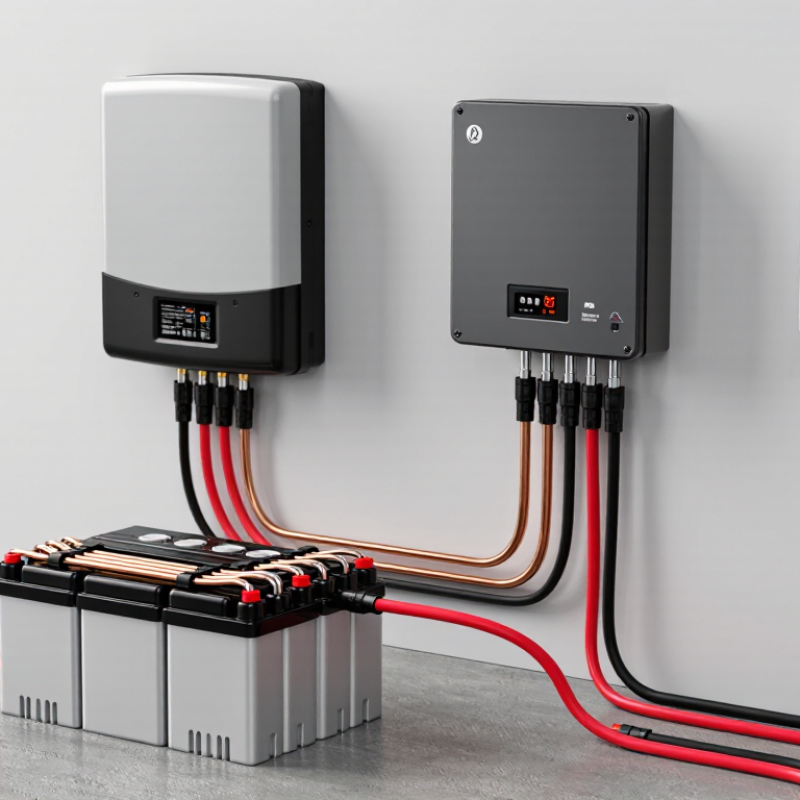
Table of Contents [Hide]
Define the Battery Harness and Its Wall-Mounted Application
A battery harness is an assembled cable system connecting battery modules with the battery management system, inverter, and protection devices. It normally includes power conductors, signal wires, terminals, insulation, connectors, fuses, and strain relief. Unlike loose cables, a harness controls routing and reduces wiring errors during installation.
Wall-mounted applications place the battery close to a wall, often inside a compact residential or commercial energy-storage system. The harness must tolerate tight bend radii, limited service space, vibration, heat, and possible moisture exposure.
Measure continuous current first, not only peak current. Then verify voltage rating, conductor size, connector locking, insulation temperature, and the required clearance from sharp metal edges. A short service loop also helps technicians replace connectors safely.
The IEA’s Batteries and Secure Energy Transitions report states that battery storage additions in the power sector exceeded 40 GW in 2023, more than doubling from the previous year. Its Global EV Outlook 2024 reports battery demand above 750 GWh in 2023, rising about 40%. These figures show why harness reliability deserves engineering attention, even in small wall-mounted systems.
Choose components tested under relevant electrical and thermal conditions, and request traceable inspection records. Neat routing is not enough. In practice, installers sometimes focus on current capacity and overlook strain relief or bend radius. That mistake can age a connector faster than expected.
A qualified technician should review the final layout before energization.