-
PRODUCTS & SERVICESOptimized cooling solutions for modern data centersProducts & ServicesOptimized cooling solutions for modern data centers
-
CAPABILITIESAdvancing liquid cooling technologiesCapabilitiesAdvancing liquid cooling technologies
-
TechnologiesLiquid Cooling InnovationTechnologiesLiquid Cooling Innovation
-
RESOURCESLatest News & InformationResourcesLatest News & Information
-
ABOUTOur history, leadership and ownershipAboutOur history, leadership and ownership
-
CONTACTFacility locations and global operational footprint







What Does RCCB Mean and How Does It Work?
Rccb Meaning refers to the purpose of a Residual Current Circuit Breaker, often called an RCCB. This protective device monitors electrical current flowing through a circuit. Under normal conditions, current leaving through the live wire should closely match current returning through the neutral wire. The RCCB compares these values continuously. If some current escapes through an unintended path, such as a damaged cable or a person, the balance changes. The device can then disconnect the circuit.
The mechanism is compact. Inside, a sensing transformer detects the difference between the live and neutral currents. If that difference reaches the device’s rated operating level, a trip mechanism opens its contacts. The supply stops. This rapid response can reduce the risk of serious electric shock and may help limit some electrical fire hazards. It cannot remove every danger, though. No device is perfect.
An RCCB generally does not provide protection against overloads or short circuits. Those faults usually require a correctly selected circuit breaker or fuse, unless protection is combined in an RCBO. That distinction matters when reading a panel label or choosing equipment. Ratings, wiring, and local installation requirements all affect safe operation. A tripping RCCB may signal leakage, a faulty appliance, or another wiring problem; repeatedly resetting it without finding the cause is unwise. A qualified electrician can test the circuit and confirm the device is suitable. The label can be confusing, and checking it carefully is worthwhile.
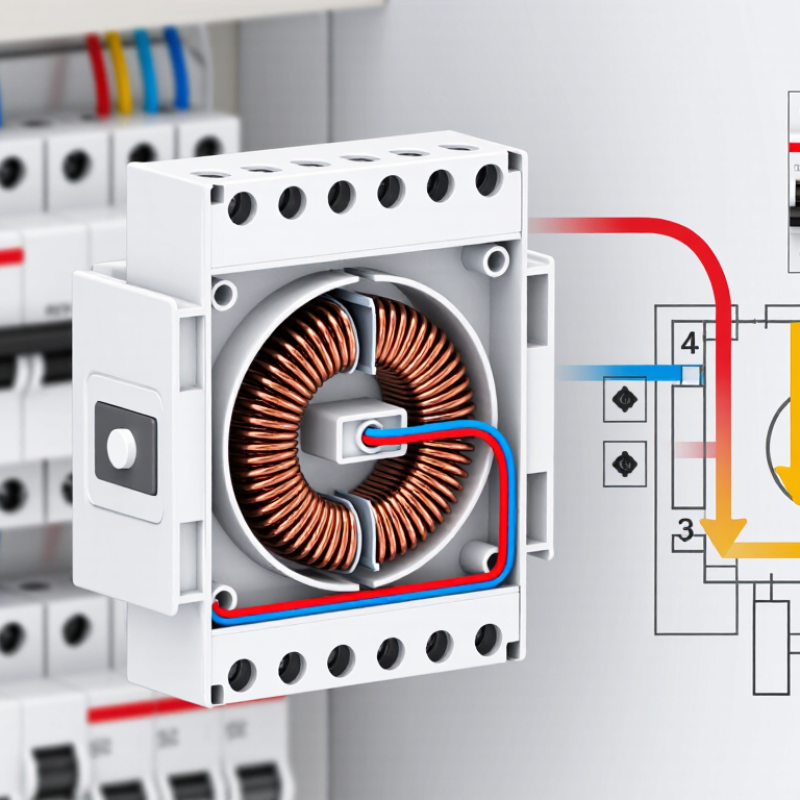
Table of Contents [Hide]
What RCCB Means and Its Role in Electrical Safety
An RCCB, or residual current circuit breaker, monitors the electricity flowing through a circuit’s live and neutral wires. Under normal conditions, those currents are nearly equal. If some current escapes—perhaps through damaged insulation or a person touching a faulty appliance—the balance changes. The RCCB detects that difference and switches off the circuit.
It acts quickly. That matters. For example, a worn kettle cord in a damp kitchen could allow current to leak toward an earthed surface. An RCCB may disconnect the supply before the fault continues, reducing the risk of severe electric shock or electrical fire. It does not make contact with live parts safe, and it cannot guarantee injury prevention.
An RCCB has an important limit: a standard unit does not usually protect against overloads or short circuits. A separate overcurrent device, or a combined protective device, may be needed for those faults. The right arrangement depends on the circuit and installation. No setup is perfect; aging cables, loose connections, and incorrect wiring can still create hazards. A test button helps check the mechanism, but it does not replace proper inspection. If an RCCB trips repeatedly, avoid resetting it again and again. Have a qualified electrician investigate the cause.