-
PRODUCTS & SERVICESOptimized cooling solutions for modern data centersProducts & ServicesOptimized cooling solutions for modern data centers
-
CAPABILITIESAdvancing liquid cooling technologiesCapabilitiesAdvancing liquid cooling technologies
-
TechnologiesLiquid Cooling InnovationTechnologiesLiquid Cooling Innovation
-
RESOURCESLatest News & InformationResourcesLatest News & Information
-
ABOUTOur history, leadership and ownershipAboutOur history, leadership and ownership
-
CONTACTFacility locations and global operational footprint







Top 10 Types of Coffee Pouches for Global Buyers?
Coffee packaging is not merely a container choice. It affects freshness, shelf appeal, shipping efficiency, and how easily customers use a product. For global buyers, the right Coffee Pouch depends on more than appearance. Roast level, whole-bean or ground format, filling equipment, and sales channel all matter. Small details matter.
This guide introduces ten common pouch types, including stand-up, flat-bottom, side-gusset, quad-seal, and single-serve formats. Each offers different benefits and trade-offs. A flat-bottom pouch may stand neatly on a retail shelf, while a compact sachet can suit sampling or travel. These are practical tendencies, not guarantees. Performance depends on material structure, closure quality, valve design, and manufacturing consistency.
Buyers should also check barrier specifications, seal strength, print quality, and compatibility with their packing line. Ask suppliers for technical data and representative samples, then test them with the actual coffee and filling process. A pouch that looks excellent in a catalogue can behave differently on a fast production line. That part is often underestimated.
There is no universal best option. Budget, transport conditions, local recycling systems, and customer expectations vary across markets. Some trade-offs remain imperfect, even after careful testing. This overview provides a grounded starting point for comparing pouch styles and asking suppliers better questions. The final choice should be based on verified requirements, not packaging trends alone.
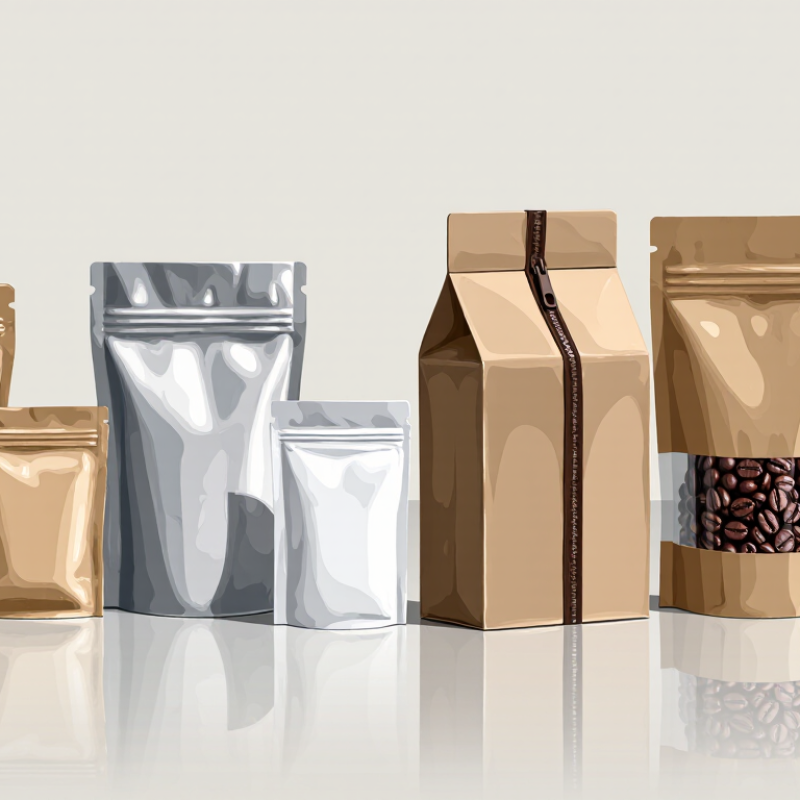
Table of Contents [Hide]
Coffee Pouch Basics: 60-kg Trade Sacks and Retail Pack Formats
Coffee packaging changes with the journey. Green beans commonly move in 60-kg trade sacks, often made from jute or woven material. The USDA Foreign Agricultural Service’s Coffee: World Markets and Trade reports production in 60-kg bags; its 2024/25 estimate was about 174.9 million bags. That unit helps buyers compare supply volumes, but it does not describe every shipment. Exporters may use liners or larger bulk containers when moisture control and handling requirements call for them. A sack is not a moisture barrier.
Retail packs serve a different job. Common formats include 250-g and 500-g side-gusset bags, flat-bottom pouches, one-kilogram packs, and small single-serve sachets. One-way valves can release gas from freshly roasted coffee while limiting air entry; foil laminates can provide a stronger barrier to oxygen and light. Buyers should check seal quality, material structure, filling equipment, and storage conditions—not just the pouch shape. The International Coffee Organization’s statistics also use 60-kg bags as a trade-volume measure, but retail weights vary by market and product. I would not assume one format fits all. A neat pouch can still fail if its seal wrinkles or its barrier is too weak.