-
PRODUCTS & SERVICESOptimized cooling solutions for modern data centersProducts & ServicesOptimized cooling solutions for modern data centers
-
CAPABILITIESAdvancing liquid cooling technologiesCapabilitiesAdvancing liquid cooling technologies
-
TechnologiesLiquid Cooling InnovationTechnologiesLiquid Cooling Innovation
-
RESOURCESLatest News & InformationResourcesLatest News & Information
-
ABOUTOur history, leadership and ownershipAboutOur history, leadership and ownership
-
CONTACTFacility locations and global operational footprint







What Are the Top 10 Safety Hand Gloves?
Choosing the right Safety Hand Gloves is not a simple matter of ranking materials or brands. A mechanic facing sharp sheet metal needs different protection from a laboratory worker handling chemicals. The wrong glove can create false confidence. That risk deserves attention.
The U.S. Bureau of Labor Statistics’ Survey of Occupational Injuries and Illnesses repeatedly places hand and wrist injuries among common workplace injury locations. OSHA’s hand protection guidance also stresses hazard assessment before selecting gloves. These findings support a practical approach. Protection should match the task, exposure, and working environment. Cut resistance, puncture resistance, grip, dexterity, heat protection, and chemical compatibility all matter. So does proper sizing.
Standards provide useful evidence. ANSI/ISEA 105 evaluates cut, puncture, and abrasion performance in North America. EN 388 reports mechanical protection through tested performance levels. Neither standard proves that one glove suits every job. Testing conditions cannot perfectly reproduce wet steel, oily tools, cold storage rooms, or repeated eight-hour shifts. Real work is messier.
This guide examines ten widely used Safety Hand Gloves categories and explains where each performs best. It considers nitrile-coated gloves, leather gloves, cut-resistant models, chemical-resistant gloves, impact gloves, heat-resistant gloves, and other practical options. The selection reflects recognized standards, manufacturer testing, and workplace experience. Still, rankings remain partly subjective. A comfortable glove that workers actually wear may outperform a stronger glove left in a locker. That detail is easy to overlook. Good protection begins with honest hazard identification, routine inspection, and replacing damaged gloves before failure becomes visible.
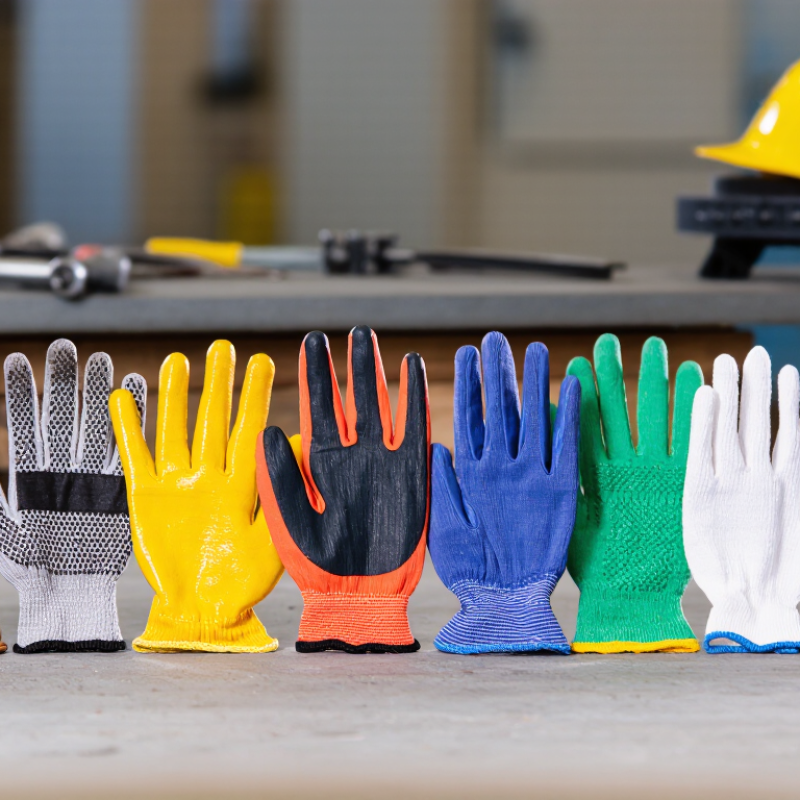
Table of Contents [Hide]
What Makes a Safety Glove Effective?
An effective safety glove matches a specific hazard, not a general idea of protection.
A thick glove may resist abrasion but reduce finger control. That can make handling small parts slower and less secure. Good selection begins with the task, material, temperature, force, and contact time. It should also consider grip when surfaces are oily, wet, dusty, or dry. Fit matters greatly. Loose cuffs can catch, while tight fingers cause early fatigue.
Look for clear performance information from reliable testing sources. Cut, puncture, abrasion, impact, chemical, and heat resistance are different properties. One rating does not prove complete protection. Check the glove’s technical data and compare it with the actual workplace risk. In practical inspections, seams, fingertips, and palm coatings often show damage first. Replace worn gloves promptly. Small tears can become serious gaps. Still, even careful selection is imperfect; workers may overlook changing conditions during a busy shift.
Tips:
Choose the glove after identifying the hazard. Check fit with natural hand movement. Test grip using the real tool, when safe. Inspect gloves before every use. Keep clean pairs available. Do not assume a thicker glove is safer. Train users to report discomfort, contamination, and visible damage. Record repeated failures, because they may reveal a poor design choice or an incomplete risk assessment. Safety improves when feedback changes the selection process.