-
PRODUCTS & SERVICESOptimized cooling solutions for modern data centersProducts & ServicesOptimized cooling solutions for modern data centers
-
CAPABILITIESAdvancing liquid cooling technologiesCapabilitiesAdvancing liquid cooling technologies
-
TechnologiesLiquid Cooling InnovationTechnologiesLiquid Cooling Innovation
-
RESOURCESLatest News & InformationResourcesLatest News & Information
-
ABOUTOur history, leadership and ownershipAboutOur history, leadership and ownership
-
CONTACTFacility locations and global operational footprint







What Are the Top 10 Types of LED Tunnel Lights?
What Are the Top 10 Types of Led Tunnel Lights?
Tunnel lighting is not simply a brighter version of highway lighting. It must guide drivers through darkness, glare, dust, water, and sudden daylight. The right Led Tunnel Light supports visibility, visual comfort, energy efficiency, and long service life. CIE 88 and PIARC tunnel guidance emphasize threshold lighting, transition zones, interior lighting, exit lighting, uniformity, and glare control. These principles shape the ten types discussed in this outline.
Energy use also matters. The International Energy Agency reports that lighting consumes roughly 15% of global electricity. Efficient tunnel systems can reduce waste through dimming, adaptive controls, and daylight-responsive operation. The U.S. Department of Energy’s solid-state lighting research also highlights higher efficacy, improved controls, and longer operating life as major LED advantages. Numbers vary by tunnel design. Real performance depends on traffic, road surface, mounting height, climate, and maintenance.
Dr. John D. Bullough, a recognized lighting researcher, expresses the central idea clearly: “Design for the visual task, not merely for brightness.” That sentence deserves attention. A powerful fixture can still create glare, dark patches, or uncomfortable transitions. This list therefore considers more than wattage. It examines tunnel entrance lights, threshold lights, transition lights, interior linear fixtures, jet-fan compatible units, emergency lights, explosion-resistant designs, dimmable systems, smart-control fixtures, and high-output exit lights. The categories overlap slightly. That is intentional, because tunnel projects rarely fit neat boxes. Performance must be tested on site, not assumed from a product brochure.
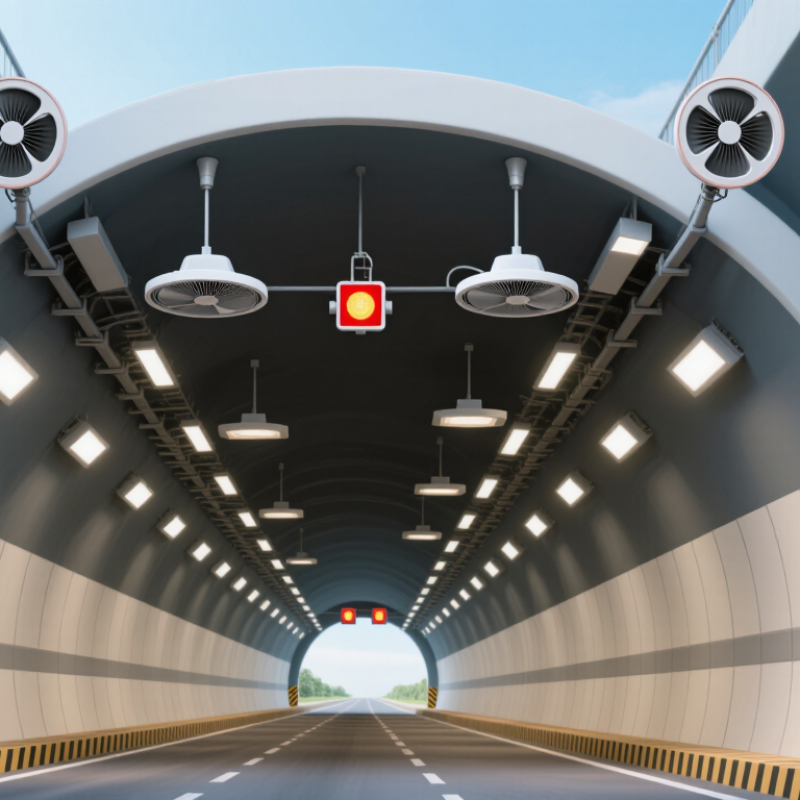
Table of Contents [Hide]
LED Tunnel Lights: Purpose, Structure, and Classification
What Are the Top 10 Types of LED Tunnel Lights?
LED Tunnel Lights: Purpose, Structure, and Classification
LED tunnel lights provide continuous visibility for drivers, workers, and maintenance teams. Their purpose changes with tunnel length, traffic speed, geometry, and emergency requirements. Visibility comes first. Common classifications include ten practical types: entrance, transition, interior, exit, jet-fan, wall-mounted, ceiling-mounted, recessed, linear, and explosion-resistant tunnel lights. Each type serves a different lighting zone or installation condition.
Entrance lights handle the sharp change between daylight and darkness. Transition lights reduce glare as drivers move deeper inside. Interior lights maintain steady brightness across the central section. Exit lights support visual adaptation near the tunnel opening. Jet-fan tunnel lights are positioned around ventilation equipment, while wall-mounted units suit narrow service areas. Ceiling-mounted fixtures distribute light evenly over traffic lanes. Recessed models create a cleaner profile and reduce collision exposure. Linear lights produce continuous illumination with fewer dark gaps. Explosion-resistant designs suit environments requiring stronger protective enclosures.
Most fixtures contain LED modules, heat sinks, optical lenses, drivers, seals, and mounting brackets. The optical system controls beam spread and limits discomfort glare. Heat management affects service life, especially beneath concrete ceilings. In real projects, dust, water spray, vibration, and cleaning chemicals can change performance. IP protection matters. Emergency circuits may use separate power supplies and controls. However, no classification fits every tunnel perfectly. A recessed fixture may look efficient, yet repairs can take longer. Field testing, photometric checks, and maintenance access should guide the final selection.