-
PRODUCTS & SERVICESOptimized cooling solutions for modern data centersProducts & ServicesOptimized cooling solutions for modern data centers
-
CAPABILITIESAdvancing liquid cooling technologiesCapabilitiesAdvancing liquid cooling technologies
-
TechnologiesLiquid Cooling InnovationTechnologiesLiquid Cooling Innovation
-
RESOURCESLatest News & InformationResourcesLatest News & Information
-
ABOUTOur history, leadership and ownershipAboutOur history, leadership and ownership
-
CONTACTFacility locations and global operational footprint




Top 10 Aluminum Scrap Melting Furnace Manufacturers
Choosing an aluminum scrap melting furnace requires more than comparing purchase prices. Scrap chemistry, furnace capacity, fuel efficiency, dross control, emissions management, and operator support affect every production shift. A furnace may look impressive on paper, yet perform poorly when fed with painted profiles, beverage cans, or mixed industrial scrap.
The International Aluminium Institute reports that recycling aluminum uses about 95% less energy than producing primary aluminum. It also states that nearly 75% of all aluminum ever produced remains in use today. These figures explain the growing demand for reliable melting equipment. They also expose a practical weakness: not every aluminum scrap melting furnace handles contamination, oxidation, and variable feedstock equally well.
Tom Dobbins, former president and chief executive officer of The Aluminum Association, has said, “Aluminum is infinitely recyclable.” That statement is powerful, but recycling is not effortless. Furnace design still determines metal recovery, melt quality, and operating costs. The best manufacturers combine thermal engineering with real plant experience. They provide accurate temperature control, efficient burners, durable linings, and responsive technical service.
This guide examines ten leading aluminum scrap melting furnace manufacturers. It considers product design, furnace types, capacity ranges, energy performance, automation, maintenance, and documented industry credibility. Some rankings remain debatable. Regional service quality can change the result. A technically advanced furnace is not automatically the right choice for every recycler. Therefore, buyers should test representative scrap before signing a major equipment contract.
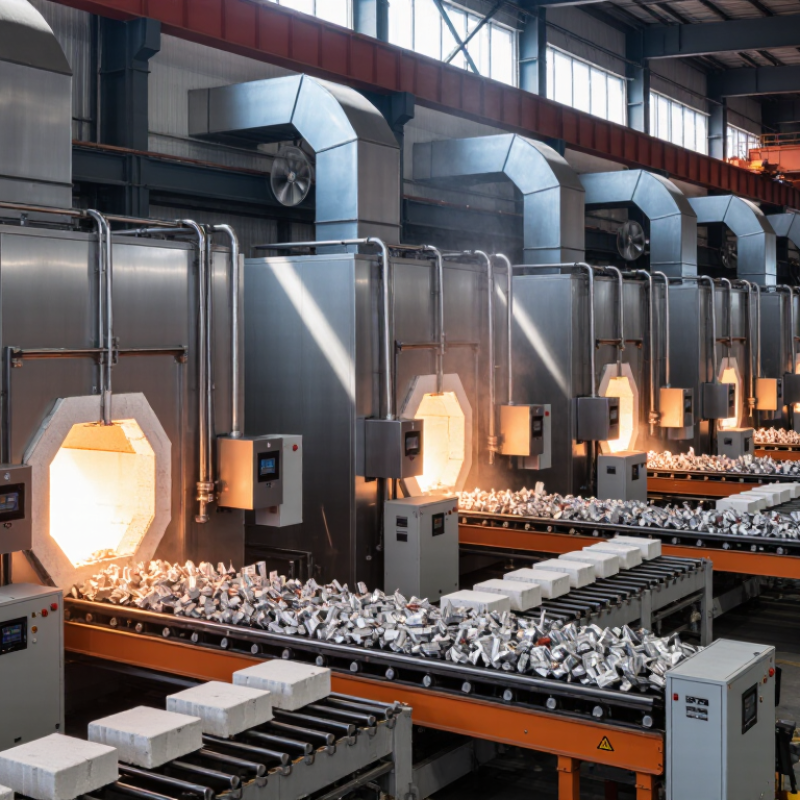
Table of Contents [Hide]
Definition and Role of Aluminum Scrap Melting Furnaces
An aluminum scrap melting furnace converts sorted scrap into reusable molten metal. It combines heat, controlled atmosphere, stirring, and temperature monitoring. The furnace also supports slag removal and alloy adjustment. These steps affect metal quality, energy use, and worker safety. According to the International Aluminium Institute, recycled aluminum requires about 5% of the energy used for primary aluminum production. That advantage makes furnace efficiency commercially important. It also explains the growing demand for reliable equipment.
In real operations, furnace design must match scrap type, charge density, contamination, and production volume. Reverberatory, rotary, and induction furnaces offer different balances between capacity, recovery rate, and operating cost. The U.S. Department of Energy’s Industrial Decarbonization Roadmap identifies secondary aluminum as an important pathway for reducing industrial energy demand. However, no furnace is universally best. A clean spreadsheet can still hide poor loading practices, excessive dross, or unstable temperature control. Experienced operators remain essential.
Tips: Check melting loss, energy consumption, filtration, refractory life, and automation before comparing manufacturers. Ask for measured operating data, not only catalogue claims. Inspect the furnace floor, charging zone, and exhaust points during a site visit. Small details matter. Scrap moisture and paint residues can change performance sharply. A lower purchase price may create higher maintenance costs later. The evaluation should include local service skills, spare-part access, and compliance with applicable environmental standards.