-
PRODUCTS & SERVICESOptimized cooling solutions for modern data centersProducts & ServicesOptimized cooling solutions for modern data centers
-
CAPABILITIESAdvancing liquid cooling technologiesCapabilitiesAdvancing liquid cooling technologies
-
TechnologiesLiquid Cooling InnovationTechnologiesLiquid Cooling Innovation
-
RESOURCESLatest News & InformationResourcesLatest News & Information
-
ABOUTOur history, leadership and ownershipAboutOur history, leadership and ownership
-
CONTACTFacility locations and global operational footprint







Top 10 Electromagnetic Wire Suppliers for Global Buyers?
Electrification is raising the stakes for buyers of Electromagnetic Wire. The International Energy Agency’s Global EV Outlook 2024 projected more than 17 million electric-car sales worldwide that year, over one-fifth of all cars sold. That forecast is not a direct measure of magnet-wire demand, but it signals expanding production of motors, generators, and electrical components that rely on dependable winding materials.
“The Age of Electricity is upon us,” said Dr. Fatih Birol, Executive Director of the IEA, in the agency’s World Energy Outlook 2024. For procurement teams, that shift makes supplier evaluation more than a price comparison. Insulation consistency, conductor quality, thermal performance, documentation, and delivery reliability all matter. A small flaw in enamel coating can become a costly problem after wire is wound into a motor and tested under load.
This guide compares ten suppliers for global buyers, focusing on product range, technical support, manufacturing reach, and evidence of quality controls. A datasheet is useful. It is not proof of consistent production. Buyers should verify specifications against their application and request relevant test records before placing large orders. No ranking can replace a factory audit or a careful review of samples. Supplier capabilities also change, so treat this list as a starting point—not a final purchasing decision.
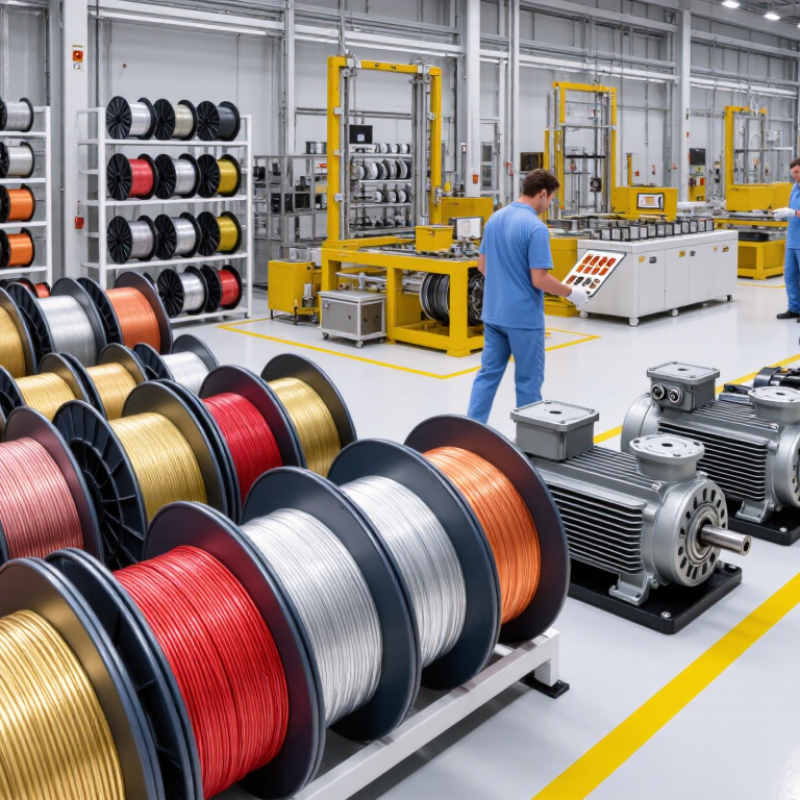
Table of Contents [Hide]
What Electromagnetic Wire Is and How It Is Used
What Electromagnetic Wire Is and How It Is Used
Electromagnetic wire, often called magnet wire, is a metal conductor covered by a thin insulating coating. Copper is widely used because it conducts electricity well and can be drawn into fine, flexible wire. Aluminum is another option, especially where lower weight matters. That thin coating matters. It allows adjacent turns of wire to sit close together without making electrical contact.
Manufacturers wind this wire into coils for motors, transformers, inductors, and solenoids. In a motor, current flowing through the windings creates a magnetic field that helps produce rotation. A transformer uses separate wire coils to transfer electrical energy between circuits. In smaller devices, tightly wound coils can support sensing, filtering, or controlled movement. The wire’s diameter, coating type, and temperature rating affect how much current and heat the finished component can handle.
Choosing wire is not only about conductivity. Equipment designers also consider winding space, operating temperature, insulation durability, and the shape of the coil. A very fine wire can fit more turns into a compact space, but it may be harder to handle and more vulnerable to damage. Heat changes everything. It is easy to overlook the coating when comparing specifications, yet that layer can influence reliability over years of use. Exact requirements depend on the application, so a datasheet should be checked before production.