-
PRODUCTS & SERVICESOptimized cooling solutions for modern data centersProducts & ServicesOptimized cooling solutions for modern data centers
-
CAPABILITIESAdvancing liquid cooling technologiesCapabilitiesAdvancing liquid cooling technologies
-
TechnologiesLiquid Cooling InnovationTechnologiesLiquid Cooling Innovation
-
RESOURCESLatest News & InformationResourcesLatest News & Information
-
ABOUTOur history, leadership and ownershipAboutOur history, leadership and ownership
-
CONTACTFacility locations and global operational footprint





Top 10 Non Aging Foam Sandwich Panels for Global Buyers
Global buyers are paying closer attention to insulation durability, energy efficiency, and total building performance. The reason is practical. The International Energy Agency’s Buildings 2023 report states that buildings consume about 30% of global final energy. It also links buildings to approximately 26% of energy-related emissions. These figures make thermal insulation more than a specification detail.
The UNEP 2023 Global Status Report for Buildings and Construction reports that the sector represented about 34% of global energy demand and 37% of energy-related emissions in 2022. Against this background, the Non-Aging Foam Sandwich Panel has gained attention in cold storage, cleanrooms, warehouses, modular buildings, and industrial roofing. However, “non-aging” should not be treated as an unlimited promise. Core density, cell structure, moisture absorption, facing quality, joint design, and installation discipline all influence long-term performance. That is an important limitation.
This guide introduces ten leading panel options for international buyers. The comparison considers insulation value, dimensional stability, fire behavior, moisture resistance, panel weight, environmental conditions, and available certifications. References to EN 14509, ISO test methods, and manufacturer technical data help create a more reliable evaluation framework. Yet laboratory results cannot fully reproduce coastal salt, repeated freeze-thaw cycles, careless fastening, or damaged sealants. Buyers should verify current test reports, factory quality controls, and project-specific compliance before ordering. The strongest panel on paper may perform poorly when its joints are neglected. That uncomfortable point deserves attention.
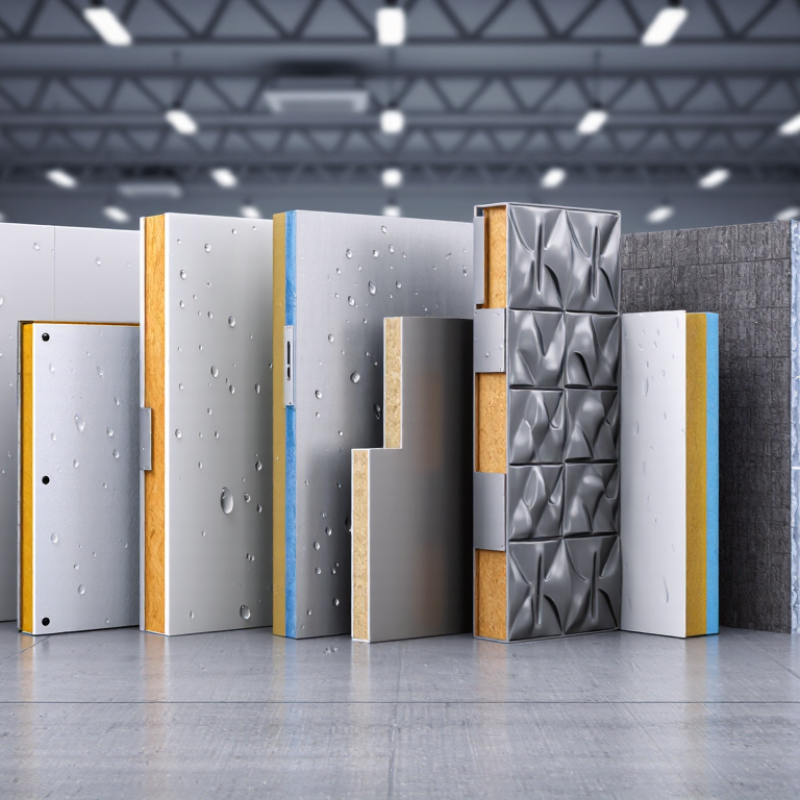
Table of Contents [Hide]
What Non-Aging Foam Sandwich Panels Are and How They Work
Top 10 Non Aging Foam Sandwich Panels for Global Buyers
Non-aging foam sandwich panels are composite building elements designed to resist long-term performance loss. They combine two rigid skins with a lightweight insulation core. The skins protect the core from impact, air, and moisture. The foam core reduces heat transfer through its small, closed cells. It also supports the skins and helps maintain panel stiffness. During installation, tight joints matter. Poorly sealed edges can weaken insulation performance, even when the panel is well manufactured.
Non-aging foam sandwich panels are composite building elements designed to resist long-term performance loss.
The term “non-aging” needs careful interpretation. No material remains unchanged forever. Sunlight, temperature cycles, water exposure, and installation errors can affect service life. Experienced buyers should request test data for thermal conductivity, water absorption, dimensional stability, bond strength, and fire behavior. Independent laboratory reports are more useful than broad marketing claims. Check the panel after cutting, too. A rough edge or crushed foam can create a hidden weakness. I have seen specifications look impressive while site handling reduced actual performance. This is an uncomfortable detail, but it matters. For global projects, also compare local climate, transport conditions, storage requirements, and building regulations before selecting a panel.