-
PRODUCTS & SERVICESOptimized cooling solutions for modern data centersProducts & ServicesOptimized cooling solutions for modern data centers
-
CAPABILITIESAdvancing liquid cooling technologiesCapabilitiesAdvancing liquid cooling technologies
-
TechnologiesLiquid Cooling InnovationTechnologiesLiquid Cooling Innovation
-
RESOURCESLatest News & InformationResourcesLatest News & Information
-
ABOUTOur history, leadership and ownershipAboutOur history, leadership and ownership
-
CONTACTFacility locations and global operational footprint







What Are the Top Refrigeration Chiller Types?
Choosing the right Refrigeration Chiller begins with the building, process, and climate. A supermarket, hospital, and plastics factory rarely need the same solution. Heat load, water availability, operating hours, noise limits, and maintenance access all influence the decision. The best chiller is not always the one with the highest efficiency rating.
Professor Armin Hafner, a respected refrigeration researcher at NTNU, emphasizes this practical principle: “A good refrigeration system must be efficient, reliable, safe, and serviceable.” That statement matters on a hot afternoon, when a cooling tower is running continuously and a failed pump can interrupt production. Air-cooled chillers usually simplify installation because they avoid condenser-water circuits. Water-cooled chillers can deliver strong efficiency, especially in large facilities with stable water treatment. Evaporative systems may perform well in suitable dry climates. Absorption chillers can use recovered heat, although their controls and maintenance demands may be underestimated.
The compressor also changes the equipment’s behavior. Scroll chillers suit smaller loads and modular applications. Screw chillers provide flexible capacity control for commercial and industrial sites. Centrifugal chillers often serve large buildings with steady cooling demand. These categories overlap.
Real projects are messier.
A chiller selected from a catalogue may perform poorly after installation. Fouled tubes, oversized pumps, weak airflow, or incorrect setpoints can erase expected savings. Engineers should compare full-load and part-load performance, refrigerant requirements, service support, sound levels, and lifecycle cost. This guide examines the top Refrigeration Chiller types and explains where each design works best. It also questions a common assumption: maximum efficiency on paper does not guarantee the lowest cost in practice.
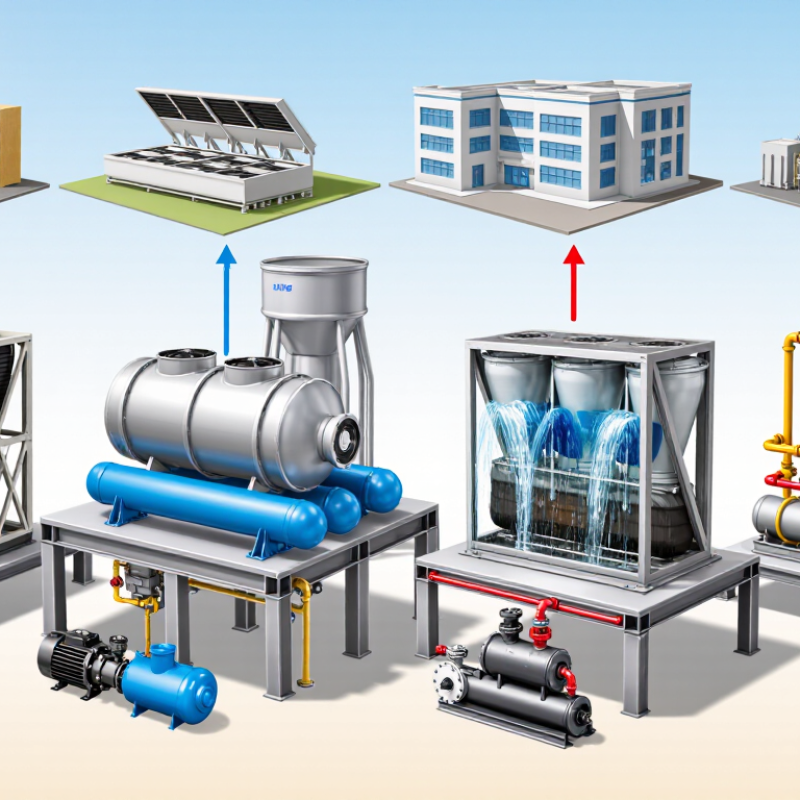
Table of Contents [Hide]
Chiller Basics: Purpose, Main Components, and Operating Principles
What Are the Top Refrigeration Chiller Types?
A chiller removes heat from water or another circulating fluid. That cooled fluid serves air-handling units, process equipment, or data rooms. The basic circuit includes a compressor, condenser, expansion device, and evaporator. Pumps move water through the system. Controls adjust capacity as cooling demand changes. The International Energy Agency reports that global space-cooling energy demand has more than tripled since 1990 (IEA, The Future of Cooling, 2018). Efficiency now matters beyond comfort.
Air-cooled chillers reject heat through outdoor coils and fans. They need less water and simpler maintenance. Water-cooled chillers use a cooling tower, condenser pump, and water treatment system. They often achieve better efficiency, especially in large facilities. Absorption chillers use heat instead of mainly electric compression. Their performance depends on available steam, hot water, or recovered heat. The U.S. Department of Energy identifies cooling as a major energy load in commercial buildings, making equipment selection a serious operating decision.
The operating sequence is straightforward. The evaporator absorbs heat, and the compressor raises refrigerant pressure. The condenser then releases heat outdoors or into condenser water. Finally, the expansion device lowers pressure before the cycle repeats. Real buildings are less tidy. Dirty coils, unstable flow, and incorrect sensors can erase expected savings. A 1°C water-temperature change can affect control stability and comfort. Engineers should compare full-load and part-load performance using AHRI-certified rating data, not brochure claims alone (AHRI Standard 550/590).