Top Server Cooling Solutions for Optimal Performance and Efficiency?
In today’s data-driven world, efficient server cooling solutions play a critical role in ensuring optimal performance. As servers become more powerful, they generate significant heat. Effective cooling is essential for maintaining hardware longevity and reliability. Without proper cooling, server failures can lead to costly downtime and data loss.
There are various server cooling solutions available, each offering unique benefits and potential drawbacks. From traditional air conditioning to innovative liquid cooling options, the choice can be overwhelming. Selecting the right method requires understanding specific needs and infrastructure limitations. Data centers must carefully assess their cooling needs to achieve efficiency.
However, many organizations overlook the importance of a well-established cooling strategy. They might implement a basic cooling system without considering future scalability. This oversight can hinder growth and increase operational costs in the long run. It is crucial to invest time in evaluating and optimizing your server cooling solutions. Prioritizing this aspect can lead to enhanced performance and reduced energy consumption.
Understanding the Importance of Server Cooling for Performance
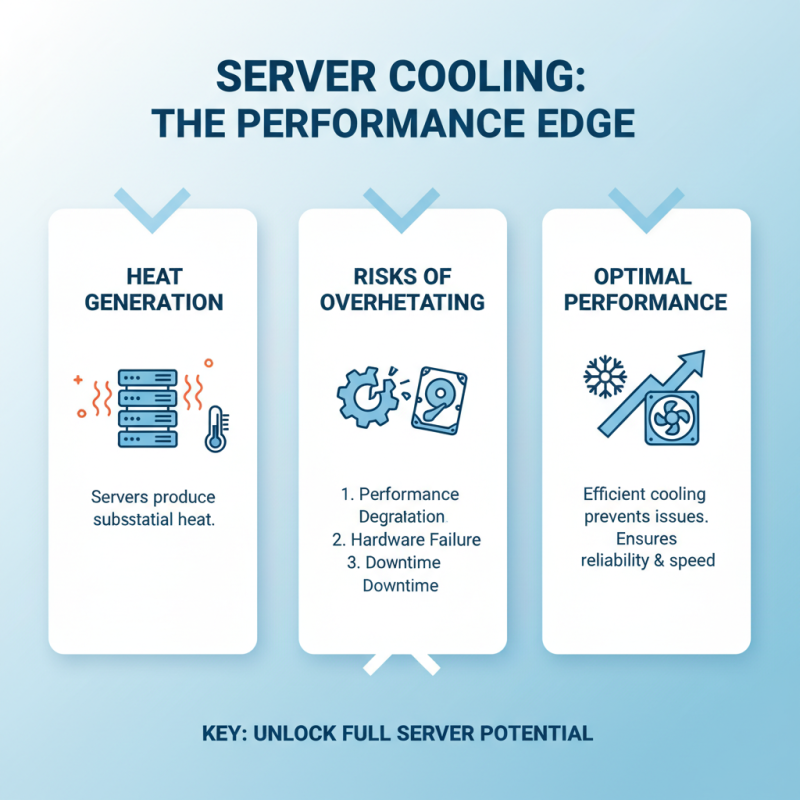
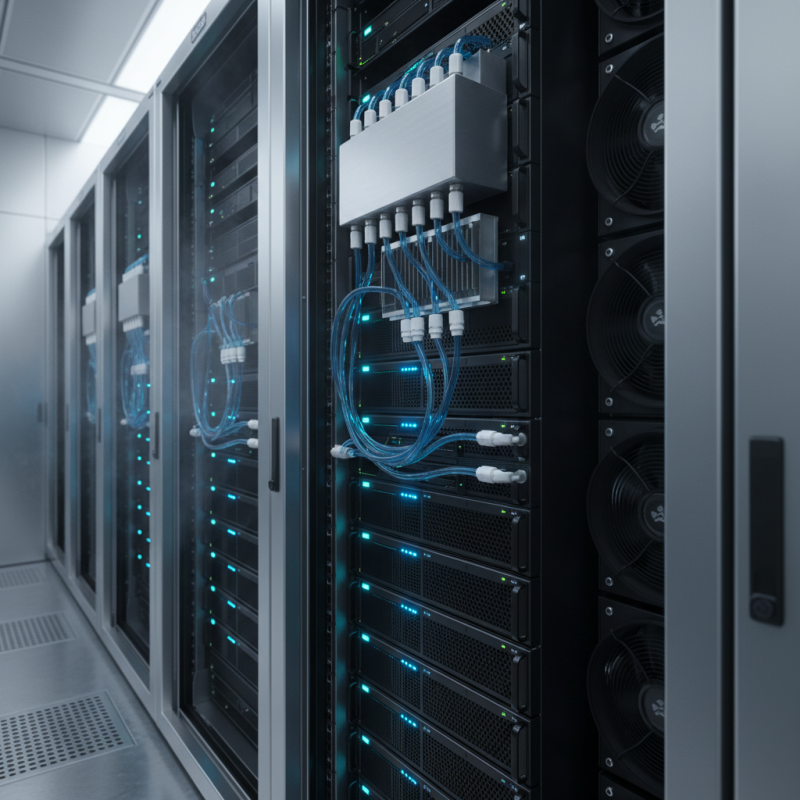
Server cooling is crucial for maintaining optimal performance. Servers generate a significant amount of heat. Without effective cooling solutions, performance can degrade. High temperatures can lead to hardware failures and downtime. Therefore, understanding server cooling is vital.
Implementing efficient cooling strategies can enhance server lifespan. One important tip is to invest in airflow management. Clear pathways for cool air to flow reduce hotspots. Regularly cleaning air filters and ensuring vents are unobstructed is essential.
Another approach is to monitor temperature levels consistently. Use thermal sensors to track changes. This data helps to adjust cooling processes as needed. Remember, relying solely on one cooling method may not be sufficient. Exploring combinations of different cooling techniques can yield better results. Emphasizing reliability and efficiency in cooling systems will ultimately contribute to a more stable server environment.
Types of Server Cooling Solutions: Liquid vs. Air Cooling
When considering server cooling solutions, two prominent types emerge: liquid cooling and air cooling. Each has unique benefits and challenges. Liquid cooling is increasingly favored for dense server environments. According to industry reports, it can be up to 50% more efficient than traditional air systems. This efficiency often correlates with reduced energy costs and increased performance stability.
Air cooling remains the more common choice, primarily due to its simplicity and lower initial costs. However, it struggles in high-density situations. Data from the American Society of Heating, Refrigerating and Air-Conditioning Engineers show that air cooling can lead to hotspots in server racks. This inconsistency poses risks, particularly in critical applications.
It is crucial to reflect on the specific needs of your environment. While liquid cooling might seem optimal for some, it introduces complexity and potential maintenance challenges. In contrast, air cooling may not suffice in high-performance scenarios. The right choice hinges on a careful assessment of requirements, costs, and the potential for future scaling.
Innovative Technologies in Server Cooling Systems
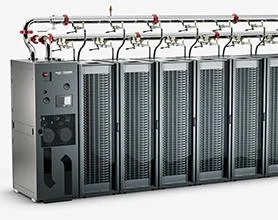
Innovative technologies are reshaping server cooling systems, boosting performance and efficiency. Liquid cooling systems have become increasingly popular. They are efficient in transferring heat away from computer components. This method greatly reduces energy consumption compared to traditional air cooling.
Another advanced solution is the use of immersion cooling. In this method, servers are submerged in a thermally conductive liquid. This not only enhances cooling efficiency but also minimizes noise and footprint. Many data centers are starting to explore this technology for sustainable operations.
Tips: Regular monitoring of temperature is crucial. Ensure all systems operate within optimal ranges. Implementing predictive maintenance can prevent overheating. Also, consider airflow management. Proper airflow is essential for any cooling strategy. This can prevent hot spots and maintain uniform temperatures across server racks.
Top Server Cooling Solutions for Optimal Performance and Efficiency
| Cooling Solution |
Cooling Method |
Efficiency Rating |
Temperature Range (°C) |
Cost ($) |
| Air Cooling |
Forced Air |
85% |
10 - 35 |
500 |
| Liquid Cooling |
Direct to Chip |
95% |
5 - 40 |
1500 |
| Immersion Cooling |
Submerged |
98% |
5 - 50 |
3000 |
| Peltier Cooling |
Thermoelectric |
80% |
-20 - 60 |
2000 |
| Evaporative Cooling |
Wet Bulb Effect |
90% |
15 - 35 |
800 |
Best Practices for Implementing Effective Cooling Solutions
Effective cooling solutions are crucial for server performance and efficiency. Implementing proper airflow management can significantly reduce heat accumulation. Start by positioning servers in a hot aisle/cold aisle configuration. This setup helps maintain optimal temperature. Monitor airflow with proper ducting. Use temperature sensors to identify hotspots.
Regular maintenance is essential. Dust and debris can clog filters and impede airflow. Schedule routine cleanings. Reviewing server load can also help. Too many tasks might lead to overheating. Consider gradually redistributing workloads. Ensure that redundancy is built into your cooling system. A failure in one part can lead to catastrophic failures elsewhere.
Energy efficiency should be a priority. Opt for cooling solutions that reduce energy consumption. Incorporating free cooling techniques can lower costs. Reflecting on the environment can offer insights. Assess and adapt your cooling strategies based on server operating conditions. Continuous evaluation can pinpoint areas for improvement.
Top Server Cooling Solutions for Optimal Performance and Efficiency
This chart illustrates the effectiveness of various server cooling solutions measured by their cooling efficiency (in BTU/hr) and energy consumption (in kWh/month). The data reflects industry standards for optimal performance.
Evaluating Cost-Effectiveness and Sustainability of Cooling Options
When evaluating server cooling solutions, cost-effectiveness and sustainability are crucial. According to a report by the U.S. Department of Energy, cooling can account for up to 40% of total data center energy consumption. This highlights the need for efficient cooling strategies. Traditional air cooling systems often rely heavily on electricity, leading to high operational costs.
Liquid cooling has emerged as an alternative, showing promise for both performance and energy efficiency. Research suggests that liquid cooling systems can reduce energy usage by 30-40% compared to conventional air systems. However, the initial investment for liquid cooling infrastructure can be significant. Data centers must weigh these upfront costs against long-term savings.
Sustainability is also a pressing concern. Options utilizing renewable energy can minimize carbon footprints. However, the availability and cost of renewable resources can vary greatly. Many facilities struggle to find a balance between immediate financial requirements and long-term environmental impacts. The choice of cooling solution encompasses not only current energy prices but also future regulations on emissions and sustainability practices.