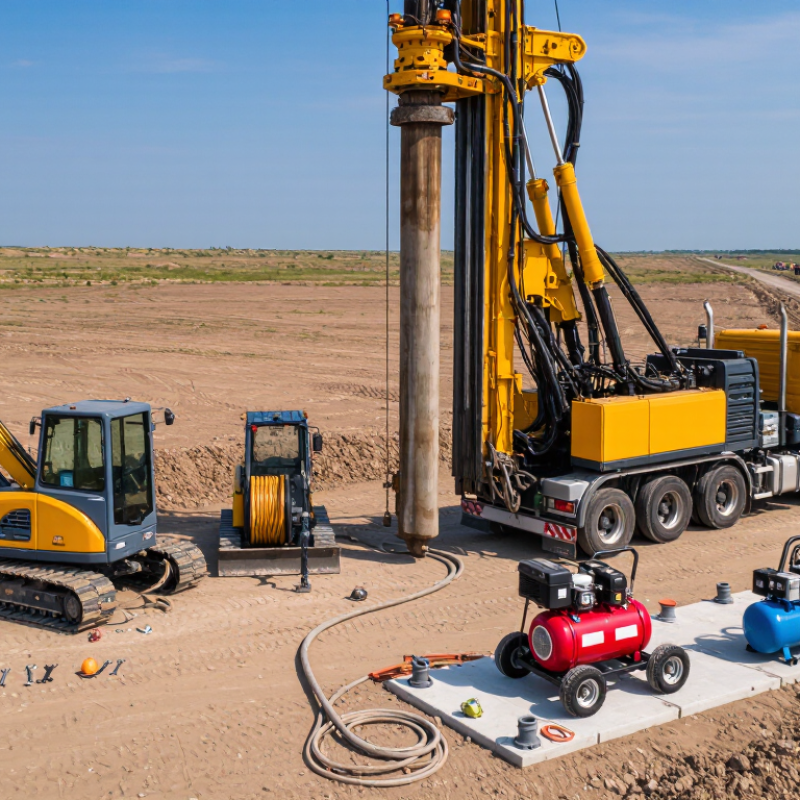
| Truck-Mounted Rotary Drilling Rig | Drills water wells, geotechnical holes, and utility boreholes using rotary or down-the-hole tooling. | Rotary mud, air rotary, or down-the-hole hammer | Approx. 100–500 m depth Typical hole diameter: 100–450 mm | Soft formations, weathered rock, sand, clay, and medium-hard rock when fitted with suitable tooling | Air compressor, mud pump, drill pipe, water tank, lifting equipment, and support vehicle | Check transport regulations, mast height, gross vehicle weight, torque, pullback capacity, compressor compatibility, and local service access. |
| Crawler-Mounted Rotary Rig | Provides mobile drilling capability on uneven or remote terrain where road access is limited. | Rotary mud, air rotary, reverse circulation, or down-the-hole hammer | Approx. 100–800 m depth Typical hole diameter: 100–600 mm | Rugged terrain, mixed overburden, fractured rock, and construction or exploration sites | Compressor, mud system, drill rods, casing, crawler transport support, and auxiliary power | Evaluate crawler width, ground pressure, gradeability, mast reach, component protection, fuel consumption, and spare-parts availability. |
| Trailer-Mounted Water-Well Rig | Offers a lower-cost mobile solution for agricultural, domestic, and small community water wells. | Rotary mud, air rotary, or cable-tool drilling | Approx. 50–300 m depth Typical hole diameter: 100–350 mm | Alluvial deposits, clay, sand, weathered formations, and moderately consolidated ground | Towing vehicle, mud pump, compressor, water tank, drill pipe, casing, and leveling jacks | Confirm towing capacity, setup time, stabilization requirements, available hydraulic power, and the practicality of moving the rig between sites. |
| Top-Drive Down-the-Hole Hammer Rig | Creates efficient boreholes in hard rock by combining rotary thrust with percussive impact at the bit. | Down-the-hole air hammer | Approx. 100–600 m depth Typical hole diameter: 100–350 mm | Hard rock, competent formations, fractured rock, and formations requiring straight holes | High-pressure compressor, DTH hammer, bits, drill pipe, dust collector, and water injection system | Compare compressor pressure and flow, hammer compatibility, bit life, dust control, fuel use, and expected penetration rate. |
| Rotary Mud Drilling Rig | Uses circulating drilling fluid to stabilize the borehole, remove cuttings, and cool the bit. | Direct rotary with drilling-fluid circulation | Approx. 100–700 m depth Typical hole diameter: 150–600 mm | Loose sand, gravel, clay, unconsolidated alluvium, and formations prone to collapse | Mud pump, mixing tank, shale shaker or settling pits, bentonite, polymer, drill pipe, and casing | Review pump output, fluid-handling capacity, circulation controls, environmental requirements, water availability, and cuttings disposal procedures. |
| Reverse-Circulation Drilling Rig | Improves cuttings transport and sample recovery in large-diameter water-well and mineral exploration work. | Reverse circulation using air, water, or a combined air-lift system | Approx. 100–1,000 m depth Typical hole diameter: 300–1,200 mm | Large-diameter unconsolidated formations, alluvial deposits, and selected hard-rock applications | Large-diameter drill pipe, air compressor, circulation tank, cyclone or cuttings collector, booster pump, and casing | Check air volume, pipe diameter, sample handling, water demand, borehole stability, transport logistics, and crew training requirements. |
| Cable-Tool Percussion Rig | Breaks and lifts formation material through repeated impact, making it suitable for basic water-well construction. | Rope-tool percussion drilling | Approx. 30–300 m depth Typical hole diameter: 100–600 mm | Clay, gravel, sand, weathered rock, and formations where low fluid use is preferred | Drill cable, bailer, casing, winch, tripod or mast, hoist, and casing-driving tools | Assess drilling speed, lifting capacity, cable durability, casing requirements, operator skill, and suitability for hard or fractured rock. |
| Geothermal and Large-Diameter Rotary Rig | Constructs deeper or larger boreholes for geothermal loops, groundwater production, industrial wells, and foundation work. | Rotary mud, air rotary, DTH, or dual-rotary drilling | Approx. 200–2,000 m depth Typical hole diameter: 200–1,000+ mm | Overburden, hard rock, fractured formations, and mixed ground requiring heavy casing programs | High-capacity mud pump, compressor, casing system, drill pipe, crane or pipe handler, power pack, and fluid recycling system | Focus on torque, pullback, mast capacity, continuous circulation, casing diameter, power demand, site footprint, and regulatory compliance. |
| Drill Pipes and Rods | Transfers rotary torque, thrust, impact energy, and drilling fluid between the rig and the bit. | Used with rotary, mud, air, DTH, and reverse-circulation systems | Common lengths: 1.5–6 m Diameter selected by rig and hole size | Selection depends on formation hardness, drilling method, depth, and fluid pressure | Rod handler, thread compound, lifting subs, breakout wrench, pipe rack, and thread protectors | Verify thread type, outside diameter, wall thickness, tensile capacity, torsional strength, straightness, wear allowance, and connection compatibility. |
| Drill Bits and Reamers | Cut, crush, or abrade the formation and maintain the required borehole diameter. | Tricone, PDC, drag, roller-cone, DTH, button, or reaming tools | Selected by hole diameter Bit size must match formation and rig capacity | Different designs are matched to soft soil, abrasive sand, gravel, limestone, and hard rock | Bit breakers, subs, stabilizers, lubricants, water or mud circulation, and measurement tools | Compare cutting structure, gauge protection, bearing design, carbide quality, expected footage, replacement cost, and local reconditioning options. |
| Air Compressor and Booster | Supplies compressed air for DTH drilling, cuttings removal, foam injection, and air-lift pumping. | Compressed-air drilling and air-lift circulation | Typical pressure: 7–35 bar Flow selected by hole size and depth | Most effective in stable formations, fractured rock, and applications requiring rapid cuttings removal | Air hose, receiver, booster, lubricator, moisture separator, dust collector, and safety valves | Match pressure and cubic-metre-per-minute output to the hammer, depth, altitude, pipe size, fuel quality, and noise or emissions limits. |
| Mud Pump and Drilling-Fluid System | Circulates drilling fluid to cool the bit, transport cuttings, and support unstable borehole walls. | Direct rotary and selected reverse-circulation applications | Flow commonly varies from tens to hundreds of L/min Pressure depends on depth and circulation design | Loose, unconsolidated, water-bearing, or unstable formations | Mud tank, mixing hopper, agitator, hoses, valves, settling tank, screen, bentonite, and polymers | Check flow rate, pressure, solids handling, diaphragm or piston design, liner availability, fluid compatibility, and cleaning requirements. |
| Casing, Casing Advancer, and Casing Oscillator | Supports unstable formations, isolates water-bearing zones, and maintains borehole integrity during construction. | Rotary casing, driven casing, eccentric overburden drilling, or simultaneous drilling and casing | Diameter selected for final well design Depth limited by ground and equipment capacity | Collapsible overburden, loose gravel, running sand, fractured rock, and mixed formations | Casing shoes, casing clamps, hydraulic power unit, centralizers, welders, lifting tools, and casing lubricant | Confirm casing material, wall thickness, connection type, corrosion resistance, advancement force, retrieval method, and local well standards. |
| Well-Development and Testing Equipment | Removes fine sediment and verifies well yield, drawdown, recovery, and water quality after drilling. | Air-lift development, surging, bailing, pumping, and step-drawdown testing | Pump capacity matched to well yield Testing duration set by project requirements | Completed water wells requiring reliable production and quality assessment | Submersible test pump, air compressor, flow meter, pressure gauge, water-level meter, generator, and discharge pipe | Evaluate pump diameter, maximum head, cable length, flow measurement accuracy, discharge management, and electrical protection. |
| Power Pack, Generator, and Hydraulic System | Provides mechanical, electrical, and hydraulic power for drilling, pumping, handling, and auxiliary functions. | Supports diesel-hydraulic, electric-hydraulic, and hybrid drilling systems | Capacity depends on rig and auxiliary load Voltage and frequency must match site requirements | Remote sites, construction areas, agricultural projects, and grid-connected or off-grid operations | Fuel tank, hydraulic hoses, control panel, transformer, cables, filtration system, and emergency shutdown system | Check rated power, altitude derating, fuel consumption, emissions rules, electrical safety, hydraulic cleanliness, and access to filters and service parts. |