-
PRODUCTS & SERVICESOptimized cooling solutions for modern data centersProducts & ServicesOptimized cooling solutions for modern data centers
-
CAPABILITIESAdvancing liquid cooling technologiesCapabilitiesAdvancing liquid cooling technologies
-
TechnologiesLiquid Cooling InnovationTechnologiesLiquid Cooling Innovation
-
RESOURCESLatest News & InformationResourcesLatest News & Information
-
ABOUTOur history, leadership and ownershipAboutOur history, leadership and ownership
-
CONTACTFacility locations and global operational footprint




Top Types of Sheet Metal Die Cutting Machines
Choosing the right equipment for sheet metal cutting starts with understanding the job. A Sheet Metal Die Cutting Machine uses a punch and die to cut or shape stock with repeatable force. The result can be a clean opening, a formed edge, or a blank ready for the next operation. Material thickness, part geometry, production volume, and required tolerances all affect which machine makes sense. A setup that works well for thin aluminum may struggle with thicker steel.
Different machine types suit different conditions. Mechanical presses deliver fast, consistent strokes for high-volume work. Hydraulic presses offer adjustable force and control, which can help with thicker materials or varied forming tasks. Servo-driven models provide programmable motion and may reduce wasted movement. Pneumatic systems can suit lighter-duty applications, while turret punch presses handle many hole shapes with interchangeable tooling. Each option has trade-offs. Speed alone does not tell the full story.
This guide compares common machine types, their operating principles, and practical uses. It also considers factors such as tooling changes, floor space, maintenance, and operator skill. A small shop may value flexibility more than maximum output. A busy production line may need stable cycle times and reliable part handling. Details matter. Even a suitable machine can produce poor results when its die is worn or misaligned. Buyers should verify specifications and test representative material before committing. That step takes time, but skipping it can be costly. There is no perfect choice for every shop. The right one depends on the parts, process, and constraints at hand.
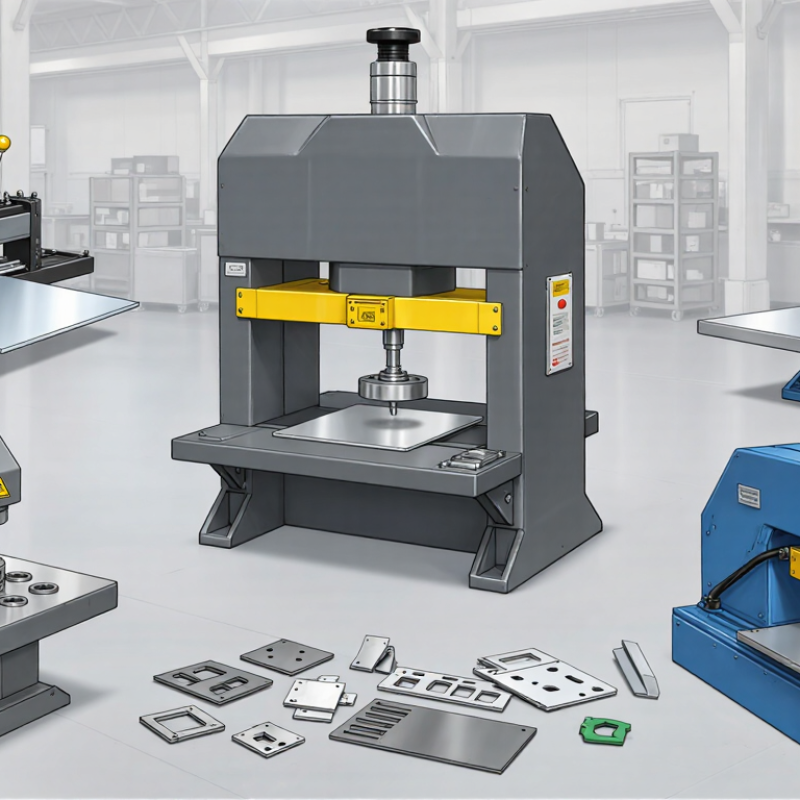
Table of Contents [Hide]
Mechanical Sheet Metal Die Cutting Machines
Mechanical Sheet Metal Die Cutting Machines
Mechanical sheet metal die cutting machines convert motor power into repeated ram movement through a flywheel and crank mechanism. The ram follows a fixed stroke, making these presses useful for repeatable punching, blanking, and forming operations. On a production floor, their steady rhythm can help maintain consistent output across large batches.
Their speed is useful, but it is not the whole story. Die design, material thickness, and required force all affect cut quality. A poorly matched setup may leave burrs, distort thin stock, or wear tooling faster than expected. Mechanical presses also have a fixed stroke, so they may offer less flexibility than some other press types. The trade-off is easy to overlook. Check the machine’s rated capacity at the point where the die performs its work, not only its maximum tonnage.
Tips: Match the press to the material and die, then verify alignment with test pieces before a full run. Inspect tooling and listen for unusual noise during operation. Small changes in sound or cut edges can be early warning signs. Maintenance schedules help, though real production conditions are rarely perfect.