-
PRODUCTS & SERVICESOptimized cooling solutions for modern data centersProducts & ServicesOptimized cooling solutions for modern data centers
-
CAPABILITIESAdvancing liquid cooling technologiesCapabilitiesAdvancing liquid cooling technologies
-
TechnologiesLiquid Cooling InnovationTechnologiesLiquid Cooling Innovation
-
RESOURCESLatest News & InformationResourcesLatest News & Information
-
ABOUTOur history, leadership and ownershipAboutOur history, leadership and ownership
-
CONTACTFacility locations and global operational footprint




What Is Vacuum Welding and How Does It Work?
Vacuum Welding is a controlled joining process performed inside a sealed chamber. Air and moisture are removed before the materials meet. This creates a cleaner working environment. It also reduces oxidation during heating.
The process usually combines heat, pressure, or a focused energy beam. Electron beam welding is a familiar example. Its narrow beam can melt metal precisely, even around delicate components. In other systems, heated surfaces contact under pressure and form a solid-state bond. The chamber may resemble a large steel vessel, with pumps humming while gauges track falling pressure.
“Clean surfaces and stable energy make the joint trustworthy,” explains Dr. Elena Marquez, a vacuum-welding process engineer. Her observation captures the central principle. Contamination can weaken the joint. Poor pressure control can distort the result. Unchecked heat may create residual stress.
A simple definition can mislead.
Vacuum Welding is not automatically perfect. Operators must select compatible materials, chamber pressure, temperature, and cooling rates. They also inspect weld depth, porosity, alignment, and surface condition. Aerospace parts, medical instruments, research hardware, and high-performance electronics may benefit from this precision. However, equipment costs remain high, and large components can create practical challenges.
This guide examines what Vacuum Welding means, how the equipment works, and why process control matters. It also considers common limitations. Real production rarely follows a flawless diagram. Small leaks, trapped gases, or inaccurate settings can change the outcome. Understanding those imperfections helps engineers make safer and more reliable decisions.
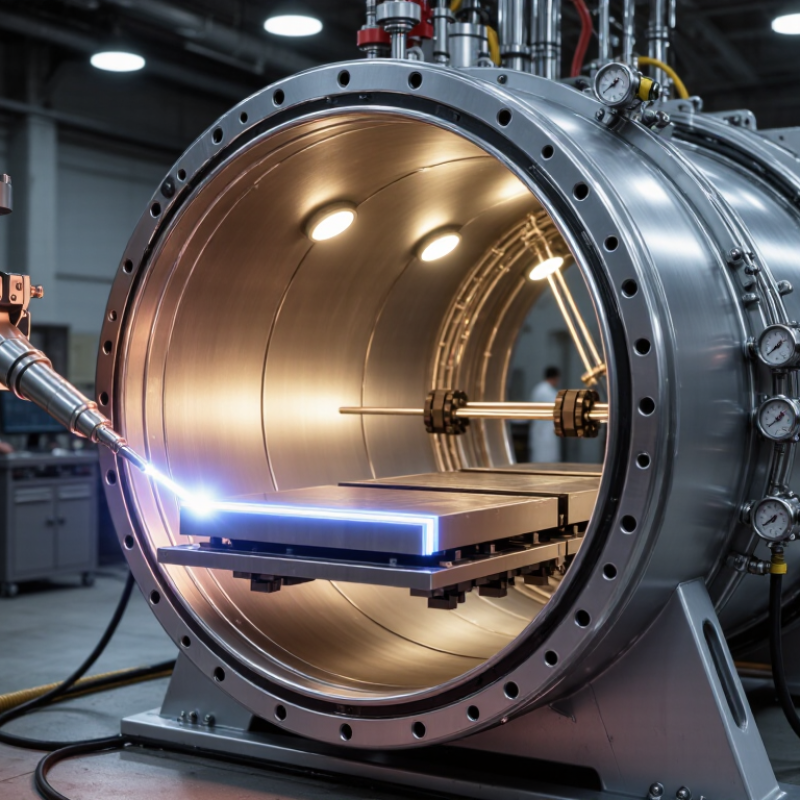
Table of Contents [Hide]
What Is Vacuum Welding and Why Is It Used?
Vacuum welding joins materials inside a controlled chamber with very little air. The process may use heat and pressure, or a compatible filler metal. Diffusion bonding usually joins clean surfaces without melting them. Vacuum brazing uses molten filler metal to flow into narrow gaps.
Why use it? The vacuum removes oxygen, moisture, and surface contamination. This greatly reduces oxidation during heating. The result can be a clean joint with limited distortion and strong metallurgical contact. This matters when parts must keep precise dimensions. It also helps protect reactive materials, including titanium and certain high-temperature alloys.
Manufacturers use vacuum welding for heat exchangers, medical components, aerospace structures, and semiconductor equipment. Complex assemblies can often be joined without exposing them to open flames or atmospheric contamination. Controlled temperature cycles also improve repeatability between production batches.
It is not magic.
The surfaces must fit closely and remain clean. Poor preparation can create weak areas, trapped gas, or incomplete bonding. The equipment also requires substantial investment, careful temperature control, and qualified inspection. A vacuum chamber may reduce oxidation, but it cannot correct unsuitable materials or poor joint design. In practice, engineers should test the joint under expected heat, pressure, vibration, and corrosion conditions. I would not treat a shiny weld as proof of reliability; internal defects may remain invisible without appropriate testing.