-
PRODUCTS & SERVICESOptimized cooling solutions for modern data centersProducts & ServicesOptimized cooling solutions for modern data centers
-
CAPABILITIESAdvancing liquid cooling technologiesCapabilitiesAdvancing liquid cooling technologies
-
TechnologiesLiquid Cooling InnovationTechnologiesLiquid Cooling Innovation
-
RESOURCESLatest News & InformationResourcesLatest News & Information
-
ABOUTOur history, leadership and ownershipAboutOur history, leadership and ownership
-
CONTACTFacility locations and global operational footprint







What Are the Top 10 Elevated Flooring Options?
Elevated Flooring solves practical problems where ordinary floors cannot. It creates a controlled gap beneath the walking surface. That space can conceal cables, drainage lines, insulation, or uneven substrates. In commercial rooms, raised access panels support regular maintenance. Outdoors, adjustable pedestals can improve drainage beneath porcelain pavers. The right system depends on load, moisture, height, climate, and future access.
This guide examines the top 10 elevated flooring options used across offices, rooftops, balconies, patios, and industrial areas. It considers raised access floors, sleeper systems, pedestal pavers, rooftop decks, interlocking tiles, and other proven solutions. Each option has a different installation method and performance profile. Some offer quick access. Others provide stronger support or better weather resistance. Small details matter, including panel thickness, pedestal spacing, edge restraints, and surface movement.
Experience shows that attractive flooring can still fail when the subfloor remains wet or unstable. Professional specifications must therefore include drainage, ventilation, fire performance, and expected traffic. Manufacturer instructions and local building requirements should always guide final decisions. No option works everywhere. That is important.
The comparisons focus on practical value rather than appearance alone. They explain where each system performs well, where it may become expensive, and what maintenance can involve. Even careful recommendations have limits, especially when site conditions are unknown. A site inspection remains wiser than a confident guess. With that caution, this overview can help readers choose a durable, accessible, and suitable elevated surface.
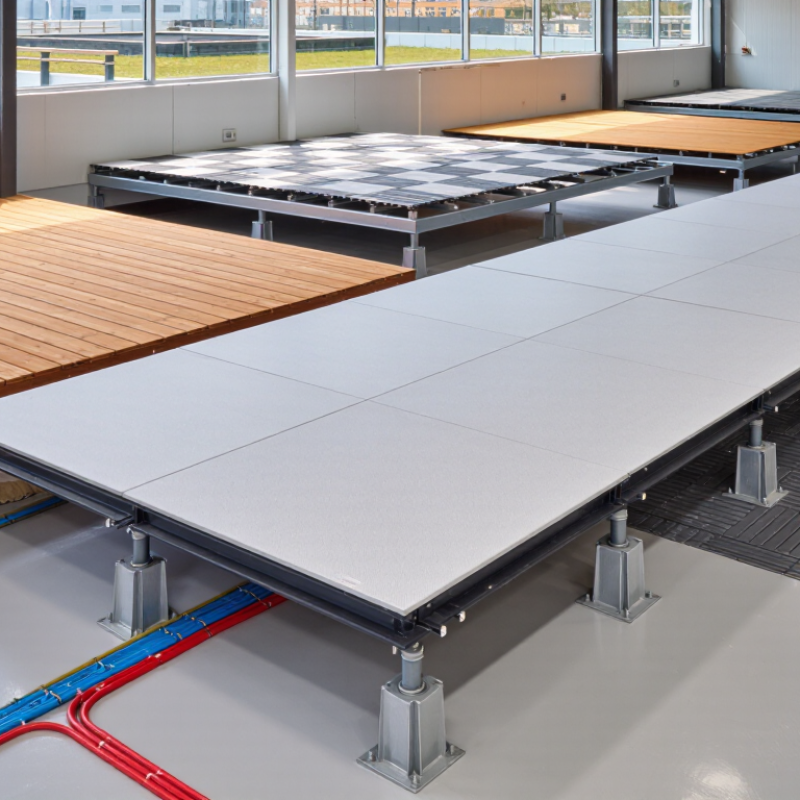
Table of Contents [Hide]
Define Elevated Flooring: 10 Systems Across 50–2,000 mm Access Heights
What Are the Top 10 Elevated Flooring Options?
Define Elevated Flooring: 10 Systems Across 50–2,000 mm Access Heights
Elevated flooring creates a service void between the structural slab and finished surface. Access height usually determines airflow, cable capacity, drainage, and maintenance access. At 50–100 mm, low-profile access panels suit shallow power and data routes. Calcium sulfate panels on adjustable pedestals typically cover 100–200 mm. Stringerless pedestal floors work around 100–300 mm. Bolted stringer systems extend from roughly 150–600 mm. Seismic-braced floors add restraint within similar ranges. They need careful anchoring.
Higher voids support more demanding infrastructure. Underfloor-air-plenum systems commonly use 300–900 mm. Data-center raised floors often range from 450–1,200 mm. Structural steel access floors can reach 600–1,500 mm. Heavy-duty concrete panels suit industrial loading and heights approaching 2,000 mm. Deep service trenches or modular platforms occupy the 1,000–2,000 mm range. The last two options need verified load paths, not optimistic estimates.
ASHRAE Technical Committee 9.9 recommends 18–27°C for common data-center operating conditions. That range makes airflow design more than a flooring decision. Uptime Institute’s 2024 Global Data Center Survey again identifies power problems as a leading outage cause. Cable access and separation therefore deserve equal attention. A neat ten-system list can mislead. Site surveys, panel load tests, fire strategy, and maintenance trials should decide the final height. Mistakes often appear months later, under a fully loaded rack.