-
PRODUCTS & SERVICESOptimized cooling solutions for modern data centersProducts & ServicesOptimized cooling solutions for modern data centers
-
CAPABILITIESAdvancing liquid cooling technologiesCapabilitiesAdvancing liquid cooling technologies
-
TechnologiesLiquid Cooling InnovationTechnologiesLiquid Cooling Innovation
-
RESOURCESLatest News & InformationResourcesLatest News & Information
-
ABOUTOur history, leadership and ownershipAboutOur history, leadership and ownership
-
CONTACTFacility locations and global operational footprint







What Is a Bridge Crane and How Does It Work?
A Bridge Crane is a powered lifting system that moves heavy loads across a defined workspace. It usually includes parallel runway beams, a traveling bridge, an end truck, and a hoist trolley. The bridge travels lengthwise. The trolley moves sideways. The hoist raises or lowers the load.
The concept is simple.
On a typical factory floor, a steel coil may hang from a hook, rise several meters, and travel steadily toward a storage bay. Operators control this movement using pendant stations, radio remotes, or cabin controls. Each motion depends on coordinated motors, brakes, limit switches, and load-supporting components. The Occupational Safety and Health Administration, under 29 CFR 1910.179, identifies inspection, rated-load marking, guarding, and operating controls as essential overhead-crane requirements. CMAA specifications also provide widely used engineering guidance for crane classification, design, and service conditions.
Industry demand explains why this equipment remains important. Grand View Research reported that the global overhead cranes market was valued at approximately USD 4.8 billion in 2023. Its analysis connects market growth with manufacturing, construction, energy, and logistics activities. These figures are useful, but market forecasts are not guarantees. Actual crane selection depends on span, duty cycle, headroom, load shape, environment, and maintenance quality.
A reliable explanation must include limitations. A Bridge Crane does not make an unsafe load safe. Poor rigging, excessive speed, uneven loading, or neglected inspections can create severe hazards. This article examines what a Bridge Crane is, how its movements work, and which practical details influence safe, efficient operation.
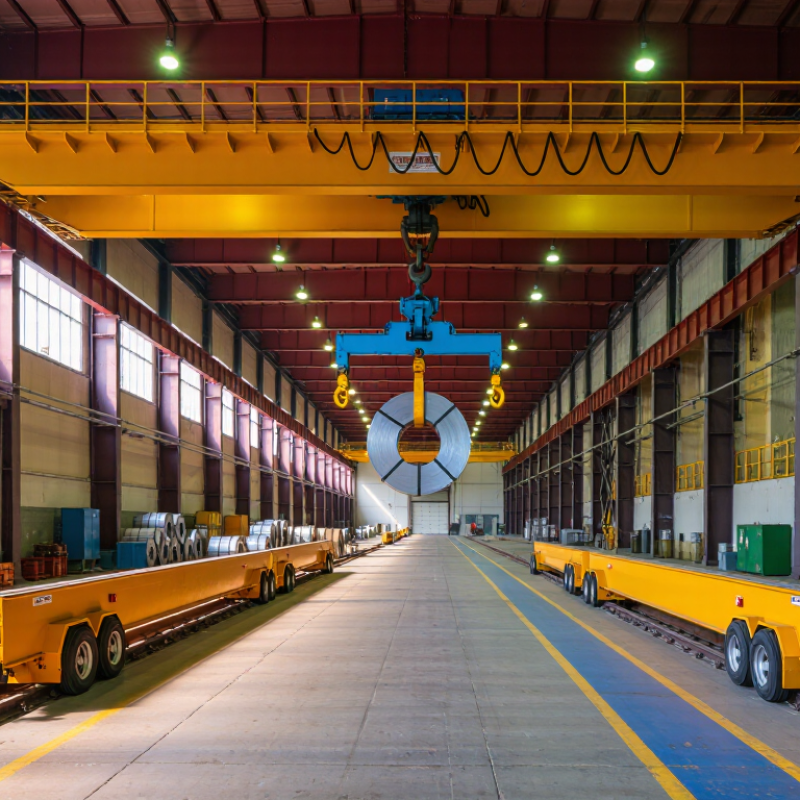
Table of Contents [Hide]
Bridge Crane Definition and Main Structural Components
What Is a Bridge Crane and How Does It Work?
Bridge Crane Definition and Main Structural Components
A bridge crane is an overhead lifting system that moves loads across a building. It usually travels along parallel runway beams fixed to the structure. The main bridge spans the working area. End trucks support the bridge and move it along the runways. This arrangement creates a clear floor space for production, storage, or maintenance work.
The bridge carries a trolley, which moves sideways across its length. A hoist mounted on the trolley raises and lowers the load. Wire rope, chain, hooks, and lifting accessories connect the hoist to the material. Electric motors drive the bridge and trolley wheels. Controls may be pendant-operated, remote-controlled, or installed in a cabin. Each method requires trained operation.
Load capacity depends on the bridge design, runway condition, hoist rating, and building support. These details must agree. A practical inspection checks wheels, brakes, ropes, hooks, limit devices, and bolts. Inspectors also look for unusual noise, uneven travel, or damaged electrical parts. Small defects can become expensive failures.
The crane does not carry weight alone. The supporting structure matters equally. Engineers review wheel loads, deflection, clearances, and local building conditions before installation. Measurements are sometimes imperfect, especially in older workshops. That uncertainty deserves a second check. Operators should avoid side pulling, sudden starts, and suspended loads over people. Regular records make maintenance decisions more reliable.