-
PRODUCTS & SERVICESOptimized cooling solutions for modern data centersProducts & ServicesOptimized cooling solutions for modern data centers
-
CAPABILITIESAdvancing liquid cooling technologiesCapabilitiesAdvancing liquid cooling technologies
-
TechnologiesLiquid Cooling InnovationTechnologiesLiquid Cooling Innovation
-
RESOURCESLatest News & InformationResourcesLatest News & Information
-
ABOUTOur history, leadership and ownershipAboutOur history, leadership and ownership
-
CONTACTFacility locations and global operational footprint






What Is the Best Home Surge Protector?
Choosing the best Home Surge Protector requires more than counting outlets or reading a bright marketing label. A surge protector sits beside your television, router, or refrigerator, quietly absorbing electrical stress. Its quality can affect expensive equipment, data, and daily comfort. The Insurance Information Institute reported 71,551 lightning-related homeowners insurance claims in 2023, totaling approximately $1.2 billion in losses. That figure shows why household surge protection deserves careful evaluation.
Reliable comparison begins with recognized safety standards. UL 1449, the Standard for Surge Protective Devices, establishes important requirements for testing, construction, and performance. IEEE Standard C62.41.1 also explains electrical surge environments inside low-voltage AC power circuits. These documents do not identify one universal winner. They provide a professional framework for judging clamping voltage, surge-current capacity, response behavior, and installation safety. Look for clear certification information, realistic joule ratings, thermal protection, and a protected-equipment warranty with understandable conditions.
Details matter. A well-designed unit should fit firmly into a wall outlet without forcing a heavy adapter downward. Its indicator light should remain visible behind a desk. Cable spacing also matters near a crowded entertainment console. However, no protector lasts forever. Repeated surges can weaken internal components, even when the device still appears normal. That is easy to forget.
This guide compares leading options through standards, specifications, usability, and independent evidence. It also considers weaknesses, because the “best” choice depends on your wiring, appliances, budget, and risk exposure. A more expensive model is not automatically safer. Careful selection remains essential.
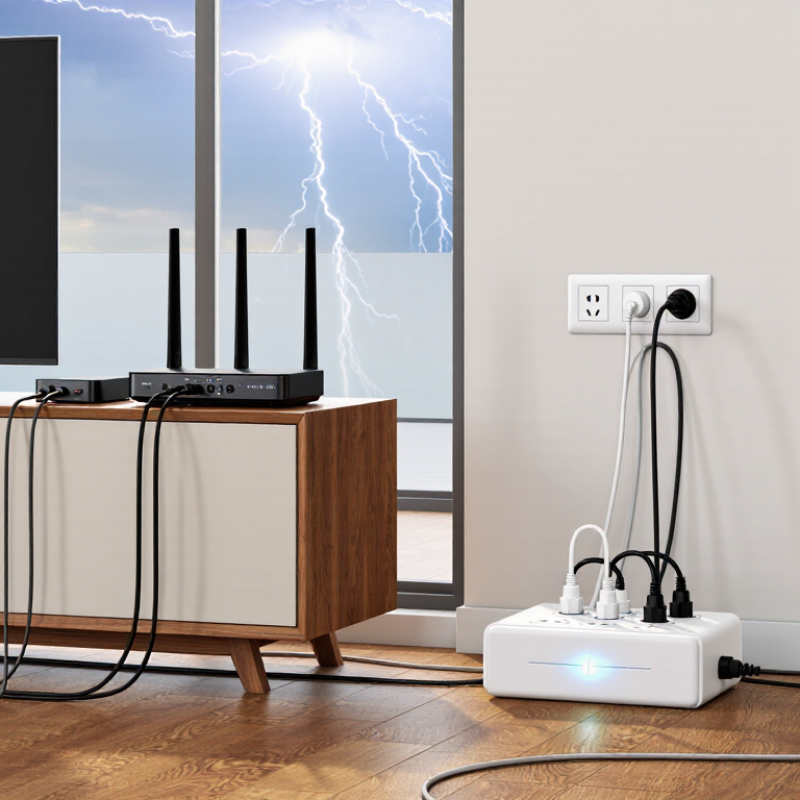
Table of Contents [Hide]
What a Home Surge Protector Does and Why It Matters
What Is the Best Home Surge Protector?
A home surge protector limits sudden voltage increases before they damage connected electronics. These spikes can enter through power lines, cable lines, or nearby lightning activity. A reliable unit diverts excess energy away from sensitive circuits. It does not provide unlimited protection. No device can stop every surge.
When choosing one, check its joule rating, response time, and number of protected outlets. Higher joule ratings generally indicate greater energy-handling capacity. Look for tested safety certification from a recognized laboratory. A status light should confirm that protection remains active. Replace the unit after a major surge or when its warning light changes. I have seen people trust a protector for years without checking its condition. That habit is easy to question.
Tips: Keep large appliances and delicate electronics on separate circuits when practical. Do not connect one surge protector into another. Leave space around the unit to prevent heat buildup. For homes in storm-prone areas, consider professional whole-home protection. Ask an electrician to inspect grounding and the main service panel. A plug-in device cannot correct poor grounding. The best choice depends on your wiring, equipment, and local risks.