-
PRODUCTS & SERVICESOptimized cooling solutions for modern data centersProducts & ServicesOptimized cooling solutions for modern data centers
-
CAPABILITIESAdvancing liquid cooling technologiesCapabilitiesAdvancing liquid cooling technologies
-
TechnologiesLiquid Cooling InnovationTechnologiesLiquid Cooling Innovation
-
RESOURCESLatest News & InformationResourcesLatest News & Information
-
ABOUTOur history, leadership and ownershipAboutOur history, leadership and ownership
-
CONTACTFacility locations and global operational footprint







Why Choose Mild Steel Pipe for Global Projects?
Why Choose Mild Steel Pipe for Global Projects? The answer begins with practical performance, not marketing language. Mild Steel Pipe offers a balanced combination of strength, weldability, availability, and cost control. These qualities matter when projects cross borders, climates, and supply chains.
A six-metre pipe section can be transported, lifted, aligned, and welded with familiar site equipment. Fabricators can cut it for water lines, structural supports, drainage systems, and general industrial service. Its relatively simple composition also supports predictable machining and joining practices. That familiarity reduces training demands, especially when local contractors use different equipment or methods. Small details matter.
However, mild steel is not automatically the best choice. Engineers must match wall thickness, diameter, pressure rating, temperature, and service environment. Unprotected pipe may corrode quickly near saltwater, humid storage yards, or chemically aggressive soil. Suitable coatings, linings, cathodic protection, or drainage design may be necessary. These decisions should follow project specifications and recognized standards, not habit.
Reliable procurement also requires more than comparing prices. Buyers should review mill certificates, heat numbers, dimensional reports, weld procedures, and inspection records. Independent testing can confirm chemical composition, tensile strength, impact performance, and coating quality when risk justifies the cost. A useful lesson from many projects is that early assumptions can fail at installation. Availability may change. Delivery routes may tighten. A technically sound pipe can still create delays without verified documentation and realistic logistics planning. Mild Steel Pipe remains valuable because it combines proven engineering practice with adaptable project planning, provided its limitations receive equal attention.
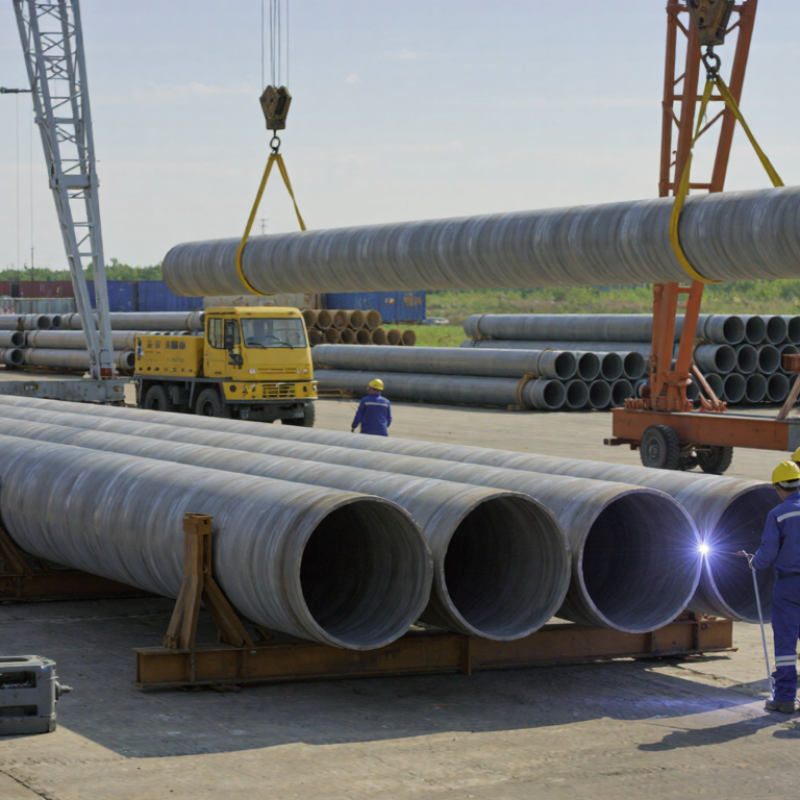
Table of Contents [Hide]
What Is Mild Steel Pipe?
Why Choose Mild Steel Pipe for Global Projects?
What Is Mild Steel Pipe?
Mild steel pipe is manufactured from low-carbon steel, usually containing about 0.05% to 0.25% carbon. This range is not universal. Specifications can differ between standards and project regions. Its relatively low carbon content improves weldability, bending performance, and fabrication efficiency.
That matters on busy construction sites. Workers can cut, weld, and install mild steel pipe using widely available equipment. Common applications include water transmission, structural supports, compressed air, and industrial utility lines. Welded and seamless versions serve different pressure and reliability requirements. Standards still matter.
The World Steel Association reported approximately 1.89 billion tonnes of crude steel production in 2023 (World Steel in Figures 2024). This scale supports broad raw-material availability and established processing capacity. However, availability does not guarantee suitability. Engineers must check wall thickness, pressure, temperature, corrosion exposure, and connection methods.
Mild steel is not naturally corrosion-proof. Bare pipe may deteriorate quickly in humid soil or coastal air. Protective coatings, linings, drainage design, and inspection schedules are essential. The NACE IMPACT study estimated global corrosion costs at about 3.4% of worldwide gross domestic product. That figure is older, but the warning remains useful. A lower purchase price can become expensive when maintenance is ignored.