-
PRODUCTS & SERVICESOptimized cooling solutions for modern data centersProducts & ServicesOptimized cooling solutions for modern data centers
-
CAPABILITIESAdvancing liquid cooling technologiesCapabilitiesAdvancing liquid cooling technologies
-
TechnologiesLiquid Cooling InnovationTechnologiesLiquid Cooling Innovation
-
RESOURCESLatest News & InformationResourcesLatest News & Information
-
ABOUTOur history, leadership and ownershipAboutOur history, leadership and ownership
-
CONTACTFacility locations and global operational footprint







Why Choose Rolling Tool Carts for Your Business?
Why Choose Rolling Tool Carts for Your Business?
A busy workshop rarely loses time through one dramatic failure. Small delays accumulate. A technician walks across the floor for one wrench, then returns for fasteners. Rolling Tool Carts reduce these interruptions by bringing organized tools directly to the workstation. Their value is practical, not decorative. When drawers, trays, and side panels have defined locations, employees can identify missing equipment faster and restore tools consistently.
The U.S. Bureau of Labor Statistics recorded approximately 2.6 million nonfatal workplace injuries and illnesses in private industry during 2023. The Occupational Safety and Health Administration also emphasizes safer material handling, clear work areas, and reduced ergonomic strain. A properly selected cart can support these goals by limiting unnecessary carrying and keeping heavy tools near waist height. It cannot remove every hazard. Poor loading, damaged casters, or blocked aisles can create new risks.
Real improvement requires observation. Measure walking distances, tool-search time, and workstation congestion before purchasing. Check each cart’s rated capacity, drawer extension, wheel quality, brake design, and corrosion resistance. A cart that looks impressive may fail in a humid maintenance room. That mistake is easy to make. Grand View Research and other tool-storage market analyses show continuing demand for organized, mobile storage, yet market growth does not guarantee operational value for every company. Rolling Tool Carts work best when matched to actual tasks, floor conditions, and employee habits. Their strongest benefit may be simple: fewer searches, cleaner stations, and a more repeatable daily workflow.
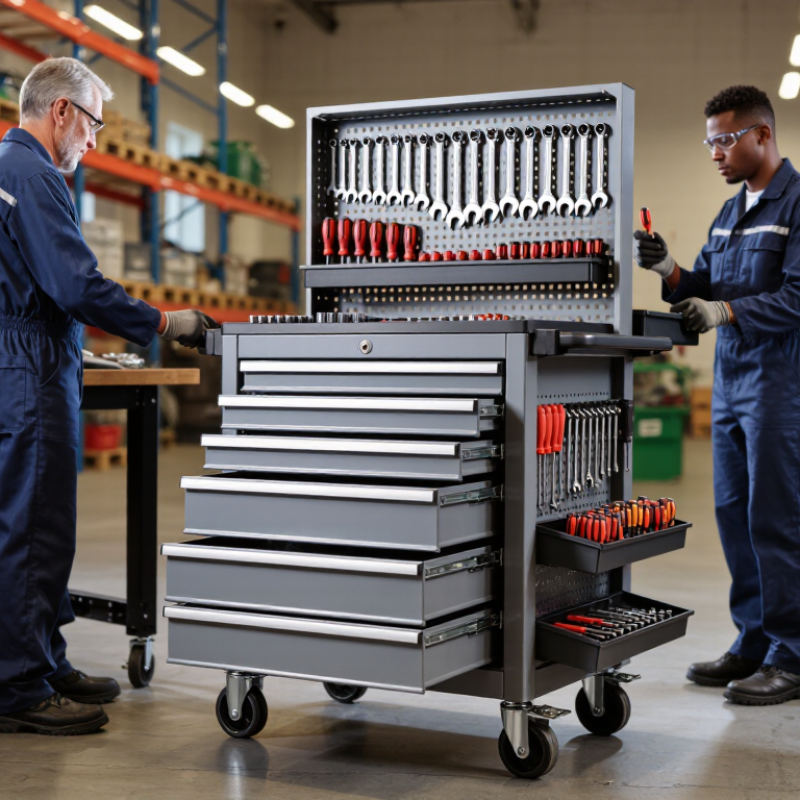
Table of Contents [Hide]
Business Tool Storage Needs and the Role of Rolling Carts
Why Choose Rolling Tool Carts for Your Business?
Business tool storage is not only about keeping equipment off the floor. It also affects workflow, safety, and maintenance time. A rolling tool cart places frequently used tools beside the workstation. Technicians can move drills, sockets, fasteners, and measuring devices without repeated trips across the facility. In my experience, this simple change reduces interruptions during repairs. Clear drawers also make missing tools easier to notice.
A suitable cart should match the working environment. Check its load rating, drawer depth, wheel quality, and locking system before purchase. Lockable casters help keep the cart stable during precise tasks. Full-extension drawers improve access to tools at the back. In busy workshops, steel construction usually handles daily impacts better than lightweight materials. However, heavy carts can become difficult to push across uneven floors.
Small details matter.
Tool storage should follow actual work habits, not an imagined perfect routine. One team may need shallow drawers for hand tools. Another may require deeper compartments for power equipment and spare parts. Labels, foam inserts, and simple color coding can reduce searching time. They also support consistent tool returns between shifts. Yet organization can fail when storage rules are too complicated. I have seen carefully labeled carts become cluttered again within weeks. Regular checks and honest feedback are necessary. A cart should support the team’s movement, not restrict it.