-
PRODUCTS & SERVICESOptimized cooling solutions for modern data centersProducts & ServicesOptimized cooling solutions for modern data centers
-
CAPABILITIESAdvancing liquid cooling technologiesCapabilitiesAdvancing liquid cooling technologies
-
TechnologiesLiquid Cooling InnovationTechnologiesLiquid Cooling Innovation
-
RESOURCESLatest News & InformationResourcesLatest News & Information
-
ABOUTOur history, leadership and ownershipAboutOur history, leadership and ownership
-
CONTACTFacility locations and global operational footprint







Why Is My Car Alternator Not Charging?
Why Is My Car Alternator Not Charging? This question often appears after a slow engine crank, a dim dashboard, or a battery warning light. The Car Alternator may be failing, but the alternator is not always the true cause. Loose battery terminals, damaged wiring, a worn serpentine belt, or a weak battery can create similar symptoms. A careful diagnosis prevents unnecessary parts replacement.
A practical inspection begins with simple clues. Listen for belt squealing near the alternator. Check whether the headlights become noticeably dim at idle. Use a multimeter to test battery voltage before starting and while the engine runs. A healthy charging system commonly produces about 13.5 to 14.8 volts, although specifications vary by vehicle. Modern cars may use smart charging systems, so one voltage reading cannot prove everything. That detail is easy to overlook.
Safety matters. Keep hands, clothing, and tools away from moving belts and pulleys. Do not disconnect the battery while the engine is running. That old test can damage sensitive electronics. Professional technicians often inspect grounds, fuses, connectors, belt tension, and charging-system data before replacing an alternator. Still, diagnosis is not perfectly predictable. Intermittent faults may disappear during testing, leaving only a faint warning light or a stored computer code. This guide explains the most likely causes, practical checks, and signs that professional service is the safer choice. A small measurement can prevent a large repair bill.
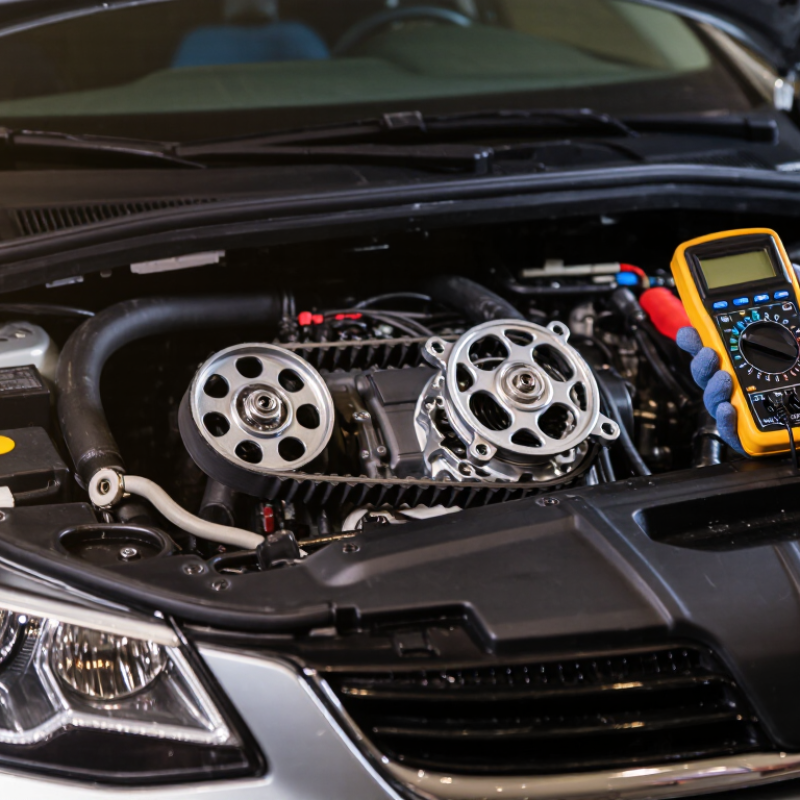
Table of Contents [Hide]
What the Alternator Does and Why Charging Matters
Why Is My Car Alternator Not Charging?
What the Alternator Does and Why Charging Matters
The alternator is the car’s electrical generator. It converts engine rotation into electricity while you drive. A rectifier changes that electricity into direct current for the vehicle’s systems. The battery mainly starts the engine and helps stabilize voltage. It is not designed to power every electrical load for long. When charging fails, headlights may dim, warning lights can appear, and the engine may eventually stop. Small symptoms matter.
In workshop testing, I check the battery voltage before blaming the alternator. A healthy, rested battery often measures near 12.6 volts. With the engine running, many vehicles show roughly 13.8 to 14.7 volts. Modern charging systems can vary, so this range is not absolute. Loose connections, damaged wiring, a worn belt, or a weak battery can create similar readings. I have seen technicians replace alternators too quickly. That mistake wastes money and misses the real fault.
Tips:
Inspect the belt for cracks, looseness, or unusual squealing.
Clean corrosion from the battery terminals carefully.
Measure voltage at the battery and alternator output when possible.
Turn on the headlights and blower, then watch for a sharp voltage drop.
Avoid touching moving parts.
A multimeter can mislead when its leads are damaged, so test the meter first.