-
PRODUCTS & SERVICESOptimized cooling solutions for modern data centersProducts & ServicesOptimized cooling solutions for modern data centers
-
CAPABILITIESAdvancing liquid cooling technologiesCapabilitiesAdvancing liquid cooling technologies
-
TechnologiesLiquid Cooling InnovationTechnologiesLiquid Cooling Innovation
-
RESOURCESLatest News & InformationResourcesLatest News & Information
-
ABOUTOur history, leadership and ownershipAboutOur history, leadership and ownership
-
CONTACTFacility locations and global operational footprint

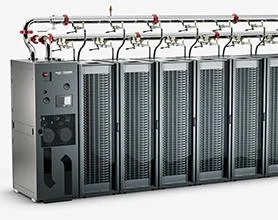



How to Choose AI Infrastructure Cooling Solutions?
Choosing the right AI Infrastructure Cooling solution is no longer a facilities afterthought. It is a performance, reliability, and cost decision. Modern AI servers can generate intense heat within compact racks, especially during sustained model training. A few minutes of thermal stress may reduce system performance or trigger unexpected shutdowns. Small errors matter.
This guide examines practical cooling choices, including advanced air cooling, direct-to-chip liquid cooling, rear-door heat exchangers, and immersion systems. Each option has different installation requirements, water considerations, maintenance risks, and expansion limits. Experienced data center teams often begin with measured rack density, inlet temperatures, humidity, airflow patterns, and available utility capacity. Guesswork is expensive. A solution that works in a demonstration environment may fail in an older facility with limited floor loading or weak pipe infrastructure.
Reliable decisions also require independent standards, manufacturer documentation, and site-specific testing. Guidelines from organizations such as ASHRAE can support temperature and humidity planning, but they cannot replace commissioning data. Cooling efficiency should be assessed alongside uptime, service access, noise, energy use, and long-term operating costs. The cheapest equipment is not always the least expensive choice.
There is no universal answer. Some facilities may benefit from hybrid cooling, while others need a carefully phased liquid upgrade. This discussion offers a practical framework for comparing technologies, questioning supplier claims, and identifying hidden risks before procurement. It also acknowledges an uncomfortable reality: even a well-designed system can underperform when maintenance, controls, or operator training receives too little attention.
Table of Contents
[Hide]
AI Infrastructure Cooling: Core Concepts and System Requirements
AI Infrastructure Cooling: Core Concepts and System Requirements
AI infrastructure cooling begins with heat density, not equipment labels. Modern accelerators can release far more heat than traditional servers. A single rack may require careful airflow planning or direct liquid cooling. Air cooling works well for moderate loads and familiar maintenance routines. Liquid cooling handles higher densities, but it demands stronger leak protection and water-quality control. The correct choice depends on power, rack layout, room temperature, and expansion plans.
Cooling design should maintain stable inlet temperatures under peak workloads. Sensors must track temperature, humidity, pressure, flow, and leak conditions continuously. Redundant pumps, power paths, and control systems reduce the impact of individual failures. Heat removal capacity should include future workloads, not only today’s measurements. I have seen systems fail during short demand spikes because engineers trusted average loads. That mistake is easy to repeat. Thermal testing should cover startup, shutdown, maintenance, and partial equipment failure. A perfect design is rarely realistic, but measurable resilience is achievable.
Tips: Map heat at rack level. Test real workloads. Keep service access clear. Use alarms people can understand. Review sensor accuracy regularly. Water leaks are uncommon, yet preparation matters. Document every valve, cable, and emergency procedure. Cooling efficiency should never weaken operational reliability.
How to Choose AI Infrastructure Cooling Solutions? - AI Infrastructure Cooling: Core Concepts and System Requirements
| Cooling Solution | Typical IT Heat Density | Heat Transfer Medium | Typical Supply Temperature | Indicative Cooling Efficiency | Key Infrastructure Requirements | Primary Advantages | Main Limitations |
|---|---|---|---|---|---|---|---|
| Room-Level Air Cooling | Approximately 5–15 kW per rack in conventional deployments | Air circulated by computer room air handlers or air-conditioning units | Approximately 18–27°C supply air, depending on the operating envelope | Generally lower at high rack densities; airflow, fan power, and cooling distribution become significant loads | Raised-floor or overhead distribution, containment, adequate floor loading, and sufficient electrical capacity for fans and compressors | Familiar maintenance practices, broad equipment compatibility, and relatively simple liquid-management requirements | Limited scalability for dense AI racks; airflow space and fan energy increase rapidly with heat load |
| Rear-Door Heat Exchanger | Approximately 15–30 kW per rack, depending on door capacity and water conditions | Air-to-liquid heat exchanger mounted at the rear of the rack | Typically 18–32°C chilled or warm-water supply, subject to dew-point control | Higher heat removal capability than room-level air cooling because heat is captured at the rack exhaust | Cooling-water distribution, drip protection, leak detection, rack clearance, and adequate water flow | Can upgrade selected high-density racks without replacing every server with liquid-cooled components | Consumes rack space and may not adequately support the highest-density accelerator configurations alone |
| Direct-to-Chip Liquid Cooling | Approximately 20–80 kW per rack; higher values are possible with engineered systems | Coolant circulated through cold plates attached directly to processors and accelerators | Commonly approximately 20–45°C coolant supply; must remain above the facility dew point when non-condensing operation is required | High heat-transfer performance with substantially reduced server airflow and fan power | Coolant distribution units, manifolds, pumps, filtration, leak detection, quick-disconnects, and facility water loops | Well suited to modern AI accelerators, supports high rack density, and can enable warmer-water or economizer operation | Requires liquid-compatible servers, careful hose and connector management, and trained maintenance procedures |
| Single-Phase Immersion Cooling | Approximately 30–100 kW per tank, depending on tank design and equipment configuration | Non-conductive dielectric fluid surrounding the IT equipment | Often approximately 25–45°C fluid temperature, subject to fluid and equipment limits | Very high heat-transfer capability with minimal server airflow and potentially lower fan energy | Purpose-built tanks, fluid pumps, heat exchangers, filtration, fluid handling, and compatible service procedures | High density, uniform component cooling, and reduced reliance on room airflow management | Hardware servicing is less conventional; fluid compatibility, logistics, and component qualification must be addressed |
| Two-Phase Immersion Cooling | Approximately 50–100+ kW per tank in engineered deployments | Boiling dielectric fluid that condenses on an internal heat-transfer surface | Typically controlled by the boiling point of the selected fluid and system pressure | Excellent heat-transfer performance and highly uniform cooling across immersed components | Sealed tanks, condensers, vapor management, fluid monitoring, pressure-control provisions, and specialized maintenance processes | Suitable for very high heat fluxes and dense accelerator systems with minimal mechanical airflow | Higher system complexity, specialized fluids, stricter containment requirements, and more demanding service practices |
| Hybrid Air and Liquid Cooling | Approximately 20–60 kW per rack, depending on the liquid-cooled component share | Direct liquid cooling for primary heat sources plus air for memory, storage, networking, and residual heat | Liquid loop commonly approximately 20–45°C; room air typically maintained within the applicable IT operating envelope | Balances high-density heat removal with reduced liquid coverage for supporting components | Both air-distribution and liquid-distribution systems, control coordination, leak detection, and airflow management | Practical transition path for mixed-generation environments and partially liquid-cooled AI clusters | Two cooling domains must be monitored and maintained; residual room heat still requires adequate air-side capacity |
Notes: Values are representative engineering ranges rather than guaranteed equipment ratings. Actual capacity depends on accelerator power, rack layout, coolant properties, supply temperature, flow rate, facility water quality, ambient conditions, redundancy requirements, and applicable safety standards. Non-condensing liquid operation requires the coolant temperature to remain above the surrounding air dew point.
Related Posts
-
2026 How to Optimize High Density Server Cooling Solutions?
-
China Top 10 High Performance Computing Cooling Suppliers
-
Top 10 Supercomputer Cooling Solutions for Global Buyers
-
10 Essential Tips for Optimizing AI Infrastructure Cooling
-
How to Choose Thermal Management Systems in 2026?
-
What is Warm Water Cooling and How Does it Work?