How to Source Chip Liquid Cooling Systems in 2026?
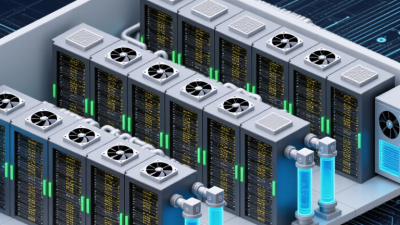
Artificial intelligence is changing the heat profile of modern data centers. High-density GPU racks can exceed 30 kW, while newer platforms may approach 100 kW per rack. Traditional air cooling becomes less convincing at these densities. Chip Liquid Cooling is becoming a procurement decision, not merely an engineering preference.
The International Energy Agency reported that data centers consumed about 415 TWh of electricity globally in 2024. Cooling represents a significant portion of facility demand, although its share varies by climate, design, and workload. The Uptime Institute’s Global Data Center Survey 2024 also highlights rising concerns about power capacity, resilience, and operational efficiency. These findings make supplier evaluation more demanding. Buyers must examine cold plates, coolant distribution units, pumps, leak detection, controls, service support, and lifecycle costs together.
The stakes are physical. A weak seal can damage expensive accelerators. Poor coolant compatibility can quietly reduce reliability. ASHRAE TC 9.9 guidance provides useful thermal-management principles, but it cannot replace site-specific testing. No single report answers every sourcing question. That is an important limitation. This guide explains how to compare Chip Liquid Cooling suppliers in 2026, using measurable performance data, documented testing, certifications, warranty terms, and field experience. It also considers retrofit constraints, water quality, maintenance access, and future rack-density increases. Procurement teams should request real thermal curves, not attractive marketing claims. A supplier’s laboratory result may not reflect your facility. That gap deserves scrutiny.
Define Chip Liquid Cooling Requirements and Performance Targets
How to Source Chip Liquid Cooling Systems in 2026?
Define Chip Liquid Cooling Requirements and Performance Targets
Before sourcing a chip liquid cooling system, define the actual thermal problem. Record each chip’s peak heat load, average load, and expected workload changes. Measure inlet temperature, outlet temperature, flow rate, and pressure drop. A 500-watt chip may need very different cooling from a 1,000-watt accelerator. Specify your rack density, operating altitude, ambient temperature, and available facility water conditions. These details prevent suppliers from designing around optimistic assumptions.
Tips: Set targets with measurable limits. For example, require coolant entering at 25°C, outlet temperature below 40°C, and pressure drop under 1.5 bar. Include leak detection response time, pump redundancy, filtration level, and service access. Ask for test data under sustained load, not only short demonstrations. Small details matter.
Set a thermal resistance target from the chip surface to the coolant. Also define allowable temperature variation across the cold plate. A practical target might limit variation to 3°C, but the correct value depends on chip layout and workload. Require stable performance during sudden load changes. I have seen systems pass steady-state testing but struggle during rapid power transitions. That weakness can be missed. Request endurance testing, corrosion compatibility data, and failure-mode documentation. A polished specification is not enough; maintenance staff must understand how to verify performance after installation. Recheck every target against real operating data after deployment.
Evaluate Suppliers, Materials, Certifications, and System Compatibility
Sourcing chip liquid cooling systems in 2026 requires more than comparing catalog prices. Evaluate suppliers through documented production experience, engineering support, and traceable quality records. Ask for thermal test data under your actual heat load, flow rate, and inlet temperature. A reliable supplier should explain pressure-drop limits clearly. Vague answers are warning signs.
Materials must match the coolant, operating temperature, and service life. Copper cold plates can improve heat transfer, while aluminum may reduce weight and cost. However, mixed metals can create corrosion risks. Check seals, hoses, coatings, and fittings as carefully as the cold plate. Request leak-test records, cleanliness standards, and batch traceability. Certifications such as ISO 9001, CE, RoHS, or relevant electrical and safety approvals can support confidence, but certificates never replace performance testing. We once trusted a certificate too quickly. The prototype still needed extra inspection.
Tips: Build a compatibility checklist before requesting quotations. Include chip package dimensions, mounting pressure, connector type, coolant chemistry, rack space, pump capacity, noise limits, and maintenance access. Test a production-intent sample for leaks, thermal resistance, vibration, and repeated start-stop cycles. Confirm whether the supplier can provide replacement seals and technical support after delivery. Small details matter. A connector that fits mechanically may still restrict flow. Keep test results, drawings, and revision numbers in one controlled file. This reduces costly misunderstandings during deployment.
Request Quotes, Test Samples, and Validate Thermal Performance
In 2026, sourcing chip liquid cooling systems will depend less on catalog prices and more on measured evidence. The IEA’s Electricity 2024 report projects data-center electricity demand above 1,000 TWh by 2026. It was about 460 TWh in 2022. That pressure makes cooling efficiency a procurement issue, not a maintenance detail. Request itemized quotes for cold plates, manifolds, pumps, controls, installation, and five-year service. Ask suppliers to state flow rate, pressure drop, coolant compatibility, inlet temperature limits, and guaranteed thermal resistance. Vague promises are expensive.
Request at least two samples from the same production lot. Test them with a heater matching the chip’s expected heat flux, not a convenient bench load. Log heater temperature, inlet and outlet temperatures, flow, pressure, leakage, and pump power. Use a thermal chamber when ambient conditions vary. ASHRAE TC 9.9 guidance provides recognized operating ranges, but testing should match your rack and facility water conditions. Repeat testing after thermal cycling. Small fittings can change results.
Compare quotes using total cost per cooled kilowatt. The Uptime Institute’s 2024 Global Data Center Survey continues to identify power availability and capacity as major operational concerns. Pump energy deserves a separate line. Request raw test files, calibration dates, uncertainty estimates, and failure criteria. A supplier refusing sample testing may still be competent. That is uncomfortable. Approval without evidence is worse. Record noise, service access, connector handling, and restart behavior during a 72-hour trial. One weak assumption can survive a spreadsheet.
How to Source Chip Liquid Cooling Systems in 2026?
Request quotes, test samples, and validate thermal performance before selecting a production supplier.
Lower thermal resistance and lower pressure drop indicate better cooling efficiency and easier system integration. Compare sample results under the same coolant temperature, flow rate, heat load, and measurement method before approving a supplier.