How to Choose Warm Water Cooling Systems for Your Business?

Choosing a Warm Water Cooling system is not simply a matter of selecting the highest capacity.

Business owners must match cooling performance with operating conditions, maintenance skills, and future expansion. A system that works well in a laboratory may struggle in a dusty warehouse or a crowded data center. Check supply and return temperatures, water flow, heat exchanger performance, pump efficiency, and control accuracy. Small details matter. A clogged filter can quietly reduce cooling capacity.

Dr. Roger Schmidt, an IBM Fellow and respected thermal-management specialist, has stated, “Liquid cooling must be designed around the heat load, not added afterward.” This principle remains highly practical. The cooling source, pipe layout, and equipment density should be reviewed together. Measure temperatures near the actual heat source, not only at the central plant. Compare real operating data with the manufacturer’s laboratory figures.

Reliability needs equal attention. Ask whether the system includes redundant pumps, leak detection, automatic shutdowns, and accessible service points. Water quality also deserves careful review, because corrosion and biological growth can damage expensive components. Warm water Cooling may reduce energy use and support higher heat loads, but it is not automatically the best choice for every business.

There are trade-offs.

A lower-temperature design may improve safety but increase energy demand. A warmer loop can improve efficiency, yet it may require compatible equipment and stronger controls. A perfect system rarely exists. The right decision comes from measured loads, credible engineering advice, and a clear maintenance plan. Before purchasing, test the design under peak demand, partial load, and one realistic failure condition.
How to Choose Warm Water Cooling Systems for Your Business?

Understanding Warm Water Cooling Systems and Their Applications

Warm water cooling systems circulate water at higher temperatures than traditional chilled-water systems, often between 30°C and 45°C. This warmer loop can reject heat through dry coolers or cooling towers for more hours each year. It also supports partial free cooling in suitable climates. The U.S. Department of Energy reports that cooling may consume up to 40% of a data center’s electricity. Reducing compressor operation can therefore lower energy demand. Uptime Institute’s 2024 Global Data Center Survey reported an average power usage effectiveness of 1.56. Small cooling improvements still matter.

These systems suit data centers, industrial process lines, laboratories, and high-density computing rooms. Choose them by checking supply temperature, return temperature, heat load, water quality, and required uptime. A 40°C return temperature may work well for servers, but not for every process machine. Heat exchanger capacity also deserves attention. Undersizing creates unstable temperatures and uncomfortable surprises. In practice, the first design is rarely perfect. Measure real loads during busy and quiet periods before final selection.

Tips: Request hourly load data, not only peak figures. Confirm the equipment’s allowable inlet temperature. Install temperature sensors near the hottest racks or process zones. Review filtration and water treatment with qualified engineers. The International Energy Agency identifies data centers as a fast-growing electricity demand sector, so efficiency claims should be verified with measured operating data. A pilot loop can reveal control problems before they become expensive.

Assessing Your Business’s Cooling Requirements

Choosing a warm water cooling system starts with the heat your business actually produces. Do not size equipment from floor area alone. Measure process heat, room gains, equipment schedules, and outdoor conditions. Record peak loads during the busiest production hour. Short spikes matter. For example, a workshop may need stable water at 28°C while machines run intermittently. That pattern differs from an office with steady computer loads.

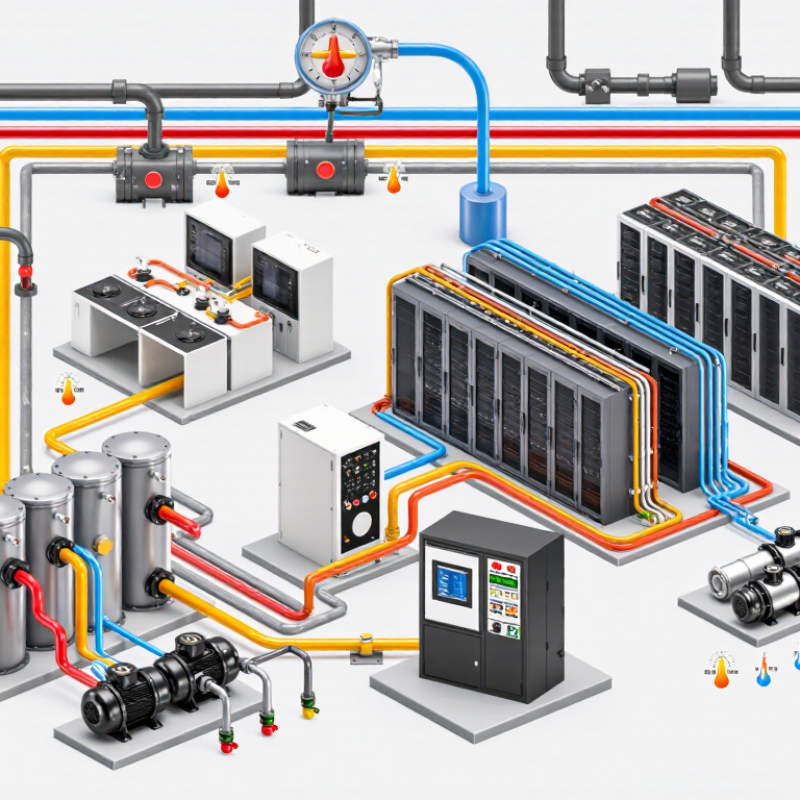
Define the required supply and return temperatures before comparing system capacities. Then confirm the water flow, allowable temperature rise, and operating pressure. These figures affect pump selection, pipe size, heat exchanger performance, and control response. Water quality deserves equal attention. Hard or dirty water can reduce heat transfer and increase maintenance. Ask a qualified engineer to test hardness, conductivity, corrosion risk, and filtration needs. Small errors here become expensive.

Review the building’s electrical capacity, ventilation, drainage, and available service space. Leave access around pumps, valves, filters, and sensors. Maintenance teams need safe working room, not merely a compact installation. Use measured data from similar operating periods when forecasting annual energy use. Be cautious with optimistic efficiency claims. Real performance changes with fouled coils, changing production, and neglected controls. An assessment should also test failure scenarios, including a blocked filter or pump outage. That exercise may reveal that the first design is too fragile. Revise it before procurement.

Comparing System Types, Capacity, and Energy Efficiency

Choosing a warm water cooling system starts with the heat your operation actually produces. A small workshop may need a compact closed-loop unit with a plate heat exchanger. Larger facilities often require modular systems, cooling towers, or dry coolers. Each option behaves differently under changing loads.

Capacity should match measured demand, not optimistic forecasts. Record peak heat output, water flow, inlet temperature, and required outlet temperature. For example, a process producing 180 kW of heat may need additional capacity for summer conditions and future equipment. Oversizing seems safe, but it can increase pump cycling and reduce efficiency. Undersizing creates unstable temperatures.

Energy efficiency depends on the complete system. Efficient pumps, variable-speed fans, and clean heat exchangers can reduce electrical use. A higher water temperature may also improve chiller performance, when the process allows it. Check the coefficient of performance across realistic operating conditions, not only laboratory ratings. Maintenance matters too. Fouled filters and scale can quietly raise energy consumption. I have seen systems perform well during commissioning, then decline after neglected cleaning. That weakness deserves honest attention. Noise, available floor space, water quality, and backup requirements also affect the final choice. A technically efficient design may still fail if operators cannot service it safely.

Evaluating Installation, Maintenance, and Operating Costs

How to Choose Warm Water Cooling Systems for Your Business?

Warm water cooling can reduce chiller dependence, but installation and operating costs need careful checking.

The International Energy Agency estimates that data centres used 240–340 TWh of electricity in 2022.

Cooling remains a major cost pressure. Uptime Institute’s 2024 Global Data Center Survey reported an average PUE of 1.56.

A warm water system may improve that figure through higher water temperatures and reduced compressor use. However, savings depend on climate, rack density, and heat rejection design.

Installation costs include pumps, heat exchangers, control valves, filtration, pipework, and leak detection. Existing facilities may need structural changes and new water circuits. ASHRAE’s liquid cooling guidance stresses water quality, corrosion control, and temperature management. These details are easy to underestimate.

A spreadsheet can still lie. Maintenance also needs trained technicians, planned filter replacement, sensor calibration, and periodic water testing. Neglecting one small valve can interrupt an entire cooling loop.

Tips:

Request a five-year total-cost model. Separate capital costs from electricity, water, labour, and replacement parts. Compare seasonal performance, not just rated efficiency. Measure return-water temperature on site before choosing equipment.

A pilot installation is safer, although it adds time and short-term expense. The IEA’s Electricity 2024 report expects data-centre demand to grow sharply through 2026, so flexible capacity matters.

Still, not every business needs the most advanced system. A simpler design may cost less and prove more reliable.

Selecting a Supplier and Planning System Implementation

Choosing a warm-water cooling system starts with the supplier, not the pump. Ask for verified flow rates, heat-rejection performance, water-quality limits, and service response times. Request operating data from installations with similar rack density and climate. A polished presentation is not enough.

ASHRAE Technical Committee 9.9 guidance identifies liquid-cooling classes that can use warmer supply water, potentially reaching 45°C in suitable designs. This can improve heat reuse and reduce mechanical cooling demand. However, compatibility depends on servers, heat exchangers, controls, and failure safeguards. The U.S. Department of Energy reports that cooling may account for up to 40% of data-center energy use. That makes efficiency valuable, but not at the expense of uptime.

Plan implementation in stages. Begin with a thermal survey, then test one representative row or production zone. Measure supply and return temperatures, flow stability, humidity, leak detection, and control response. The 2024 Uptime Institute Global Data Center Survey continues to show that outages remain a serious operational risk, even as infrastructure improves. Require the supplier to provide commissioning records, maintenance procedures, spare-parts availability, and staff training. Keep a bypass strategy for abnormal conditions. It may add cost. It may also prevent a small valve problem from becoming a business interruption. One overlooked issue is future expansion: a system sized perfectly today may restrict tomorrow’s computing load. Recheck the design after the pilot, and document what failed, not only what worked.