What Are the 2026 Top Cooling Loop Systems?
What Are the 2026 Top Cooling Loop Systems?
Cooling Loop Systems are becoming central to efficient thermal management in data centers, laboratories, manufacturing plants, and high-performance computing facilities. In 2026, the strongest systems will not simply move more coolant. They will control heat precisely, reduce energy waste, and support reliable operation under changing loads.
Dr. Roger Schmidt, an IBM thermal-management expert, has expressed the core principle clearly: “Cooling must move closer to the heat source.” This idea explains the growing interest in direct-to-chip cooling, rear-door heat exchangers, and immersion-based designs. Each approach places coolant nearer to demanding components, such as GPUs, CPUs, laser systems, and industrial power modules.
Performance depends on more than cooling capacity. Engineers must examine pump efficiency, flow stability, coolant compatibility, leak detection, filtration, pressure control, and maintenance access. A well-designed loop may include stainless-steel piping, quick-disconnect fittings, redundant pumps, and real-time temperature sensors. Small details matter.
They often decide reliability.
The best 2026 systems will likely combine liquid cooling with intelligent controls. Software can adjust flow rates when workloads rise, while sensors can identify unusual pressure changes before failure occurs. Yet no system is perfect. Complex controls may create new maintenance demands, and advanced coolants can increase purchasing costs.
That trade-off deserves honest attention. A high-performing loop is not automatically the most practical choice. Site conditions, technician skills, water availability, operating temperature, and long-term service costs must shape the decision.
This guide compares leading Cooling Loop Systems through those practical factors. It focuses on measurable efficiency, operating reliability, installation complexity, and future scalability. Real-world performance may still differ from laboratory claims.
What Are Cooling Loop Systems and How Do They Work in 2026?
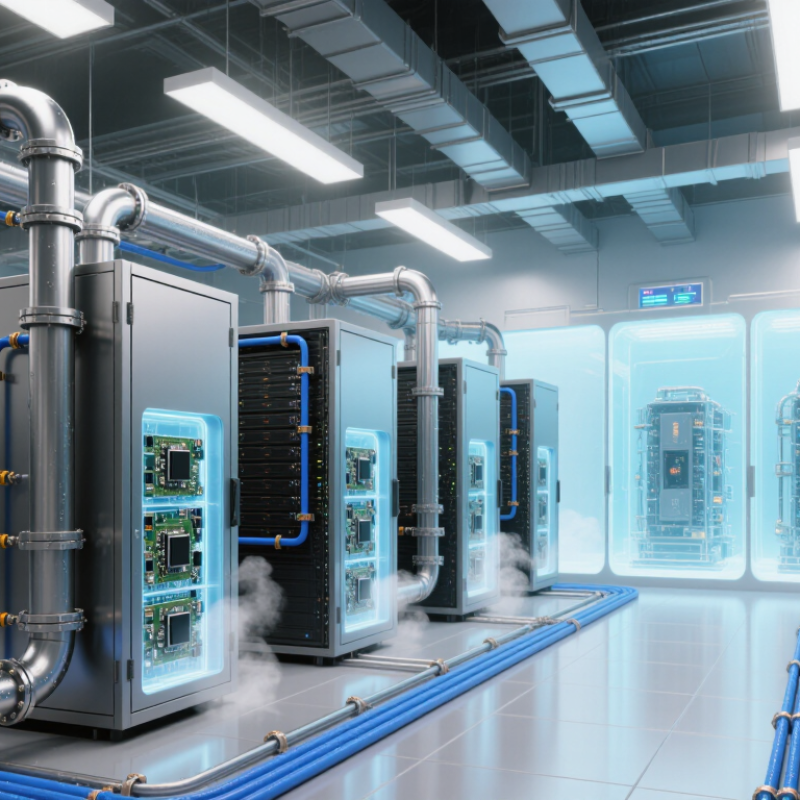
Cooling loop systems move heat away from processors, memory, and power electronics. The loop is simple. A pump circulates treated fluid through cold plates or heat exchangers. Warm fluid returns to a coolant distribution unit, where heat transfers into a facility-water loop. Chillers, dry coolers, or cooling towers then release that heat outdoors.
In 2026, direct-to-chip liquid cooling is becoming a practical choice for dense artificial-intelligence servers. It places a cold plate directly above high-power processors. Rear-door heat exchangers offer another path, using a sealed water coil behind the server rack. Immersion systems submerge electronic equipment in engineered fluid, reducing air movement and fan energy. Each design has trade-offs. Seals can fail. Water quality can drift. Maintenance skills may be limited.
The pressure is measurable. The Lawrence Berkeley National Laboratory’s 2024 United States Data Center Energy Usage Report estimates data centers consumed 176 terawatt-hours in 2023. It projects 325 to 580 terawatt-hours by 2028. Globally, the International Energy Agency reported about 415 terawatt-hours of data-center electricity use in 2024. These figures explain why cooling efficiency now affects capacity planning, not just operating cost.
ASHRAE TC 9.9 guidance remains important for temperature, humidity, and equipment reliability. In practice, the strongest 2026 system combines liquid cooling with monitored air circulation. I would not call immersion universally superior. Its value depends on workload density, fluid handling, facility design, and technician experience. The best loop is the one operators can inspect, repair, and measure consistently.
What Are the 2026 Top Cooling Loop Systems?
Cooling loop systems transfer heat from high-density computing hardware to a heat exchanger or facility water loop. The chart shows representative rack heat-removal design points for major cooling approaches used in 2026; actual capacity depends on coolant temperature, flow rate, rack layout, and system configuration.
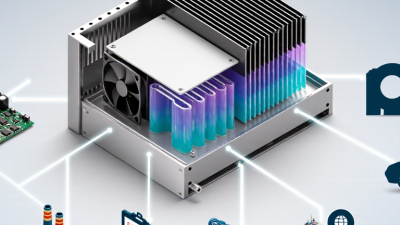
How they work: Air cooling moves heat through fans and heat sinks, rear-door heat exchangers remove heat from exhaust air, and liquid systems circulate coolant through cold plates or immersion tanks before rejecting heat through a facility-side heat exchanger.
Which Cooling Loop Technologies Define the 2026 Market?
In 2026, cooling loop technologies will define data-center efficiency more than server speed. Direct-to-chip liquid cooling is becoming central for dense artificial intelligence racks. The International Energy Agency’s Electricity 2024 report expects global data-center electricity demand to exceed 1,000 TWh by 2026. That pressure makes air-only cooling increasingly difficult.
Direct-to-chip systems move coolant through cold plates attached to processors. They remove heat near its source and can support higher rack densities. Rear-door heat exchangers remain practical for mixed environments. Single-phase immersion cooling offers another path, especially where noise and space are serious concerns. The Open Compute Project reports that liquid cooling can reduce fan power and improve thermal control, although installation standards still vary. That gap matters. A technically strong loop can fail through poor filtration, leaking joints, or unclear maintenance duties.
Tips: Measure supply temperature, return temperature, flow rate, and pressure continuously. Use water-quality monitoring and leak detection near every connection. The Uptime Institute’s annual surveys repeatedly identify power and cooling as major data-center resilience concerns. Operators should test pumps under partial load, not only during commissioning. This is often overlooked. Energy savings also depend on control software, heat reuse, and local climate conditions. The cooling loop is not a magic solution. Its pumps consume power, and neglected coolant can damage expensive equipment. Engineers should compare lifecycle costs, service access, and failure scenarios before choosing a 2026 system.
How Do the Top 2026 Cooling Loop Systems Compare?
For 2026, top cooling loop systems will be judged by density, water use, and serviceability. Direct-to-chip liquid cooling handles high-heat processors more efficiently than traditional air systems. The Uptime Institute’s Global Data Center Survey 2024 reported an average PUE of 1.56, showing that facility overhead remains significant. A well-designed liquid loop can reduce fan power, but pumps and heat exchangers still consume electricity.
Rear-door heat exchangers offer a practical middle path. They fit existing racks and require fewer hardware changes than full liquid systems. However, performance depends on stable water temperature and careful airflow control. Direct-to-chip designs usually support higher rack densities, yet they add quick-disconnects, manifolds, and leak-monitoring points. Small failures matter. Maintenance becomes more specialized.
Immersion cooling delivers the strongest heat-transfer potential among the main options. It can reduce server fan demand and support extreme computing loads. The International Energy Agency’s Electricity 2024 report projects data-center electricity demand could approach 945 TWh globally by 2030, increasing pressure for efficient cooling. Still, immersion complicates component replacement and technician training. Water quality also matters. ASHRAE guidance emphasizes thermal reliability, not just peak efficiency. My comparison is imperfect because climate, rack design, and workload patterns change the result. For many facilities, a hybrid loop may outperform a theoretically superior system.
What Factors Determine the Best Cooling Loop System?
What Are the 2026 Top Cooling Loop Systems?
The best cooling loop system depends on heat density, operating conditions, and maintenance reality. A low supply temperature alone proves little. Direct-to-chip liquid loops suit dense computing racks because they move heat close to the source. Rear-door heat exchangers can work better when facility upgrades must remain limited. Immersion systems offer strong thermal performance, but fluid handling and hardware compatibility require careful planning.
ASHRAE’s Thermal Guidelines emphasize inlet temperature, humidity, and equipment reliability rather than one universal cooling method. That principle matters in 2026. The International Energy Agency’s Energy and AI report projects global data-center electricity demand could approach 945 TWh by 2030. Cooling efficiency will therefore affect both operating cost and grid pressure. Yet efficiency claims need context. A loop using less fan power may require more pumping energy or water treatment.
Uptime Institute’s 2024 Global Data Center Survey reported an average PUE of 1.56 for 2023, showing that major efficiency gains remain difficult. The strongest system balances PUE, water usage, redundancy, leak detection, and service access. It should maintain stable temperatures during partial-load operation, not only during laboratory tests. A practical review should also measure coolant quality, pump failure response, and replacement time. Small gaps matter. In my view, many comparisons still underweight technician access and retrofit disruption. That is an imperfect assumption worth challenging. The “top” loop is the one that protects compute capacity without creating a maintenance problem.
How Are Cooling Loop Systems Evolving Beyond 2026?
Cooling loop systems are moving beyond 2026 with greater precision, flexibility, and energy awareness. In 2026, leading systems already combine liquid circulation, variable-speed pumps, and real-time temperature sensors. Future designs will connect these parts through predictive controls. The loop may adjust flow before equipment reaches a thermal limit. Small changes can prevent major performance losses.
Engineers are also exploring warmer operating temperatures and heat recovery. A loop carrying 35°C fluid could support nearby offices, greenhouses, or industrial processes. This approach reduces wasted heat, but only when local demand remains stable. Seasonal changes can make that assumption unreliable. Hybrid systems may therefore switch between dry coolers, chillers, and recovered-heat networks. Modular manifolds should make expansion easier in crowded technical rooms. Maintenance teams could replace one section without shutting down the entire loop.
Reliability will depend on details that specifications often overlook. Water quality, corrosion control, pressure balance, and sensor calibration require continuous attention. I have seen efficient designs lose performance because filters loaded too quickly. That lesson remains uncomfortable. More automation will not remove basic maintenance duties. Future systems should provide clearer fault warnings, accessible service points, and independent safety controls. Cybersecurity also matters when cooling equipment connects to facility networks. Independent testing, documented operating limits, and measured energy data will separate durable systems from attractive prototypes.